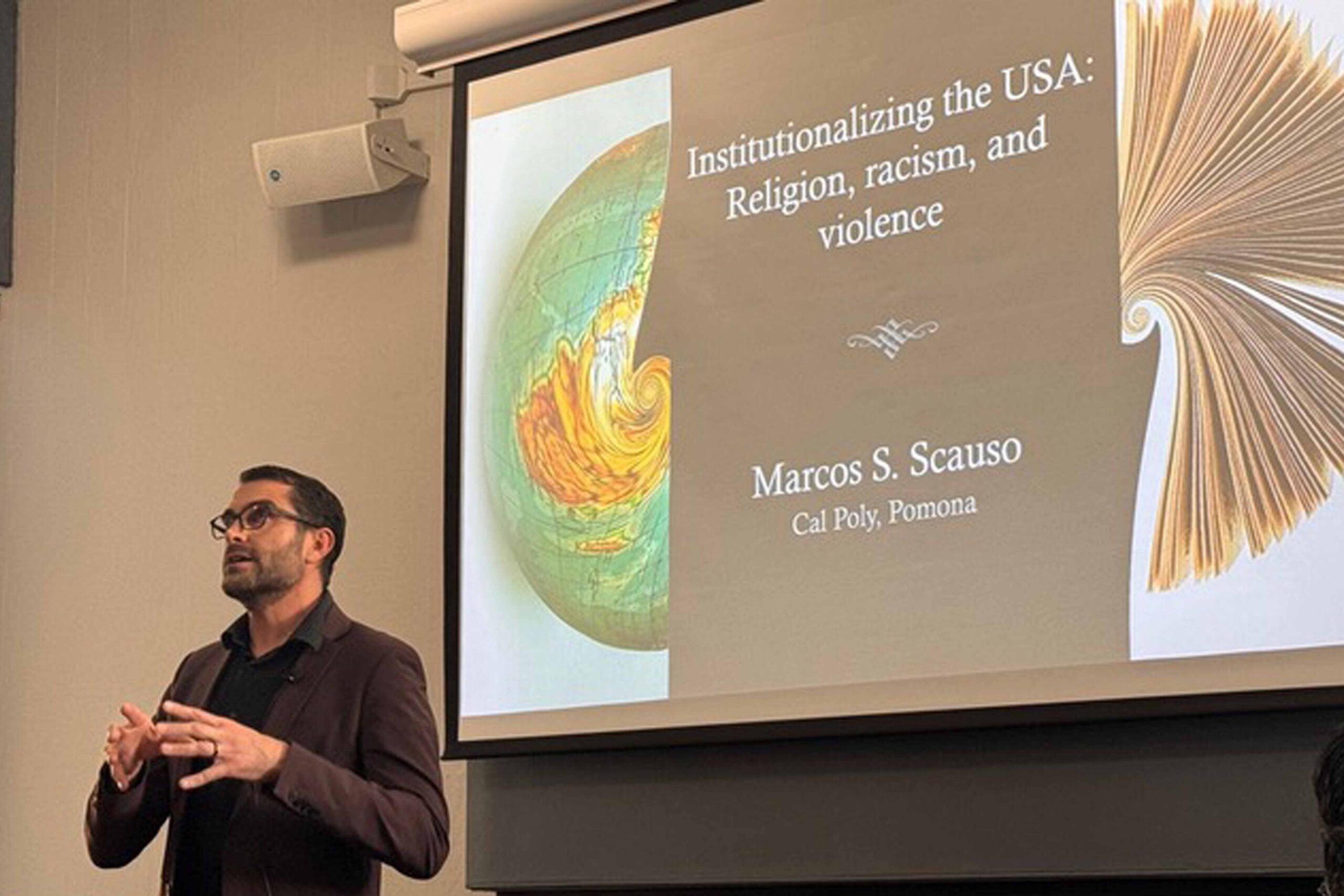
What does it take to build solidarity across struggles and why must we rethink how knowledge is produced to get there? Zara Qadir speaks with Marcos Scauso, Associate Professor at California State Polytechnic University, Pomona, and Third World Quarterly Research Notes Editor, about his research on intersectional decoloniality. Through his work, Scauso questions dominant approaches to knowledge production, and recognises that no single struggle can capture the complexity of injustice. In their short Q&A, he talks about his book Intersectional Decoloniality, and his work with the International Studies Association’s Global South Caucus.
Your research brings together international relations, colonial legacies, Indigenous politics, and intersectionality. How do they connect in your work, and what first sparked your interest in researching decolonial struggles in Latin America?
A great part of what inspired my work comes from growing up in a working-class family in post-dictatorship Argentina. Living through hyperinflation and seeing my family lose their small business really shaped what I wanted to do. It drove my desire to create a fairer world in some way.
With a scholarship, I became an exchange student in Debrecen, Hungary at Toth Arpad Grammus Sak. On the way, I remember getting completely lost at Frankfurt Airport, my first international airport. A woman took pity on me and helped me find my gate because I couldn’t speak English, German, Hungarian, or really anything that could help me communicate.
It was quite a shock to experience such a different culture. I was confronted with issues of racism for the first time while in Hungary, although I say “for the first time” with some hesitation, because Argentina’s own history includes enormous and horrendously systematic forms of genocide and violence against different groups.
When I returned home in 2001, the Argentina I had known had collapsed completely. We had five presidents in three months, and the financial system had crumbled. I remember protests erupting on the streets, citizens taking over universities, and becoming politically active. After a few months, I moved to Alaska, where I worked in construction, gardening, and whatever else I could find. Since that did not work out, I moved back home, where I met my partner, an exchange student from California. With the help of her parents, who often lent me money that I would pay back by working in the fields or in construction, I started coming to the USA to visit her. Becoming an immigrant and continuing our studies led us to move over 16 times in the last twenty years.
That experience, together with my activism and documentary work throughout Latin America, was extremely important in shaping my desire to understand not only issues of class, but also issues of racism, LGBTQI+ identities, sexuality, and how all of these issues intersect within a broader social and political context.
How have decolonial and intersectional perspectives changed the way you understand your own position? And how do they influence how you engage with struggles beyond your own experience?
To think about decolonial and intersectional perspectives in practice means understanding that there are multiple struggles and experiences happening simultaneously. Moreover, these influences may be acting in contradiction on occasion.
For example, I remember working in Bolivia and presenting on issues of class and exploitation in Argentina for my documentary to some students at the University of El Alto in Bolivia. They told me that parts of my understanding of exploitation were Western-centric and did not adequately take into account Indigenous experiences or the legacies of colonialism. For me, that was a profound learning moment. While elevating a single kind of struggle based on class, I was not only ignoring issues of race and ethnicity, but also assuming particular solutions and ideas of the future. Their critiques helped me to create a more nuanced research approach.
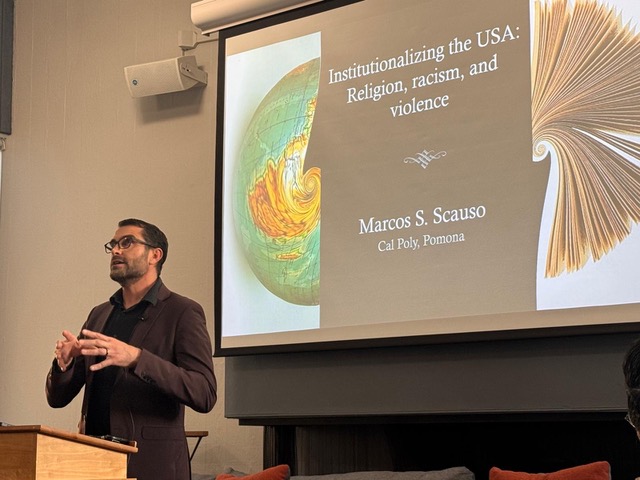
“It is important while fighting for different forms of justice to listen to voices that might confront our own privilege.”
Marcos Scauso
Your work looks at how racism, patriarchy, sexism, and environmental exploitation connect with US foreign policy in Latin America. How do you see these systems of power shaping the region today?
One way to answer this question is to think about the principles on which the United States was founded. The Declaration of Independence identifies life, liberty, and the pursuit of happiness as fundamental human rights—rights understood as universal and therefore deserving of protection through law. Though these principles have been interpreted and put into practice in different ways throughout history, they have always been universalised as the only legitimate and acceptable way of life, which everyone else “should” pursue and respect. They have been articulated through different political and economic traditions, taking on more republican, liberal, and, later, neoliberal forms, particularly with the political shifts associated with the Reagan and Clinton eras, but they have always assumed singularity at the expense of “other” differences.
Today, we are seeing another shift: the populist idea that Trump embodies what is good for America. On top of that, as Nancy Fraser [an American philosopher, feminist] argues, this represents an ultra-conservative form of neoliberalism. It differs from the more superficially progressive neoliberalism associated with Clinton, where there was at least a pretense of progressive values to respect differences and multiculturalism, which kept the same hierarchy and the same economy while the same forms of exploitation continued. However, in 2008, there was the hope of social progression which was marked by Barack Obama becoming the 44th president of the United States.
Yet with Trump now, we see an ultra-conservative neoliberalism that is much more protective of whiteness, heteronormativity, and masculinity. Trump’s America perpetuates the idea that there is a single kind of humanity that needs to be protected and universally promoted. He appears as the authoritative defender of this kind of humanity, promoting it both in the U.S. and abroad, for example, in Venezuela as well as in the U.S.’s relationship with Israel.
What’s interesting about the current state of American politics is that many people, especially in the U.S. see it as a deviation, as something that is not normal for the U.S. But this is an exacerbation of long-standing tendencies that privilege a single way of life, certain authorities, and a singular vision of the future. This monological, “one-world” tendency has been embedded in U.S. structures since its founding.
Some of my current work analyses these longer patterns throughout history and then focuses on how they affect the region today. In much of this work, I aim to denounce and dissect these patterns, which are related to oppression and one-worlding violence.
How are Indigenous movements challenging colonial structures and creating alternative political futures? Could you share some relevant examples from movements or people you’ve worked with and what you have learnt along the way?
I’ve worked with social movements in Argentina, and in the Philippines. I’ve also worked with Indigenous movements in Ecuador, as well as student movements in Venezuela, but primarily, I’ve worked in Bolivia with intellectuals from movements, such as Indianismo, and closer to former President Evo Morales, the first Indigenous president of the country.
I think one of the most interesting aspects of Indigenous movements is the extent to which the struggles they address, against racism, for land, and for other ways of life to be respected, are rooted in much longer histories of colonialism. Many of these conflicts can be traced back to the beginning of European colonisation of the Americas in 1492. Others belong to an even longer history of European expansion, particularly Portuguese colonial activity in Africa before 1492.
The Indianista movement that emerged in the 1960s in the Andes encourages us to understand violence in relation to the longer legacies of colonialism. As Fausto Reinaga, one of the most important intellectuals of the movement, teaches us, these legacies are rooted in the idea of a single, dominant, Occidental empire that seeks to impose and expand itself, often through violence. In doing so, it destroys other communities, destroys differences, which in turn eradicates peoples, creating exploitation and violence. To understand contemporary forms of violence, I think it is extremely important to listen to these struggles and to the teachings that have emerged from them.
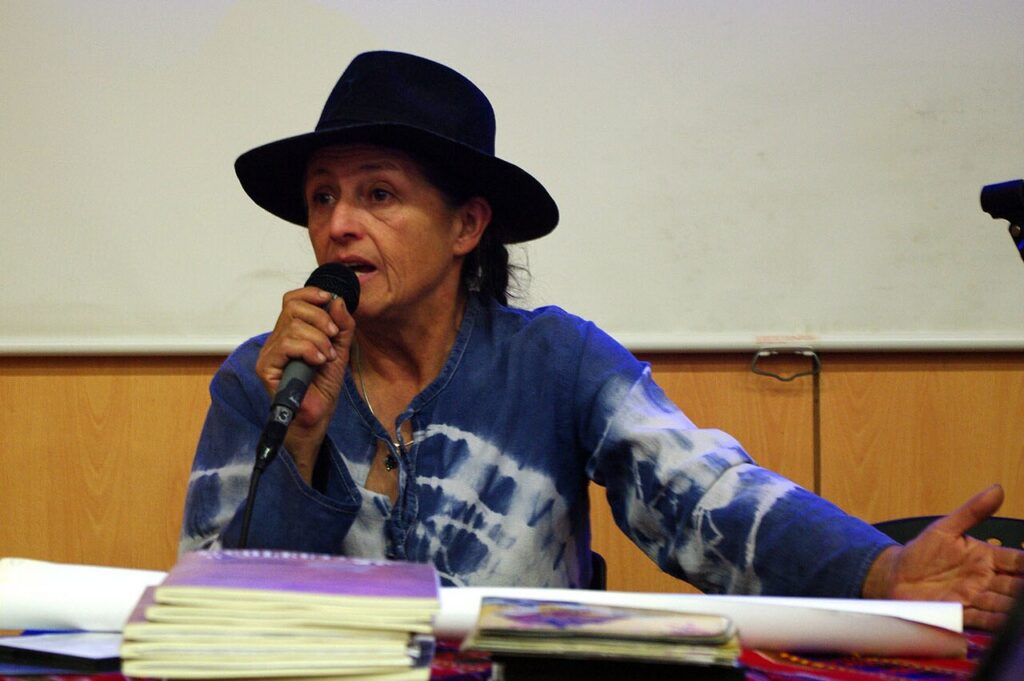
Another important lesson I’ve learned from Silvia Rivera Cusicanqui [an important Bolivian sociologist and historian] is that there are multiple, sometimes intersecting and/or overlapping struggles happening at the same time. Colonialism is not just about ethnicity and race. It’s also about gender, the environment, and sexuality. Some of the more radical elements from feminist Indigenous scholars, for example, involve this idea that there are long, continuous struggles, but there is no single struggle. In general, these intellectuals teach us to analyse, denounce, and resist colonial legacies and violences while also constantly sustaining much more reflexive possibilities of learning and listening.
How have these observations or findings helped your research?
Understanding that there are multiple intersecting struggles has very deep epistemic and methodological implications. Silvia Rivera Cusicanqui’s work has guided how I do research and how I think about political science, sociology, and global studies in general. Some of the methodological elements that emerge from Indigenous voices and intellectuals from the Andes have a lot to do, in some ways, with reflexivity. But more deeply, I think, they involve overcoming some of these modernist ideas of science and truth.
We can begin with methodological elements of positivism, a research approach that uses scientific methods and measurable evidence rather than subjective interpretations to establish knowledge. This philosophy of science assumes that humans can use their senses to “observe” the ontologically independent “reality” of “objects.” This approach is very powerful in the social sciences, and it regards the universe as composed of distinct entities ‘floating’ around independently. Instead, some Indigenous cosmologies emphasise what is known as relationality: the idea that things do not exist independently of their relationships with others. From this perspective, we cannot simply study or know an “object” as something separate from ourselves as if it had some kind of ontological independence, extract knowledge about it, and claim to understand it in isolation.
By doing so, relationality makes us think about the ways in which we construct worlds through the ways in which we relate. This leads to this idea that there are “worlds of many worlds,” as Marisol de la Cadena and Mario Blaser would say in their book, or, as the Zapatista movement (Mexico) would say, “a world in which many worlds fit.”
I think there’s something methodologically important in this idea of thinking about many worlds existing at the same time. It leads us to examine how people construct their worlds, and in doing so, positions the researcher as an equal within the research relationship.
This notion of multiplicity and complexity (or the idea that many worlds exist simultaneously) recognises that researchers and methodologies also equally participate in constructing worlds, undermining hierarchical relationships between those who produce knowledge (subject) and those who are studied (object).
Instead, we are all understood as “co-participants” (As Silvia Rivera Cusicanqui teaches us) in reconstructed relationships. Here, our own methodology, writing, articles, etc., become equal moments of discussion, conversation, and learning. This epistemic equality should call us to listen more deeply; it should encourage us to question our methodology, privilege, biases, and the harms we may cause, meaning our own ‘world’ becomes one among many; it is no longer the authorised world of a “subject” that studies an “object” out there.
This kind of flips that subject-object relationship and creates a much more equal research relationship, in which our own epistemic assumptions and methodologies become an equal part of the conversation.
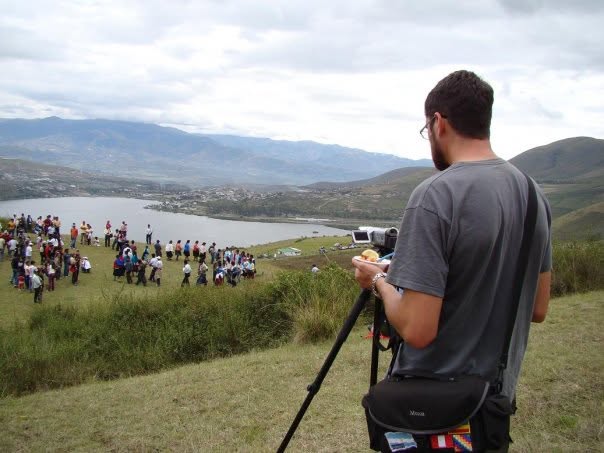
The research documentaries Swallows… A Necessary Flight (2009) and the two-part Pan y Tizas, La Educación en Decadencia (2007) explore activism and social change in Argentina and Bolivia. What inspired these projects, and what did you learn from the process of documenting these struggles through film?
The documentaries grew out of my commitment to activism and a desire to spark discussions and debates in public spaces beyond the classroom and academic conferences.
One of the documentaries [Pan y Tizas, La Educación en Decadencia (2007)] focuses on the neoliberal destruction of education in Argentina during the 1990s. The other began as a project to understand how Bolivian workers are often exploited in agricultural work in Argentina [Swallows… A Necessary Flight (2009]. When I began directing the documentary with others, we approached the issue from what Silvia Rivera Cusicanqui might describe as a “miserabilist” perspective. A “miserablist” view might try to understand the problems suffered by some people, but it also strips them from their agency and it ignores the ways in which they resist some of these injustices.
We recognised that we were portraying these communities primarily through their suffering, as if they had little or no agency of their own. But when we started filming, having conversations, and learning from Bolivian communities living in Argentina, our perspective began to change.
This was all happening in the early 2000s, when Evo Morales, who would become the country’s first Indigenous president, was gaining political prominence. Bolivia was experiencing major social and political mobilisations, including the Water War and the Gas War, which eventually preceded Morales’ election as president.
Bolivian citizens were also resisting within Argentina. They were holding festivals that honoured their traditions and reinforcing their own identities through political action, community work, and different kinds of gatherings in a country like Argentina, which has a long colonial legacy and immense issues of racism.
This documentary became a way of creating debate and discussion, but also a way for us to lean into the conversations that we were having about Bolivian lives in Argentina and different forms of resistance in the country. I think the biggest inspiration was very much the possibility of creating discussions and debates about injustice. However, it also became a way of learning and developing a more equal and collaborative approach to research.
You published a book Intersectional Decoloniality in 2020, and you have also written about the importance of “listening to the other others” in an E-international Relations blog. What does this phrase mean, and why is it important?
This idea of listening to others has a lot to do with the book, but also with my personal experience of writing it. The book shows my journey of analysing colonial legacies which exist in many forms throughout history. However, every time I would create a definition of colonial legacies, I would often find confronting voices coming from different experiences and struggles, telling me that this was not the only form of struggle.
We can begin with methodological elements of positivism, a research approach that claims to use scientific methods and measurable evidence rather than subjective interpretations to establish knowledge. Within mainstream research methodologies, we often assume we look for patterns and define the phenomena we are studying. We gather evidence and follow established procedures and methodologies, and then use our “findings” to write an article and say, “This is the problem”; these are the characteristics of our “objects.”
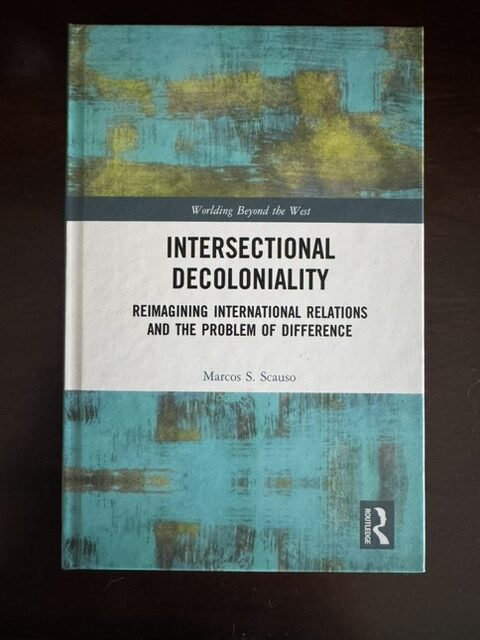
Our own personal experiences might also elevate the importance that we grant to these patterns, problems, and struggles. But every time I would do that in a chapter, I would hear confronting voices telling me not to universalise a particular experience of colonialism; teaching me that there were other experiences of oppression.
The first chapter starts in Bolivia and looks at how liberalism and republicanism created a system of dual citizenship that excluded Indigenous peoples until the 1950s. This system sustained severe violence.
In the 1950s, Bolivia’s Marxist nationalist revolution focused on class struggle as a way to expand citizenship and rights, as well as the redistribution of land. The revolution presented itself as the solution to exploitation.
Yet, during this time, Fausto Reinaga and the Indianista movement created an Indigenous party which highlighted that “class is not the only problem”. The movement recognised issues of ethnicity and race that have affected Indigenous peoples for hundreds of years, and viewing those issues through a lens that only addresses class silences that. Within some Marxist approaches, class-based analysis can also sustain an industrialist, modernist way of life as the future for everyone, whereas Indigenous peoples may have different ideas about the land, community, nature, the cosmos, or Pachamama, as it is called in Bolivia.
This challenged ways of thinking and offered a different understanding of colonialism, struggle, and the possibility for change. This is where the idea of the “other other” comes in: class may be one important form of struggle, but it is not the only one, nor is it universal. Class struggle may have reflected the experiences of urban working-class communities, but it does not necessarily capture the experiences or struggles of many other people in Bolivia.
As I was finishing my dissertation, I was satisfied with an Indianista, decolonial understanding of these injustices. But then I met Silvia Rivera Cusicanqui, who challenged my reading of colonialism as masculine, Western-centric, and too focused on territory. She encouraged me to consider the importance of gender throughout the history of colonialism and cautioned against treating any single form of power or oppression as the only “real” struggle, thereby placing other experiences in a hierarchy. In doing so, we risk reproducing the very tendencies that marginalise other ways of life, struggles, and other experiences.
This poses the question: How do we create a way of understanding and classifying “colonialism” without universalising it as the “most important” struggle, but also without falling into relativism?
Keeping this tension in mind allows us to listen to “other others” and move beyond modernist ideas of singularity. As decolonial scholars we unapologetically denounce colonialisms, but we also need to continue learning and listening. At the same time, while it is easy to call for listening to many struggles, deep reflexivity is significantly harder and it has important methodological implications. As other important moments of deep learning have taught me throughout my life and more recently, we need to sustain our tensions, listening to confronting voices, and never stopping our learning.
Could you tell us a little about your work with the Global South Caucus at the International Studies Association, and why you think spaces like this are important for bringing Global South perspectives into international relations?
As an immigrant in the U.S., I think the only reason I was able to find a space in academia and eventually get a tenure-track job was because of the community I found. That includes not only my partner, who sponsored me so that, after many years of lawyers and a very long process, I could eventually become a U.S. citizen, but there were also many others who supported me.
I think spaces like the Global South Caucus of International Studies Association (GSCIS) and Third World Quarterly, including its Research Notes, are spaces where I hope to help dismantle some of these barriers, and open up spaces and conversations. They can also play a political role in deconstructing injustices, examining some of the problems people are experiencing, and imagining other possible worlds.
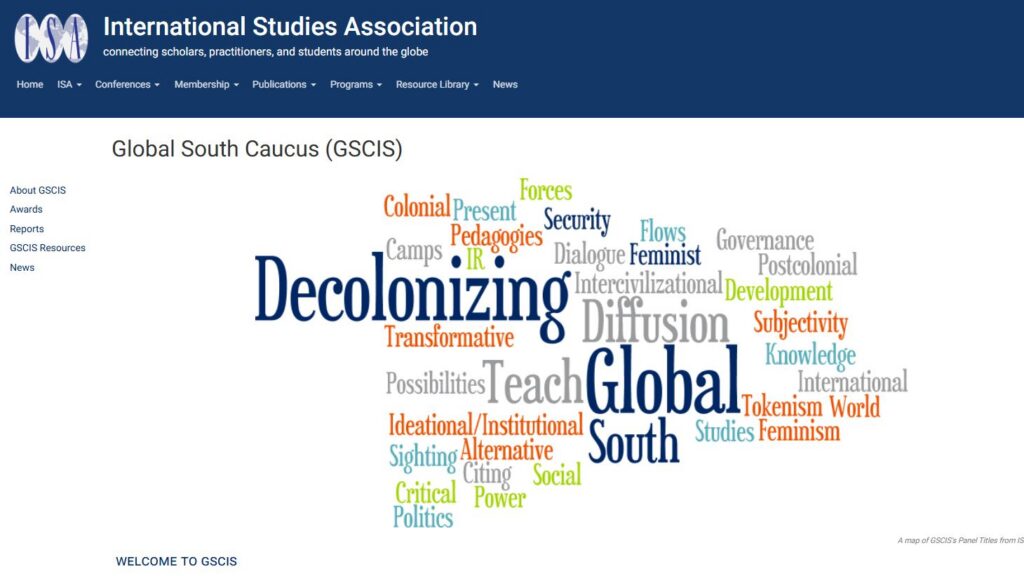
I began attending ISA in the 2010s and began working in the GSCIS in 2018. We established an author symposium to help Global South scholars navigate publishing in high-impact journals, while engaging journals in discussions about dismantling barriers to publication. We also organised panels and other spaces to encourage these conversations.
What has surprised you most about the submissions you’ve received since the launch of the TWQ Research Notes?
The Research Notes are really a wonderful space for sharing emerging ideas, methodological reflections, and innovative approaches to research. It has developed into the cutting-edge space I had hoped for, but has also evolved in ways that I didn’t expect.
First of all, the notion of what “cutting-edge” really means has become much clearer in my mind. I’ve read at least 200 research notes since the space began, and through that process, my understanding of what makes research truly cutting-edge has continued to evolve. It is not a neoliberal notion of newness and innovation. Instead, it is about challenging and expanding the boundaries of disciplines that study global issues, particularly the power structures that shape them.
It is about the possibility of moving beyond some of these mainstream approaches, many of which reinforce colonial legacies. Research notes bring in queer, Indigenous, decolonial, pluriversal, feminist, and environmentalist voices that push the study of global politics beyond these mainstream approaches.
I’m happy to see the range of conversations that have emerged. We’ve had discussions about technology and data from Indigenous perspectives, as well as a wonderful Research Note by Amaya Querejazu on pluriversal methodology. There has also been interest in methodological questions, including reflections on experiences of working in conflict zones. We’ve also had conversations about Gaza and violence.
So far, I think the Research Notes have developed into a space for conversations about issues that challenge the traditional boundaries of global studies, and I’m excited to see how they progress in future.