What happens when the impacts of climate change deepen existing inequalities and force communities from their homes? In this piece, Adnan Sarwar, an Anthropology student at Jahangirnagar University, Bangladesh, explores how climate vulnerability, flooding and displacement intersect with inequality and human development. By comparing Bangladesh’s climate change vulnerability with events that have occurred in neighbouring countries, Adnan looks at how cooperation across borders can lessen the devastating risks of climate change.
Climate change does not affect everyone in the same way. In countries such as Bangladesh, climate vulnerability can turn floods and other hazards into displacement, forcing people to leave their homes while the ability to recover is shaped by unequal access to resources, health services and infrastructure. These pressures extend beyond national borders, making cooperation between countries increasingly important in order to protect human development from the impacts of a changing climate.
Bangladesh’s climate change vulnerability is rooted in its geography as a low-lying delta, but climate-related pressures are not limited to rising temperatures or sea levels. The country is frequently exposed to floods, cyclones, river erosion, storm surges, droughts and other climate-related hazards. The scale of these risks are reflected in a 2024 review by Shariot-Ullah, which synthesises decades of research on sea-level rise, shoreline erosion, flooding and salinity intrusion in Bangladesh. Another, more recent 2025 Climate Central study identified Bangladesh as one of the ten countries most affected by dangerous heat. Bangladesh has also been ranked 13th in the Long-Term Climate Risk Index (2026), reflecting its continued exposure to floods, heatwaves, cyclones and storms.
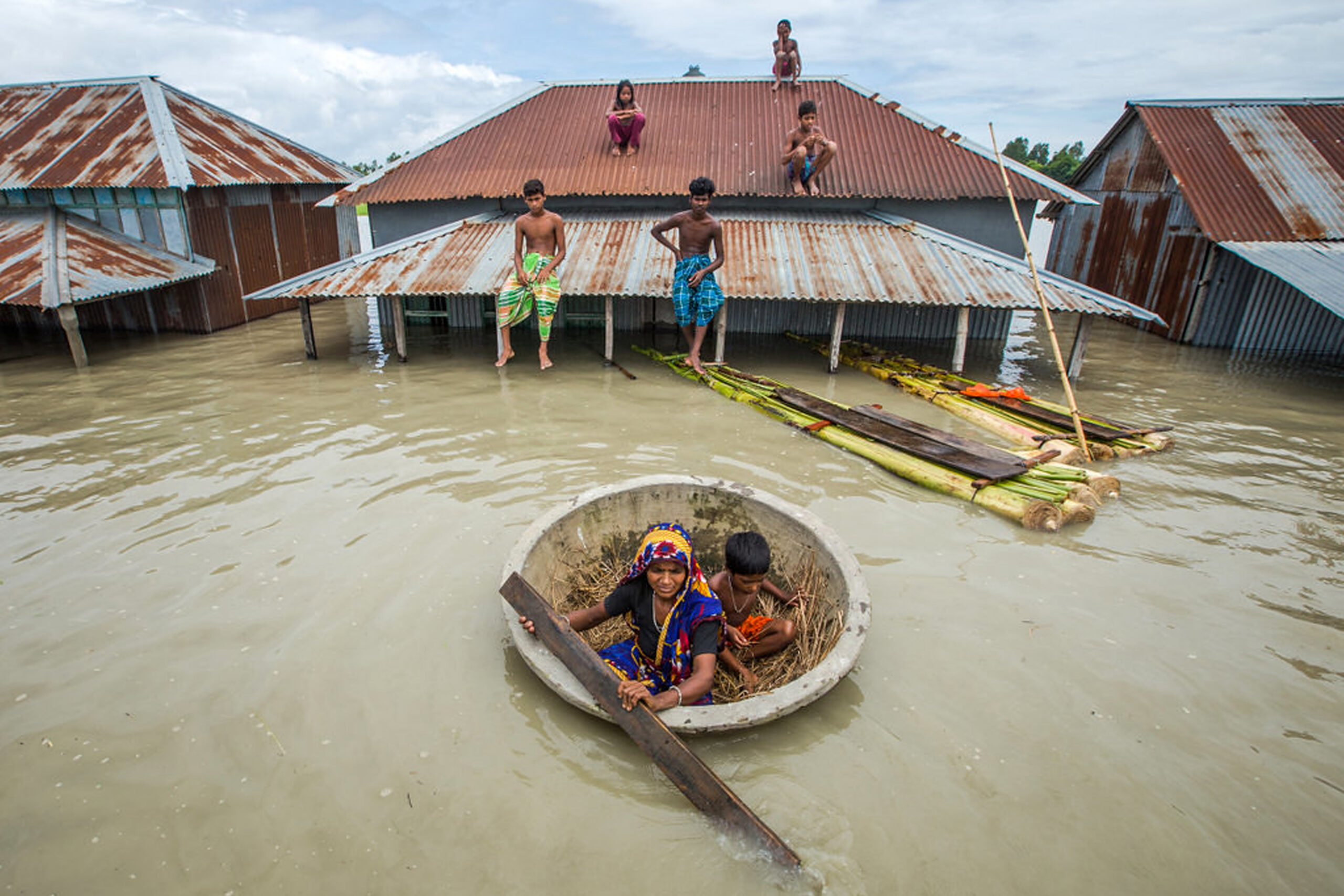
According to the Climate Risk Index (CRI), storms caused the greatest monetary damage in Bangladesh, while floods affected the highest number of people. According to research by the Bangladesh Institute of Development Studies (BIDS), floods accounted for 40.8 per cent of partial migrations, where some members of a household migrate while others remain. This shows how different climate hazards can lead to different forms of human and economic disruption.
Comparable vulnerability can be seen elsewhere in the region. The devastating floods that struck Nepal in August 2026 affected around 84,000 people. Nepali Prime Minister Balendra Shah described the disaster as an extraordinary flood triggered by an ice-and-rock avalanche in the Himalayas.
These experiences show how climate vulnerability can take different forms depending on geography. These disasters also show that the same hazard, such as flooding, can emerge through very different environmental processes. Moreover, they reinforce the CRI’s findings that countries in the Global South are especially vulnerable to the climate crisis, with Bangladesh’s neighbours, India and Myanmar, being among the countries most affected by climate-related extreme weather.
Flooding in a Changing Climate – From Bangladesh to Nepal
Bangladesh’s neighbour, Nepal, has seen devastating floods wreak havoc across the region. The flash floods that swept through Nepal’s Rasuwa, Nuwakot, Dhading, Gorkha and Tanahun districts along the Nepal-Tibet border cut off entire communities. As Nepal entered its peak tourism season, which contributes to 6.7% of Nepal’s Gross Domestic Product (GDP) and supports over one million direct and indirect jobs, the country remained in lockdown. These events have once again brought the risks of extreme flooding into sharp focus. This makes flooding particularly relevant in the context of Bangladesh, where it has repeatedly caused widespread social and economic disruption.
“Nepal’s recent disaster also highlights why stronger bilateral cooperation is needed to manage transboundary climate and glacier-related risks in the Himalayas.”
Adnan Sarwar
The devastating Brahmaputra floods of August 2017 in Bangladesh illustrate the scale and severity of these risks. Starting on the 12th of August, the flood affected 32 districts across northern, north-eastern and central Bangladesh and more than 11 million people. The event also provided scientific evidence that anthropogenic climate change is increasingly becoming a risk factor for flooding. A meteorological and hydrological study published in Hydrology and Earth System Sciences found that floods as severe as the 2017 Brahmaputra event have become between one and two times as likely compared with pre-industrial conditions. These risks are expected to grow as global temperatures rise. If global warming reaches 2°C above pre-industrial levels, extreme rainfall events of this kind could become more than 1.7 times as likely, while extreme river flows could become around 1.5 times as likely.
The most recent flood disaster in Nepal has been directly linked to climate change. Scientists found that the collapse of part of a mountain glacier triggered a torrent of water and mud that swept through Rasuwa and Nuwakot, as well as parts of Tibet. In response, Nepal’s foreign minister argued that any international support for the country should be understood not as “aid or charity”, but as a matter of “climate justice”. This highlights the growing importance of international responsibility and cooperation in responding to climate-related disasters.
While the immediate impacts of these disasters are often the most visible, their long-term consequences last much longer. Floods can lead to displacement and migration, while also deepening inequalities and affecting health, livelihoods and infrastructure. These effects can continue long after the water recedes, shaping people’s ability to recover.
The Wider Consequences of Flooding and Displacement
Floods create several different forms of vulnerability, including structural, physical, psychological, social and economic impacts. Internal displacement is one of the most significant consequences. In Bangladesh, floods and riverbank erosion have historically been estimated to displace at least one million people each year. For example, in 2010, floods affected 49 districts of Bangladesh and tens of millions of people.
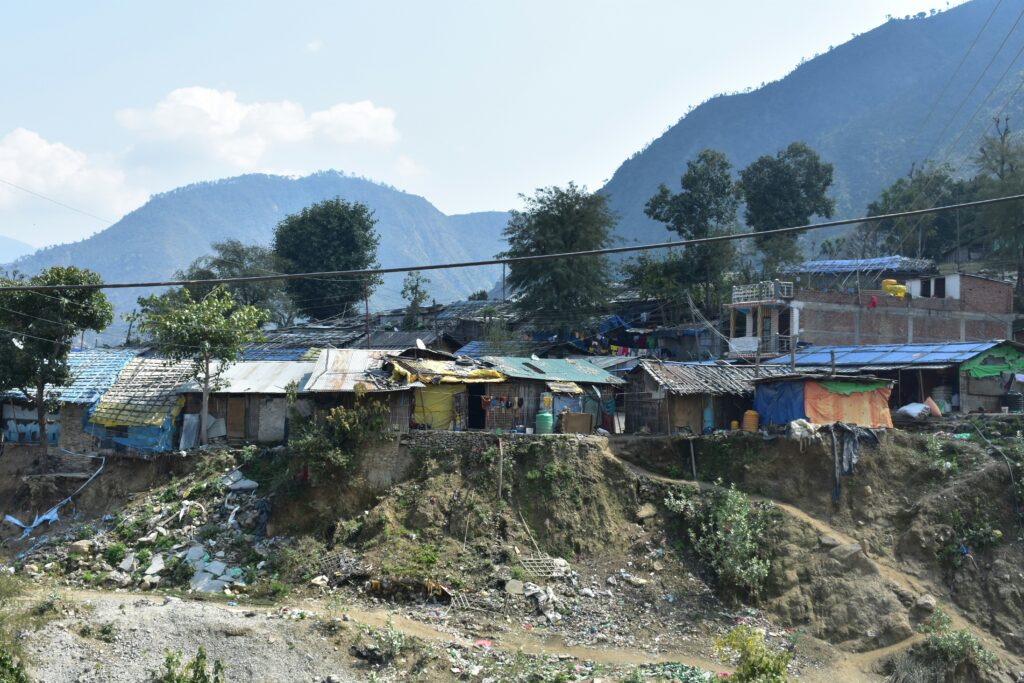
More recently, the first nationwide assessment by the International Organization for Migration (IOM) estimated that approximately 5 million people have been internally displaced due to disasters. Of these 63 per cent of these internally displaced persons (IDPs) had been displaced before April 2020, showing that displacement can last for many years. Dhaka, the capital, hosts approximately 16% of these internally displaced peoples, representing the second-highest share in the country after Chattogram in southeastern of Bangladesh.
However, the impacts of flooding do not end at displacement. The August 2024 floods, for example, created a major public health crisis, increasing the risk of waterborne diseases such as cholera, diarrhoeal diseases and hepatitis, as well as mosquito-borne diseases including malaria and dengue fever, while also putting additional pressure on already vulnerable communities. Flooding can contaminate drinking water if latrines, sewage systems and agricultural land are submerged, increasing the incidence of diarrhoea, cholera, hepatitis and intestinal infections. Stagnant floodwater can also create conditions for diseases such as dengue and malaria. In addition, disruption to health services makes it harder for people to receive timely care, and health consequences extend beyond physical illness. Anxiety, depression and post-traumatic stress can also become serious concerns after a disaster.
The Unequal Impacts of Climate Change
The impacts of flooding and displacement are not experienced equally. This unequal distribution motivated me to look more closely at the broader dynamics of climate-related displacement and how they shape people’s ability to move, adapt and recover. Gender is one important dimension of this inequality. Studies of flood-affected communities in northern Bangladesh have found that women are often more severely affected than men. This reflects existing inequalities in unequal access to mobility, employment, food, shelter, sanitation and other resources.
Gender roles can further shape experiences of displacement. During floods, men may migrate to urban areas in search of better-paid work, while women may have fewer opportunities to move elsewhere or find alternative employment. Women also face additional health and safety risks during displacement. Limited access to privacy, clean water and sanitation can make menstrual management difficult, while overcrowded shelters and disrupted social conditions can increase their exposure to harassment, verbal abuse and domestic violence.
The consequences also extend to the infrastructure people depend on. Floods can cause massive damage to transport, electricity, communication networks and essential services. These impacts are also shaped by existing inequalities. Lower-income households and those with less access to productive assets can face greater exposure to flood risks. Research in flood-prone communities in Bangladesh has also found that households facing the highest levels of risk were the least prepared and had the least access to post-disaster relief. Repeated flooding can further deepen these inequalities, as households may lose income and assets that they can only partially recover, leaving them with fewer resources for longer-term adaptation.
Nepal’s recent flood disaster illustrates the scale of these losses. Nepal’s disaster authorities estimated that the floods caused at least US$2.56 billion in overall physical losses. Around 20,000 houses will also need to be rebuilt in the flood-affected areas. During the first four months of early recovery alone, the estimated cost of rebuilding roads and temporary shelters, providing drinking water and restoring power is around US$52.6 million.
Cooperation Across Borders
While international agreements such as the Paris Agreement provide a framework for collective climate action, effective cooperation requires commitments that translate into practical support. This is particularly important for developing countries that face severe climate risks despite having contributed far less to historical emissions. Greater access to climate finance, technology and capacity-building can help vulnerable countries strengthen resilient infrastructure, expand adaptation measures and respond to the growing impacts of climate change.
The cross-border nature of climate and weather hazards means that their consequences cannot always be managed within national boundaries. Regional cooperation is therefore essential, particularly in areas such as weather forecasting, disaster preparedness, early warning and the sharing of climate and hydrological data. This is particularly important for Bangladesh, which has 57 transboundary rivers, including the Ganges-Brahmaputra-Meghna system, which spans China, Nepal, Bhutan and India before reaching Bangladesh. Managing the risks associated with these shared river systems therefore requires sustained cooperation and dialogue among the countries concerned.
Some mechanisms for this cooperation already exist. The Bangladesh-India Joint Rivers Commission, for example, provides an institutional mechanism for cooperation on shared rivers, including flood forecasting and flood-related research. Bangladesh also joined the UN Water Convention in June 2025, becoming the first South Asian country to do so and strengthening its commitment to cooperation over shared water resources. For such mechanisms to be effective practically, cooperation needs to be translated into timely sharing of information on rainfall, river flows and other hazards. Better access to such information can improve forecasts and give downstream communities more time to prepare and respond.
Nepal’s recent disaster also highlights why stronger bilateral cooperation is needed to manage transboundary climate and glacier-related risks in the Himalayas. The catastrophe was triggered by the collapse of a glacier in a remote area where monitoring was limited, rather than by a failure of bilateral cooperation in Nepal’s immediate response. However, the disaster exposed a wider challenge: Nepal and China still have limited systems for exchanging information on hazards in the Himalayan region. This matters because the two countries do not have equal capacity to monitor such risks. Chinese scientists and institutions have substantially greater resources and technical capacity for glacier and climate monitoring than those available on the Nepalese side. Stronger cooperation across borders could therefore help to address this imbalance, and through the sharing of data, expertise and technology with more reliable channels that communicate early warning signs could be created, and disastrous damage avoided. For transboundary hazards, timely information can give communities across borders valuable time to prepare and respond, and overall, lives could be saved.
South-South cooperation can also play an important role after disasters have occurred. Following Nepal’s recent floods and landslides, Bangladesh provided US$1 million to Nepal’s Prime Minister’s Disaster Relief Fund to support relief, recovery and humanitarian efforts. While financial assistance cannot replace longer-term cooperation on monitoring and early warning, it demonstrates how countries in the Global South can support one another in responding to climate-related disasters. Beyond immediate relief, UNCTAD has highlighted how South-South cooperation can strengthen climate adaptation by helping developing countries share knowledge through regional climate-risk assessment centres and research networks.
Climate-related disasters cannot always be prevented, but their consequences can be reduced. The scale of the damage depends greatly on how well communities can prepare, adapt and recover. For Bangladesh and other climate-vulnerable countries, building that capacity will require stronger institutions, greater access to resources and cooperation across borders. As climate risks intensify, collective action will become increasingly important in preventing climate vulnerability from turning into unrecoverable destruction, displacement, inequality and the loss of opportunity for human growth and development.
About Adnan Sarwar
Adnan Sarwar is currently pursuing an undergraduate degree in Anthropology at Jahangirnagar University, Bangladesh. His interests include development, public policy, governance and inequality – with a broader focus on development challenges and policy issues in the Global South. He is interested in understanding how economic and institutional processes influence development outcomes and shape inequalities in people’s access to opportunities and resources.