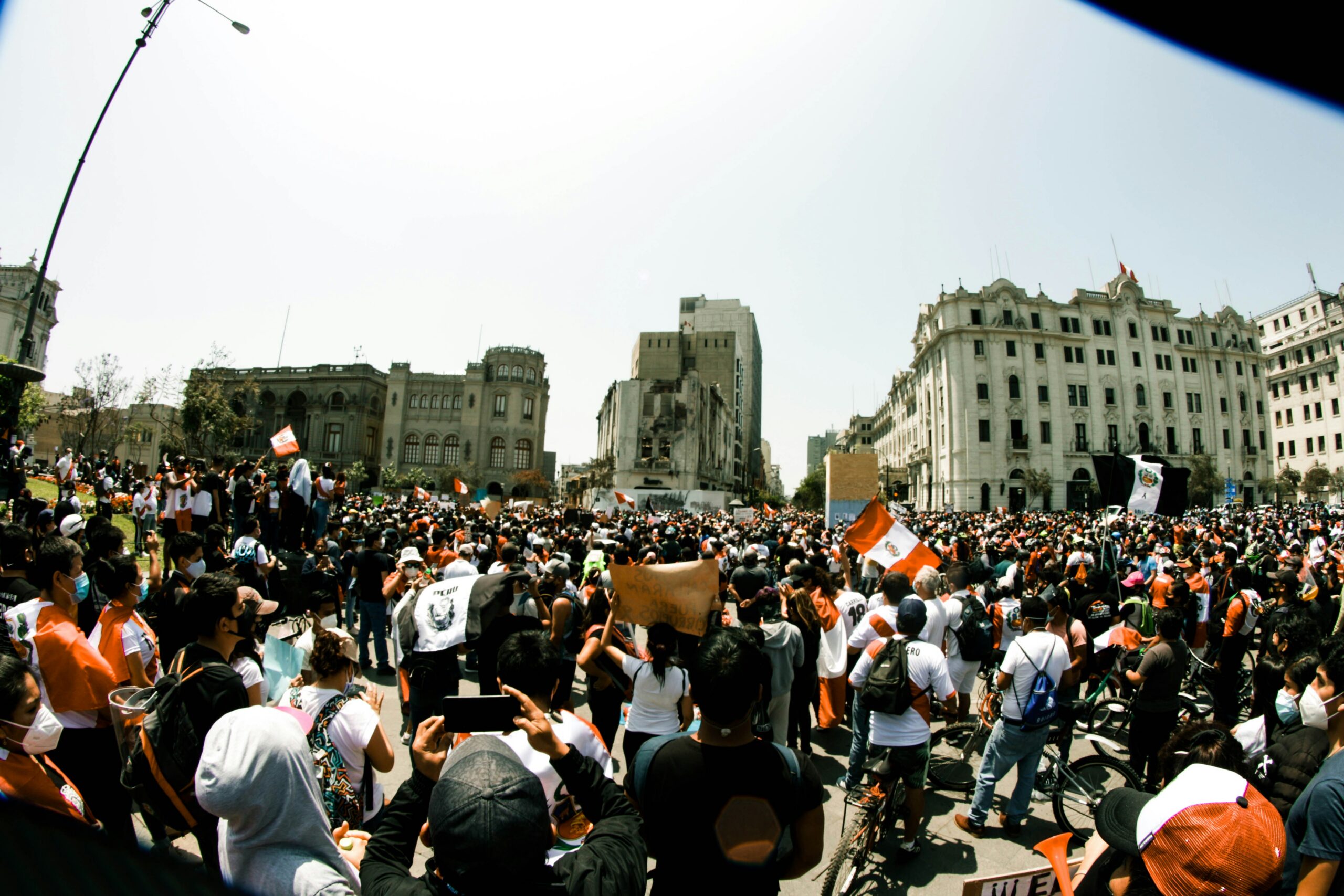
The new Third World Quarterly (TWQ) Special issue explores Governing the Social, Resisting the State: Gender and Youth in Authoritarian Regimes (Guest editors: Burcu Binbuga, Melehat Kutun and Zafer Yilmaz). Recent political developments in the Near East reveal deep social and cultural transformations. These changes must be understood through the ongoing tension between authoritarian regimes, using strategies of political suppression, and the social and political forces mobilising against them. So far, academic engagement to the region’s dynamic social fabric has been episodic and reactive, gaining visibility on moments of large-scale dissent such as the Arab Spring or the Gezi Uprising. This event-driven gaze has led to a systematic neglect of the enduring structural antagonisms that repeatedly fuel these periodic explosions of dissent.
As a result, much current debate on rising authoritarianism remains limited to analysing its institutional or electoral forms, ignoring the deeper project: the authoritarian restructuring of society and social fabric itself. This Third World Quarterly Special Issue addresses this gap by examining how authoritarian regimes reshape the social sphere and how new forms of resistance emerge in response. Our aim is to broaden political critique and social analysis by revealing the ways in which authoritarian power relentlessly reshapes the social terrain to suppress dissent and impose its own reactionary order.
As discussed in the introduction, a rapidly expanding body of literature has emerged that seeks to categorise and label the political regimes in the region. However, much of this scholarship overlooks a crucial point: authoritarian consolidation is never a one-sided process. It inevitably generates counter-movements, practices of resistance, and collective forms of defiance. Particularly marginalised in these discussions are the gender and youth movements whose struggles represent some of the most dynamic and disruptive challenges to authoritarian power in the region.
Recognising this blind spot, a growing wave of critical scholarship has begun to shift its focus toward resistance within authoritarian contexts. This Special Issue positions itself within this emerging critical turn. It seeks to foreground the social and cultural transformations taking place in Turkey, Iran, and Azerbaijan, and to map the varied and creative forms of opposition mobilised in response to authoritarian social engineering. By focusing in particular on gender and youth policies as key battlegrounds in this struggle, the issue aims to expose the structural relationship between regime formation, authoritarian consolidation, and the production of social policies that aim to discipline, regulate, and control dissenting populations.
“We argue for identifying Epistemic Erasure as a framework that signals an ongoing deliberate, systematic, and often silent attempt to erase entire epistemologies from public discourse, education, memory, and legitimacy, yet fails in the face of community mobilisations. Rather than leaving the violence at centre stage of the debate on Epistemic violence, this SI highlights the resistances that various groups are organising and teaching both locally and internationally, asserting that while erasure may be attempted, it is never complete.”
Burcu Binbuğa, Melehat Kutun & Zafer Yılmaz
About the Special Issue Guest Editors
Burcu Binbuğa
Burcu Binbuğa is an independent researcher currently based in Berlin. Previously, she was a postdoctoral researcher at the University of Bremen and Humboldt University of Berlin in Germany. She received her PhD from the Department of Political Science at Middle East Technical University (METU) in Turkey, where she wrote her dissertation on environmental movements in Turkey. She has been awarded research grants from the Alexander von Humboldt Foundation, Einstein Foundation, Rosa Luxemburg Foundation, Sabancı University Gender and Women’s Studies Center,and Karl Franzens University of Graz. Her research and teaching interests lie in the fields of social movements, environmental politics, and authoritarianism.
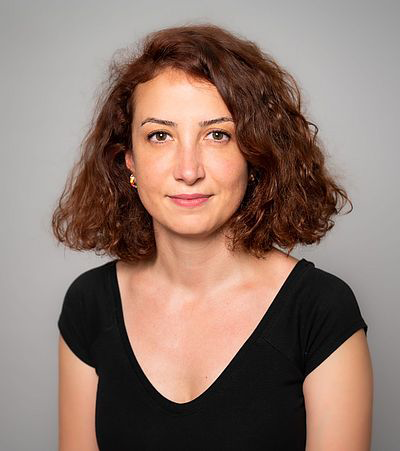
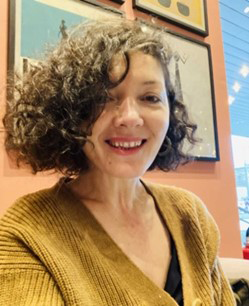
Melehat Kutun
Melehat Kutun is a political and social scientist who worked as an assistant professor at Mersin University until 2016. She is currently working at the University of Kassel on her own project, The Reshaping of Abortion Politics in Turkey: Understanding Islamic Right-Wing Populism Through the Differing Experiences of Three Groups of Gynaecologists, which is supported by the German Research Foundation (Deutsche Forschungsgemeinschaft). She is also an associate fellow of IRGAC (International Research Group on Authoritarianism and Counter-Strategies) based at the Rosa Luxemburg Foundation. Her publications focus on contemporary politics in Turkey, critical state theories, critical gender studies and abortion politics, and forced political migration. Her forthcoming manuscript is titled Authoritarianism Debates: The Ongoing Formation of the State in Turkey (Palgrave-Macmillan, 2025). She is also co-authored the two volumes book: Exiled Intellectuals: Encounters, Conflicts, and Experiences in a Transnational Context (Palgrave Macmillan, 2024).
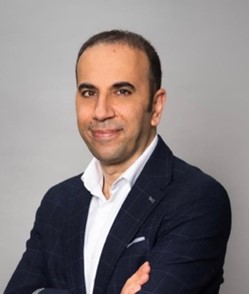
Zafer Yılmaz
Zafer Yılmaz is an Associate Professor at Ankara University and a research fellow at Alice Salomon Hochschule in Berlin. His work critically examines the global rise of authoritarianism, the deepening crisis of democracy, and the far-right’s growing hegemony. He has published widely on populism, authoritarian rule, and the authoritarian restructuring of the Turkish state in both academic journals and collective volumes. Among his books are The Spirit of New Turkey: Resentment, Domination and Destitution, Erdogan’s Presidential Regime: From Exceptional Republic to Parcelled State, and The Gloom of the Right: Authoritarian Leaders and the Stolen Rebellion (in Turkish), which interrogate the social, affective, and institutional dynamics of authoritarianism in Turkey and beyond.
Third World Quarterly (TWQ) regularly publish Special Issues(SIs), which are collections of papers centered around a theme of topical interest and are organised and led by subject experts who take on the role of Guest Editor/s. Visit our Special Issue page to find out more.