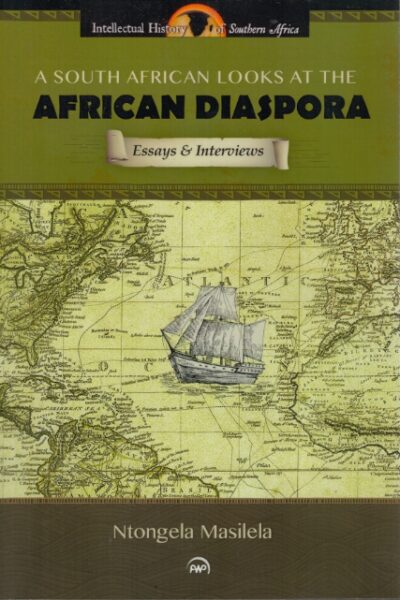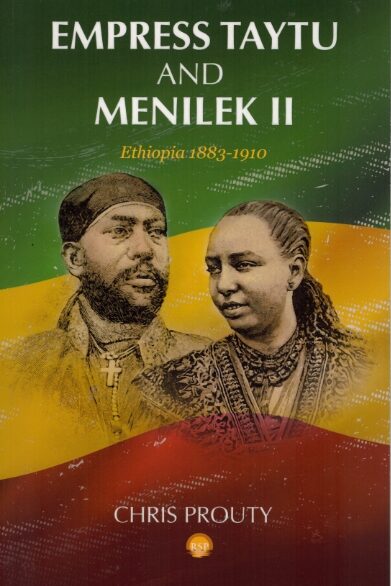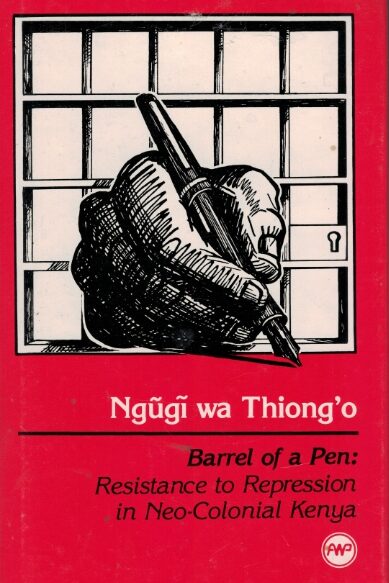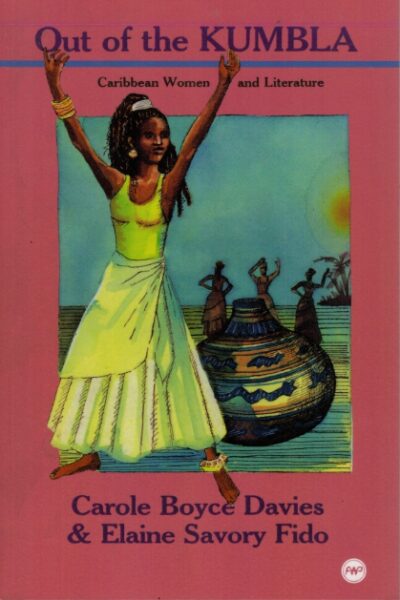
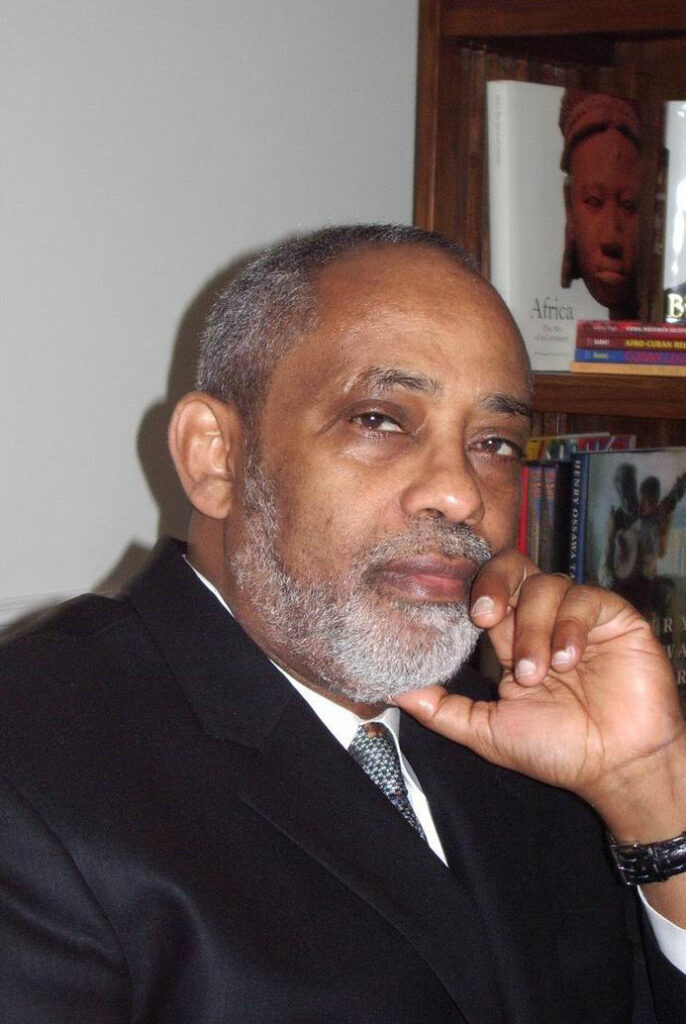
What does it take to disrupt Western dominance in publishing? Kassahun Checole founded Africa World Press in the 1980s, a Pan-African publishing house built on resistance, solidarity and belief in African voices. In this interview, Kassahun reflects on his upbringing in Eritrea, the power of independent publishing, the fight for intellectual sovereignty and reclaiming knowledge production in the Global South.
What motivated you to enter the world of publishing and start up Africa World Press?
In the late 1970s, I was teaching African Studies and Sociology at Rutgers University in New Jersey when I was seconded to El Colegio de México, in Mexico City. After seeing how well Mexican publishers told their own stories, I was inspired to start a publishing house. Africans at that time, I felt, were still struggling to do this.
A friend introduced me to a publisher at Siglo Veintiuno Editores, who were among the first Latin American publishers outside Cuba to publish African authors in Spanish. He told me, “We know almost nothing about Africa — only what the empire tells us.” We both found this tragic, especially given the lack of direct cultural ties between Africa and Latin America at the time.
I had already been working with Prof. Peter Anyang’ Nyong’o, a Kenyan politician, author and academic, developing an African Studies programme aimed at attracting students from across Latin America. But in the early 1980s, in the USA, African Studies was sidelined with token departments, and little research was taking place. Even the top universities had barely any books on Africa. So I decided to write a weekly column in El Día on African politics, economics, arts and culture to fill the vacuum.
By 1987, I left teaching and decided to set up my own publishing house. Many thought I was out of my mind and, truthfully, I had no fallback plan — just determination; in 1984, I founded Africa World Press which was both a challenging and exciting time. I had stayed active in the anti-apartheid movement in London, and there I reconnected with the late Kenyan author and academic, Ngũgĩ wa Thiong’o who had recently been released from prison after writing his memoir, Detained.
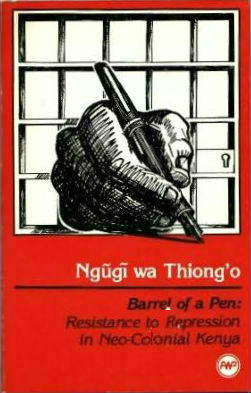
Ngũgĩ challenged us to write in our Indigenous languages, a bold idea that publishers were not keen on at that time. I told him, “I’m starting a publishing house,” and we went on to publish Barrel of a Pen with New Beacon Press. Though it was not our first release, it was the initial push that launched everything.
For those unfamiliar, could you tell us about Africa World Press and what the early days were like?
At Africa World Press we have published over 3,000 titles, that’s around 60 books each year. Except for printing, we used to handle everything in-house: layout, copy editing, proofreading, indexing. In those early days, our biggest challenge was distribution. We were good at promoting our books, but getting them into the mainstream market was tough. When I approached large US booksellers, I kept hearing the same thing: “These are great books, but who wants to read about Africa? There’s no market for it.”
I’ve always challenged the idea of “no market” for African books. If that were true, then there is no market for books on Latin America, India, or anywhere else. In 1985, I decided to start my own distribution company, the Red Sea Press. That’s why we have two imprints: Africa World Press and Red Sea Press. Over time, Red Sea Press also began publishing, focusing on the Horn of Africa, Asia and other parts of what we call the African world. When movements rose in Chile and Argentina, like the Mothers of Plaza de Mayo, we published their voices too.
We are a small company; at our peak, we had 48 employees. Looking back, it was probably naive to think the market alone would cover our costs. In reality, I relied heavily on personal resources, support from family, and the generosity of friends around the world.
Our goal with Red Sea Press was to support the growth of Black-owned bookstores, especially in African American communities. By around 1990, we had helped establish 286 Black bookstores across the USA. We did not own them, but we offered books at generous discounts and flexible terms, supporting everything from kiosks to sidewalk setups in neighbourhoods like Harlem, New York.
These grassroots efforts gained us momentum and, by the early 1990s, major chains like Barnes & Noble and Borders began to take notice. They saw there was a real market and started adding small Black Studies sections in their stores. This marked the beginning of broader recognition and growth for African and African American literature.
How did you manage to develop your publishing relationships in the early stages? What were the initial challenges and rewards?
As a new publisher, I didn’t have the resources to do everything, so I reached out to friends in South Africa, which during apartheid was impossible to travel to. In the UK, I collaborated with partners like James Currey at Heinemann and New Beacon Books. One of the smartest things I did was begin co-publishing, and I partnered with Bill Eerdmans Publishing House.
Through co-publishing, we released major titles like Hope and Suffering by anti-apartheid and human rights activist Bishop Desmond Tutu, which sold thousands of copies. We also worked with churches, institutes and nonprofit organisations. These collaborations were essential in building momentum, credibility and sustaining the press.
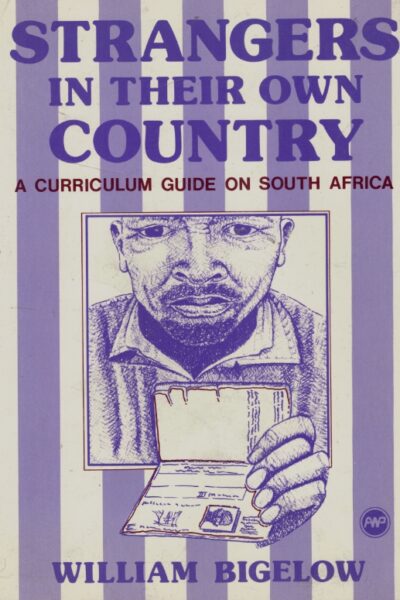
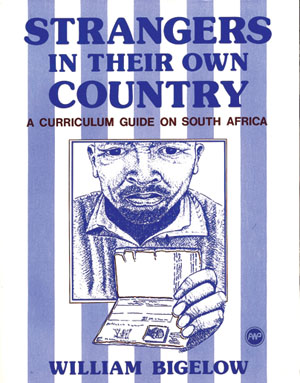
One key milestone was co-publishing a curriculum on South Africa (Strangers In Their Own Country, Bill Bigelow 1985) full of stories, poems, news articles and historical readings, supported by a grant from the Women’s Division of the Methodist Church in New York. Their help allowed us to publish the book and distribute it in classrooms across the USA. It sold around 50,000 copies.
As a novice, that kind of success was thrilling, even overwhelming. But moments like that were tied to specific historical contexts and couldn’t easily be repeated, especially for books on lesser-known places. To build the required momentum, I leaned on international relationships working with publishers like David Philip, later (New Africa Books) in South Africa and James Currey in the UK. These collaborations were crucial and helped reduce production costs and broaden our reach.
Looking back, I was fortunate. My activism had connected me with people I could trust, and those relationships became the foundation for an international co-publishing network.
Who have been your favourite authors or publications?
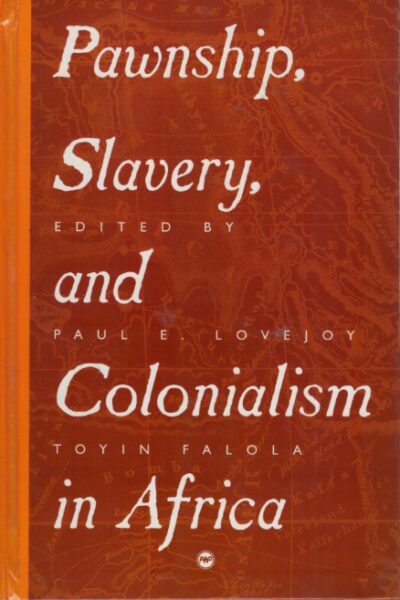
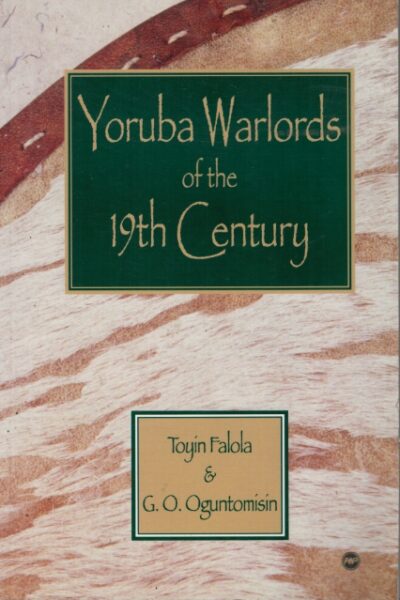
All my authors are my favourites, but a few stand out. As mentioned previously, I’ve worked closely with Ngũgĩ wa Thiong’o and Nigerian historian Toyin Falola. I also published American philosopher Molefi Kete Asante’s Afrocentricity, which was the first book to introduce that concept, which later became a global movement. Later, Prof. Paul Lovejoy at York University in Canada started The Harriet Tubman Series on historical studies that still continues to this day.
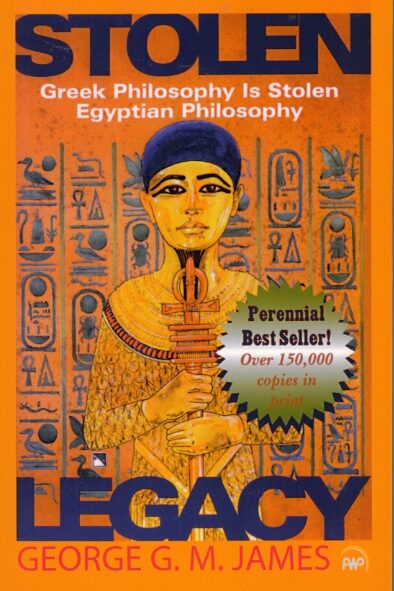
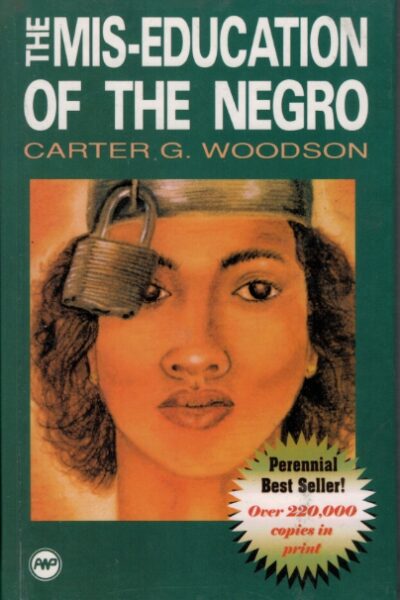
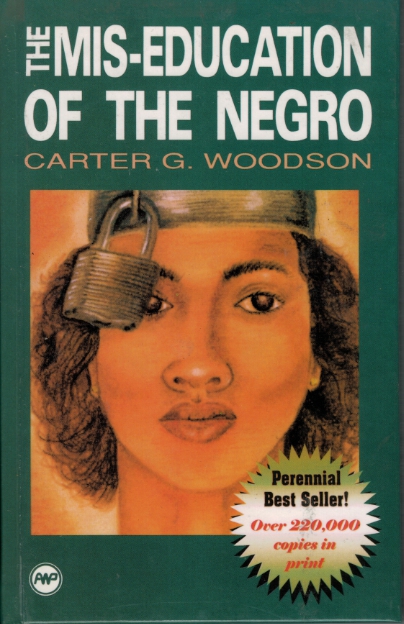
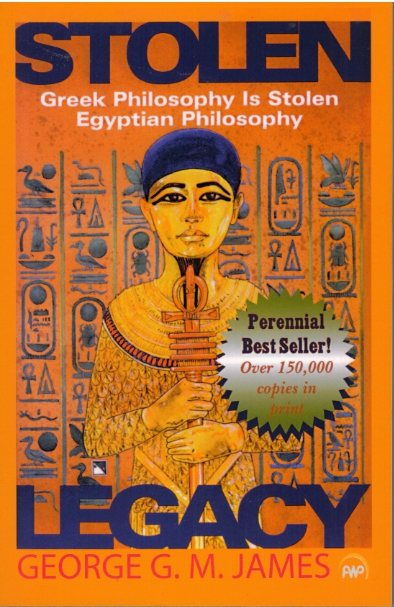
Early on, I also focused on republishing out-of-print classics. Two key titles were The Mis-Education of the Negro by Carter G. Woodson and Stolen Legacy by George G. M. James. The latter argues that many foundations of Western civilisation especially in philosophy, science and education actually originated in ancient Africa, particularly Egypt. These bestsellers anchored our press financially, allowing us to publish more niche works.
Many books we publish today may only sell a few hundred copies, especially those on African languages or critical social science topics. They’re not necessarily trendy, but they are essential, and that’s why we keep doing this work.
How has colonialism shaped the history of publishing in Africa, and how did that influence your decision to become a publisher?
Choosing to become a publisher was a difficult and radical path. Traditionally, publishing has always been a pursuit of the wealthy or is supported by powerful institutions like the church, mosques or states. It was rarely accessible to people without resources.
With the rise of colonialism, many publishers became what I call “reflective publishers” from people who travelled and then wrote about their experiences, often from a position of power. These stories typically followed a narrative like: “I conquered India, and here’s how I did it.” That’s why libraries are filled with books written from a colonial perspective.
Missionaries also played a major role in publishing in Africa. They produced language education materials, for example dictionaries, grammar books, and translations which, while significant, shaped how local people engaged with language and knowledge production.
The third important force in publishing was the [British] Empire itself. For example, the British High Commission promoted the English language by creating libraries and institutions like the Zimbabwe and Kenya African Literature Bureaus. These bureaus published simplified, accessible English books, often considered “classics”. While they did help promote reading and writing, their main purpose was not to serve the colonised, but to advance the interests of the British Empire; however, people under colonial rule often used those same institutions to resist. In places like Zimbabwe and Kenya, writers began producing anti-colonial literature, sometimes using the very platforms the Empire had established. Eventually, they pushed back further by writing in their own languages.
This was a form of bottom-up subversion: turning the Empire’s tools into instruments of resistance within African and other colonised societies.
How has your background influenced your identity and career path?
I grew up in a small community called Edaga Arbe, just outside Asmara, the capital of Eritrea. I was born in the 1940s, during a period of transition from Italian colonial rule to British administration, and later Ethiopian control.
Asmara, though built by Eritrean labour, was designed for colonial settlers. The goal was to recreate a “Little Rome,” complete with modern infrastructure, cultural venues and religious institutions, but it was not built for us. Eritreans lived on the outskirts of the city in communities like Edaga Arbe, serving the settler population.
As a child, I remember needing to take a bus or bike just to enter the city, and even then, we were restricted in where we could walk. In many ways, apartheid was already in place in Asmara, which was a city divided by race and power. That experience left a lasting impression on how I see colonialism, identity and resistance.
I was fortunate to grow up with a father who was deeply involved in both the anti-colonial movement and the Orthodox Church. He helped publish a church newspaper called Senbettie, which left an impression on me. I came to see publishing and writing as forms of resistance.
Later, I saw the same power in the anti-apartheid movement. For me, publishing has always been political and a tool for challenging injustice and inequity.
What does Pan-Africanism mean to you, and what role do you think the African diaspora should play?
Pan-Africanism is deeply important for me and rooted in my upbringing. I remember the only radio we had at home was always tuned to Egyptian broadcasts. They spoke about liberation struggles, anti-colonial resistance, and leaders like the revolutionary Egyptian president Gamal Abdel Nasser, who championed both Pan-Arabism and Pan-Africanism. I often saw my father nodding in approval; the idea that Africa must be free left a strong impression on me.
In the 1950s, Eritrea was very active politically. I witnessed huge demonstrations as a child, and phrases like “Africa must be free”, “Free Ghana” or “End apartheid in South Africa” were common.
Growing up, we were also heavily influenced by American culture. Through the US military base in Asmara, we were exposed to rock ‘n’ roll and jazz but, more importantly, the soldiers regularly discarded books and magazines, which we would buy for a few cents at the local market. Most of it was light reading, but we read everything. Even if the content wasn’t always meaningful, it helped develop our interest in literature and curiosity.
By the time I reached high school, I had become more politically aware and conscious of my identity as an African. I was part of a music group called The Harambee (named after a Swahili word meaning “let’s pull together”.) It was an activist group in support of the anti-apartheid movement in South Africa. I also began connecting with other Africans, which helped broaden my sense of solidarity and purpose.
We closely followed revolutionary movements in places like Syria, Egypt and Algeria. These global struggles shaped my thinking. I didn’t just see myself as Eritrean or Ethiopian — I saw myself as a Pan-African. Africa became my continent, a place I felt responsible for. I believed it needed to be studied, supported and liberated.
When I moved to the United States, my commitment to Pan-Africanism deepened. I formed solidarity associations and distributed flyers about the liberation struggles in the Portuguese colonies such as Angola, Mozambique and Guinea-Bissau. I also connected with South African and Namibian revolutionaries, helping to circulate their publications and raise awareness.
Pan-Africanism was, and still is, central to my identity. But as I grew older, I began to see it as part of a larger global struggle, one shared by all people oppressed by empires, regardless of race or geography. These struggles, whether in Africa, Latin America, or Asia, all resist the same forces that strip away cultural, social and economic autonomy.
That broader perspective led me to support other global movements. I became active in the East Timor independence struggle and worked closely with José Ramos-Horta, encouraging him to finish his manuscript. I eventually published his book Funu: The Unfinished Saga of East Timor’s Struggle for Independence.
So, while I began rooted in Pan-Africanism, my activism grew into a broader internationalism as I became more committed to supporting all people fighting for freedom and dignity.
How can we ensure that knowledge production, which is currently dominated in the northern hemisphere, becomes more inclusive of contributions from the Global South?
Knowledge production has existed for millennia, whether in Asia, the Mesopotamian Valley, or Africa. Civilisations have always been producing knowledge, so the real issue was the lack of global networks to share it.
Even before colonialism, Africans sought connection. That’s why, to this day, you can walk down a street in India or Pakistan and see people of African descent who didn’t arrive through colonial routes but through choice. They are part of those societies.
We now live in a time where it’s easier than ever to build networks and share knowledge; the digital era gives us the tools to expand that work.
What tips would you give to someone to expand their knowledge now that we are in the digital world? Is there anything that you would recommend?
The digital world has changed everything especially for publishing and education in Africa. It’s now easier, cheaper and more flexible to communicate, share and access knowledge. But in much of Africa, internet access is still limited. Approximately 95% of people connect through mobile phones, which they use not only to keep in touch with family but also for business and learning.
So, while digital tools are essential for the future, we still rely heavily on print. I may be in my late 70s, but it’s clear we need to prepare the next generation for a digital-first world.
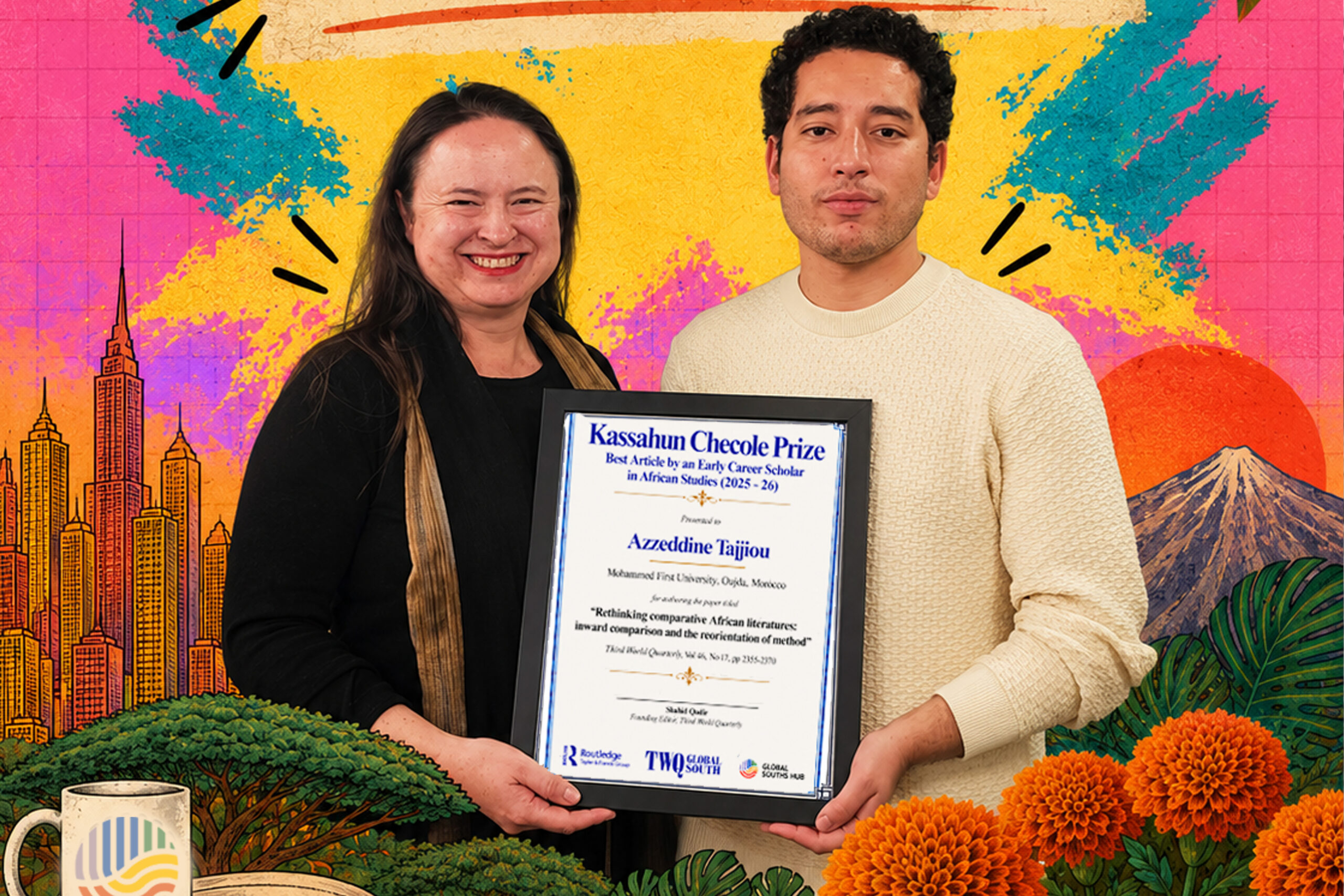
What does the launch of a prize (Kassahun Checole Award) in your honour mean to you?
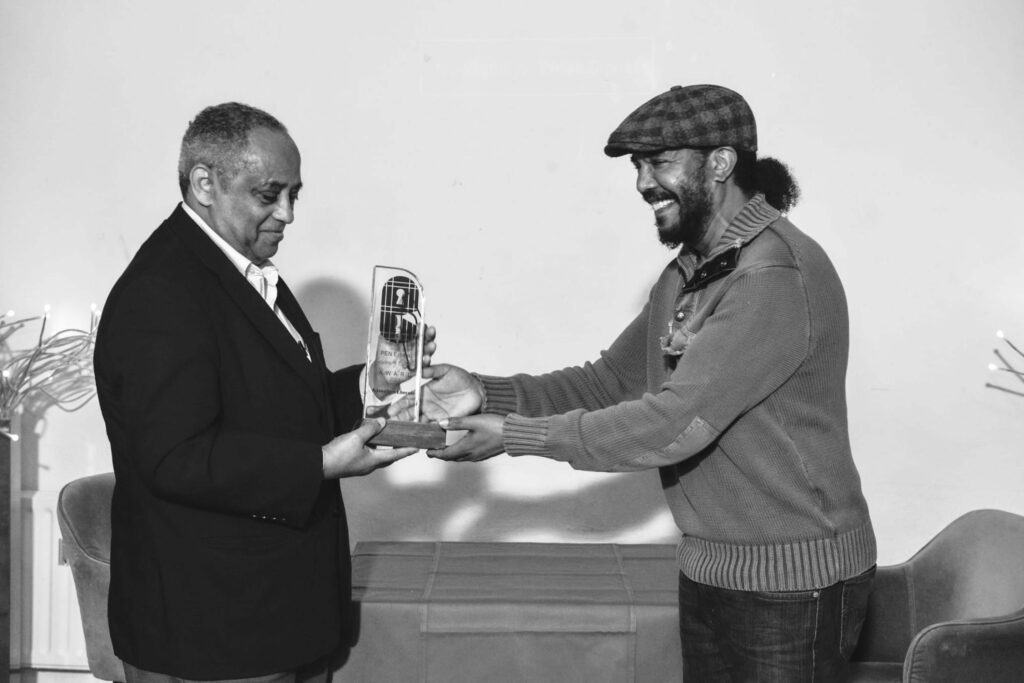
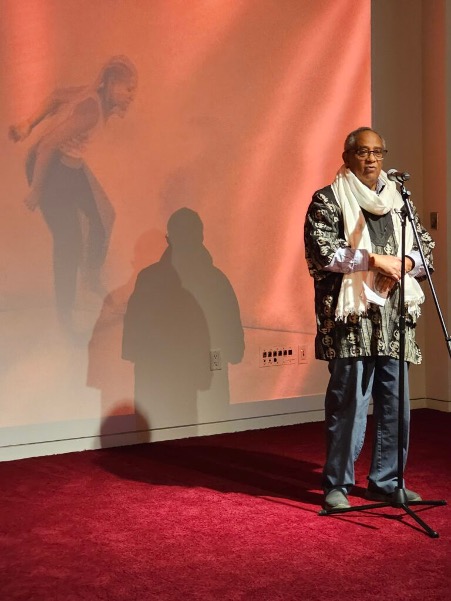
Being honoured with the Kassahun Checole Award was a surprise and a deep honour. I’m not someone who seeks recognition, but what matters most to me is that the award can open doors for young people. If it helps them publish their first piece, share their creativity, and get noticed by others, then it’s truly meaningful.
That first opportunity can be life changing. So, for me, the real gift is seeing new writers emerge and realise they have something valuable to say. It’s a humbling thing for a small-time publisher from Trenton, New Jersey with origins in a small country, like Eritrea, to be part of that journey.
Kassahun Checole Prize in African Studies
⏰ Submissions close on 1 July 2026
The prize aims to support and amplify African scholarship and writing, offering an important outlet for early-career researchers and writers working on African topics.
Who can apply?
- Early Career Researchers (ECRs)
- African writers and scholars writing on African contexts
This initiative recognises the importance of knowledge production rooted in lived realities, critical inquiry, and Global South perspectives, and contributes to expanding the global reach of African studies.
Read more from Africa World Press: