What can the encounter between childhood and militarisation reveal about international politics? Marcos do Vale Araujo, a PhD Candidate in International Relations at the State University of Rio de Janeiro, Brazil, attended the British International Studies Association (BISA) 2026 Annual Conference in Brighton, and reflects on how the conversations on childhood, militarisation, and global politics challenged familiar assumptions.
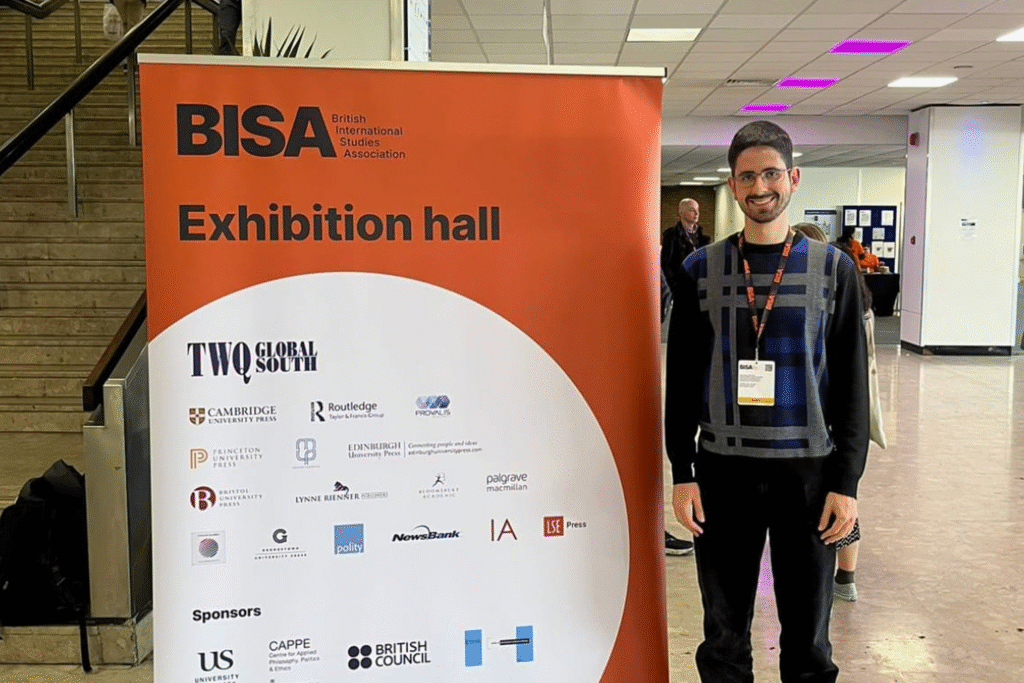
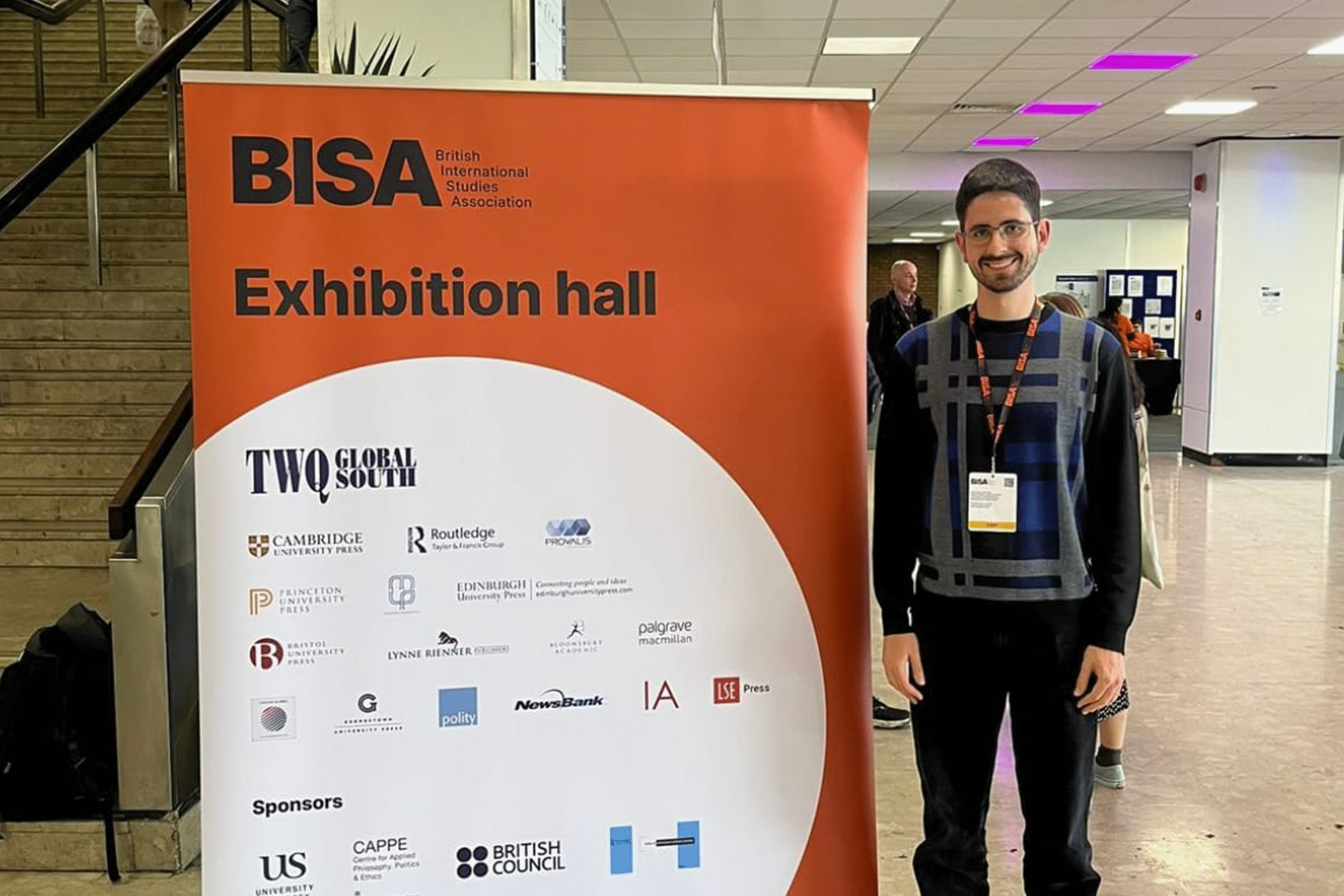
Between 2-5 June, I attended the British International Studies Association (BISA) Conference which focused on the theme “Is International Studies ready for what comes next? New thinking, new directions”. As someone who engages with International Relations through a critical lens of childhood and militarisation, the conference’s emphasis on renewing thoughts and paths of inquiry was particularly striking.
Within dominant International Relations (IR) discourse, childhood is rarely treated as a meaningful topic of inquiry. Rather than being understood as inherently political, childhood is framed through a universal, spatial and temporal narrative centred on protection, development, and innocence. In other words, to as Jana Tabak argues in her book, The Child and the World: Child-Soldiers and the Claim for Progress (University of Georgia Press, 2020) to speak about childhood within mainstream IR is to speak about disciplinary practices or measures aimed at safely ensuring the progressive transition of children into adulthood, while simultaneously guaranteeing a progressive future for the world. In conceptions of Enlightenment thinkers, childhood positions a child as a man/woman in the making. The child’s perceived lack of humanity is therefore not understood as a deficiency to be overcome, but as the potential to become a productive citizen in a stable social order.
Yet, however self-evident this conception of childhood may appear, childhood often acts as an imaginary through which identities and differences in the lived experiences of children are negotiated and controlled within modern political life. This is discussed in Children, Childhoods, and Global Politics by J. Marshall Beier and Helen Berents where childhood is not a predetermined social fact, but a historically and politically constructed category. It produces moral orders shaped by unequal power relations, conferring legitimacy on some actors, while marginalising others. These moral orders determine whose lives are deemed worthy of protection, whose voices are heard, and who is authorised to intervene.
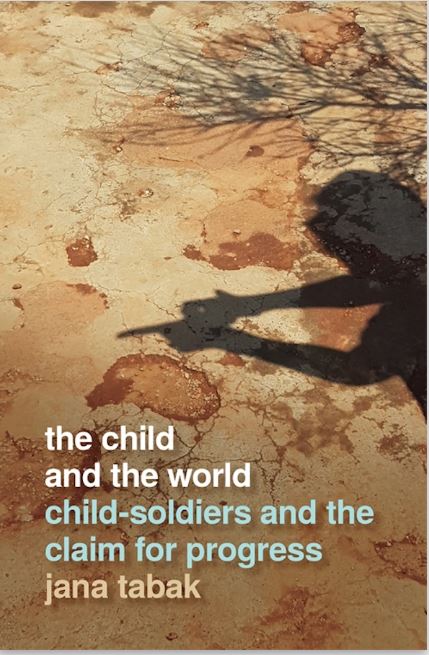
Jana Tabak (University of Georgia Press)
Edited by J. Marshall Beier and Helen Berents (Bristol University Press)
One example of this is how the iconography of childhood mobilised by humanitarian networks. By invoking children as inherently dependent and vulnerable, humanitarian campaigns often try to legitimise Western intervention in the Global South, on the premise that development and protection can only be achieved with their external assistance. In doing so, these representations reinforce unequal global hierarchies while obscuring the agency and diverse lived realities of children themselves.
Militarism and Militarisation
Militarisation, meanwhile, is primarily seen as the antithesis of security. It usually refers to the process of formal and informal actions by which states and non-state actors prepare for and engage in armed conflict. This includes military build-ups, the development of material war capabilities, and military strategies. As such, it is primarily understood in IR through the framing of states’ foreign policies and national defense. From this conventional perspective, studying militarisation means examining how states organise and legitimise the use of systematic violence. This ranges from structuring defense budgets to employing direct military force against other actors. In mainstream IR, militarisation is therefore largely treated as a matter of state policy and security strategy.
However, militarisation extends far beyond military institutions or preparations for war. It also refers to the cultural and social processes through which violence and military power become normalised as a legitimate response to insecurity in both everyday and geopolitical contexts. To conceive militarisation in this way is to see how it not simply disseminated through an ideology, but it is also embedded within culture through practices and values. This is described by Yagil Levy in a chapter, Militarism and Militarization in the Research Handbook on Civil–Military Relations. It also goes beyond romanticising the military by enacting military values through celebrations of war remembrance (commemorative rituals and public remembrance ceremonies), sports activities (military flyovers, patriotic ceremonies, and Armed Forces tributes at sporting events), militarised education programmes (Boy Scouts, military recruitment in schools, and cadet programmes), and consuming popular culture through reality TV shows (military competition shows portraying soldiering as entertainment).
“However, militarisation extends far beyond military institutions or preparations for war. It also refers to the cultural and social processes through which violence and military power become normalised as a legitimate response to insecurity in both everyday and geopolitical contexts.”
Marcos do Vale Araujo
To explore new directions in International Studies is to recognise how childhood and militarisation, two different but deeply interrelated complex social forces are shaping our understanding of the International as something way beyond an external domain detached from daily lives, but as a political space enacted in the everyday, shaped by our ideas, experiences, and actions in the world.
How are Childhood and Militarisation Connected?
Childhood and militarisation are deeply intertwined. For example, this relationship is evident in the knowledge-power relations between humanitarian actors and those often labelled as “child soldiers” within peacebuilding practices in conflict-ridden states. These initiatives are often framed around a clear distinction between vulnerable children in need of protection and humanitarian actors who are responsible for providing it.
However, as Sylvie Bodineau demonstrates in her 2024 ethnographic study (2024) of a Disarmament, Demobilization and Reintegration (DDR) programme in the Democratic Republic of the Congo, these relationships are more complex. Sylvie displayed how former child soldiers went from the figure of passive victims to agents with rights. At the same time, humanitarian workers did not simply act as heroic saviours but became facilitators working alongside children in shaping the reintegration process. This example challenges the conventional binary roles of protector and protected, showing instead how childhood and militarisation are co-constituted through everyday political encounters.
The relationship and encounter between childhood and militarisation also informs the multiple ways in which children are socialised into the Armed Forces, not only in the Global South but also in the Global North through militarised pedagogical practices aimed at constructing citizenship through military service. In his analysis of the British Army’s This is Belonging campaign, Rhys Crilley (2019) dissects how the UK state targets youth as young as sixteen by fostering what he conceptualises as a “child soldier culture.” He demonstrates how the liberal state actively cultivates militarised subjectivities by seamlessly integrating recruitment marketing with spheres of leisure, play, and youth entertainment, thereby normalising the enlistment of minors.
JROTC as a Site of Everyday Militarisation
In my own research, I am looking at the pedagogical practices of the United States’ Junior Reserve Officers’ Training Corps (JROTC) programme to explore how childhood and militarisation intersect in everyday educational settings. Rather than understanding recruitment of children solely as the formal act of enlistment, I argue that it is actually more a process marked by the gradual normalisation of military values, ideological alignment, and forms of belonging by such programmes and happens many years before young people decide to join the Armed Forces.
For instance, in schools hosting a JROTC programme, children have weekly contact with military instructors appointed by one of the six branches of the Armed Forces. This engagement spans a range of activities, from military science classes to shooting competitions, and is built on the premise that the skills and abilities developed during the programme are crucial to fostering success in adult life and shaping the contours of citizenship.
By exploring how childhood and militarisation intersect in building political belonging and shaping children’s understandings of citizenship, belonging, and the state, I found my work closely aligned with BISA’s commitment to fostering transdisciplinary approaches to understanding the International. The diversity of perspectives, scholars, and students I encountered throughout the conference provided invaluable opportunities to share my research progress, receive thoughtful feedback and gain new insights that will inform the next stages of my work.
Why I Attended BISA: Motivation and Expectation
As my Visiting Graduate Student period at McMaster University in Canada comes to an end, BISA 2026 gave me room to expand networking and productive contacts with students and professors from all over the world. As an early career scholar working at the crossings of Critical Childhood Studies and Critical Military Studies (CMS), BISA offered a unique space to talk to renowned scholars who showed me nuanced ways of applying a youth lens to International Studies. As displayed in the title of one of the conference’s roundtables, to integrate a youth lens across International Studies is to put childhood, children and youth at the forefront of our understanding of global politics. Rather than treating them as peripheral actors, this way of thinking highlights exploring how youth perspectives shape the way we discuss different topics, such as peacebuilding and climate change.
This was evident in the panel “Shaping the international through a lens of accountability to children and young people”, where Sabrina White and Katie Hodgkinson (both from Leeds University) talked about their work addressing the persistent imbalances in the development and humanitarian sectors by exposing the lack of accountability that organisations often have towards their beneficiaries (the children and young people they support). Drawing on a new analytical framework, they demonstrated how youth-led insights on accountability can improve child protection practices and make humanitarian interventions more effective.
In the same vein, Amandine Orsini’s (Université Saint-Louis – Bruxelles (USL-B) presentation investigated the possibility of adopting a youth lens to International Studies. Amandine, a specialist in global environmental politics, explored how it is possible to rethink climate litigation strategies by considering the use of legal and communication tools from youth to shape climate policy agenda and promote environmental justice. Together, these presentations illustrated how taking children and young people seriously as political actors opens new avenues to think about accountability, participation, and global governance within International Studies.
My Contribution and Enlightening Panels: Reframing Militarised Childhoods in Liberal States
At the conference, I presented a paper co-authored with Jana Tabak, my PhD supervisor at the State University of Rio de Janeiro and a leading Brazilian scholar in IR and childhood studies, titled “The Hyphen’s Work: Reframing Militarised Childhoods in Liberal States”.
In the paper, we reconsider dominant assumptions about militarised children by moving beyond stereotypes of the child soldier rooted in deviance, victimhood, and pathology. Resisting the supposedly self-evident representation of the child soldier as a symbol of ‘failed childhood’, we explore how this figure is socially and politically constructed. Its meaning is contingent upon the type of military activity and the recruiter. While the recruitment of children by armed groups is widely condemned, the ideological alignment of children with military institutions is often encouraged within liberal states through programmes that promote military values as a means of developing physical and mental capacities in many societies. Our paper questions why some forms of childhood militarisation are condemned while others are normalised and celebrated.
Classified as being a symbolic ‘phenomena’ of the so-called ‘new wars’ of the post-Cold War, child soldiers have attracted unparalleled attention from the global press and became the main banner or focus of humanitarian missions. This visibility has been shaped by the powerful images and narratives of racialised boys carrying weapons larger than their bodies, becoming popular in cultural and media narratives that reproduce them simultaneously as innocent victims and dangerous monsters. This was explored in Jana Tabak’s book, The Child and the World: Child-Soldiers and the Claim for Progress.
Within the legal and normative architecture of the international children’s rights regime, the discourse of the child soldier thus not only coalesces into a stereotypical representation of the militarised child, but also reproduces the view that childhood and militarisation are paradoxical or inherently contradictory in nature. Yet this view overlooks a longer historical reality that children have been forced to take part in war and war-preparation efforts throughout modern history.
Simplistic accounts of child soldiers obscure this complexity. As David Rosen (2015) rightly reminds us in his book, Child Soldiers in the Western Imagination: From Patriots to Victims that “over the centuries many children—heroes, villains, patriots, and victims—have been child soldiers,” citing figures as diverse as Joan of Arc, Carl von Clausewitz, Andrew Jackson, Moshe Dayan, Yasser Arafat, Ishmael Beah, and even Dr. Ruth Westheimer were child soldiers”.
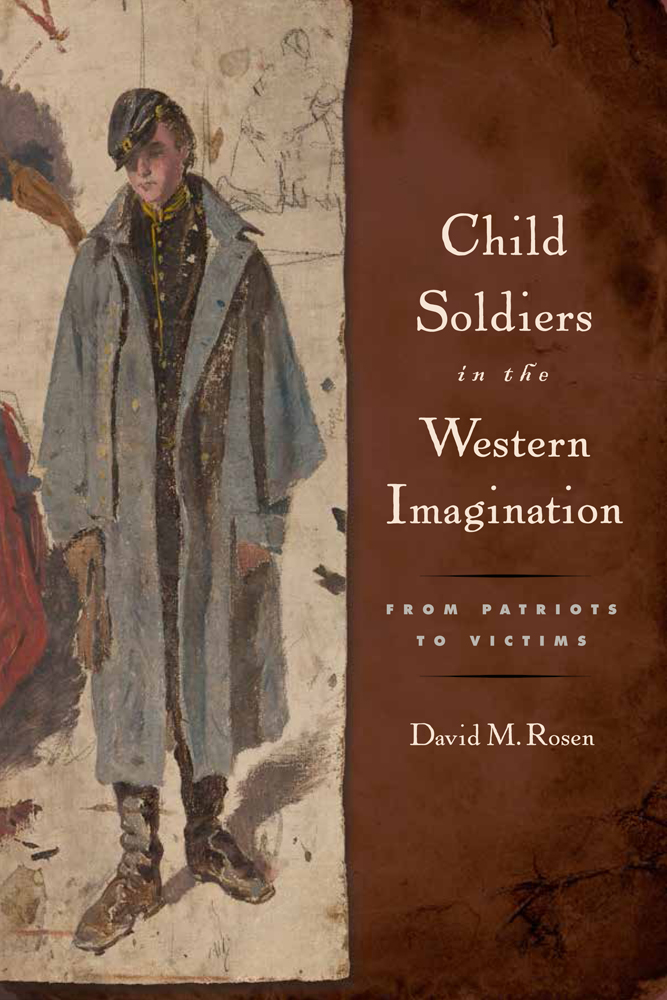
From Patriots to Victims
David M Rosen (Rutgers University Press)
By challenging this presumed paradox between childhood and militarisation, we explore how children participating in the United States Junior Reserve Officers’ Training Corps (JROTC) National Air Rifle Championship are positioned not only as symbols of the nation, but also as active enactors of desirable forms of citizenship. In other words, by engaging in the competition activities, JROTC children are disciplined, socialised and governed through the embodiment of the programme into military-oriented ideals, embodying models of leadership, responsibility, and patriotism that the programme presents as essential qualities of future citizens.
To explore this process, we identified recurring themes in video testimonies given by children, their families and military instructors as featured in displayed videos of the 2023 and 2024 JROTC National Air Rifle Championship by the Civilian Marksmanship Program (CMP). We examined the different ways in which their interactions shaped how children developed militaristic identities. In doing so, we show how this process crafts how children and young people define what it means to be a ‘good citizen’, revealing that militarisation operates through everyday educational and social practices from an early age rather than solely through formal military institutions.
While our paper aims to disturb and challenge the normalised presence of military power within civillian life, it also questions the rigid binaries that separate the child from the adult, and peace from war. These arguments resonated strongly with other delegates, many of whom were simply exploring how such critiques become possible when childhood is understood as a political, discursive, and imagistic resource rather than a self-evident category.
From this perspective, childhood is not a universal stage of life for everyone. Instead, childhood is a social construction that is incorporated into social structures by outlining or prescribing certain forms of conduct (e.g. obedience, protection, discipline). As scholars such as J. Marshall Beier and Chris Jenks have argued, these ideas are mobilised to legitimise a wide range of political projects by positioning children as passive subjects in need of guidance and intervention. Understanding childhood in this way reveals how it operates not only as a social category but also as a powerful resource through which relations of power are produced and sustained.
Our Panel “Childhood as a Technology of Global Governance”
Our Panel “Childhood as a Technology of Global Governance” was organised by J. Marshall Beier (McMaster University, Canada) and Helen Berents (Griffith University, Australia), leading scholars in international relations and childhood studies, whose extensive work has been instrumental showing how childhood shapes political life by organising actors, policies, and imaginaries of the International.
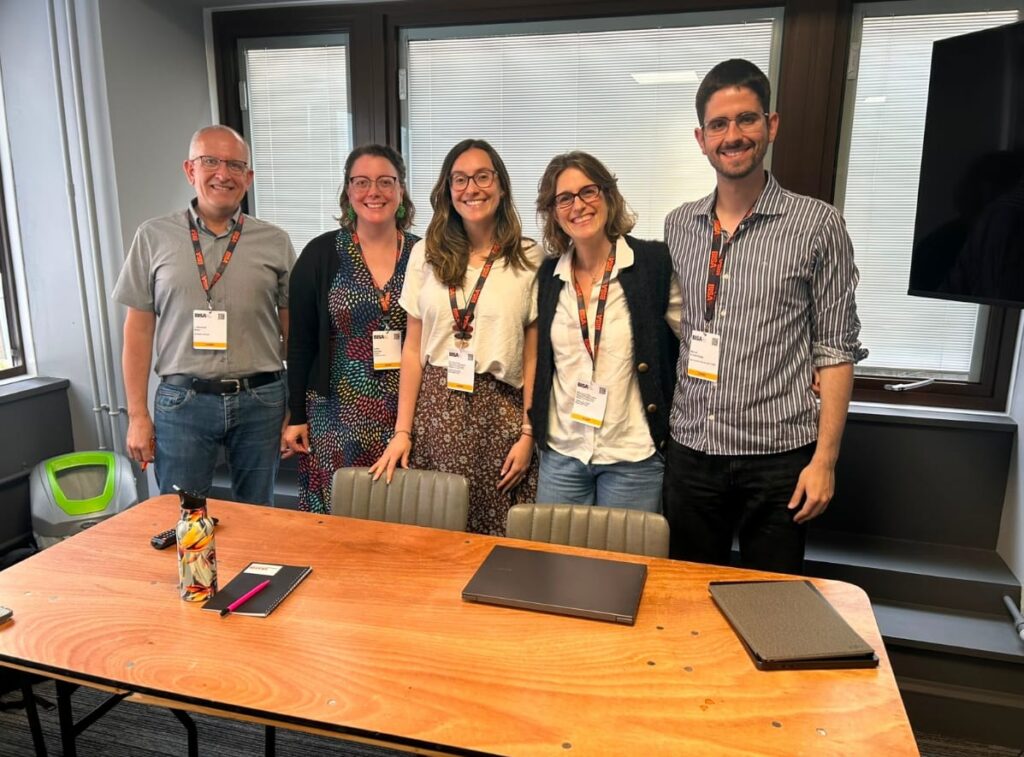
Beyond our panel, several roundtables and sessions were equally influential in encouraging participants to approach military power as a question or subject of inquiry, rather than a given fact. As Basham, Belkin and Gifkins (2015) argue in their seminal paper, having a sceptical curiosity about how military power works through social and domestic political agendas that do not necessarily refer to the conventional role of protecting the state from external threats. This approach has been central to leading scholars in Critical Military Studies such as Cynthia Enloe (Clark University, United States) and Victoria Basham (Cardiff University, United Kingdom) over the last decade.
Another particularly noteworthy contribution about this scholarly movement at this year’s BISA Conference was the Panel “Critical Dialogues on Militarism and Militarization: Non-hegemonic inquiries from the Margins“. Predominantly composed of leading Brazilian scholars in Critical Military Studies, the panel reflected on the diverse manifestations of militarisation, ranging from the role of military authority in disaster governance and the militarisation of the everyday life of students attending the university in Brazil, to critical reflections about the rise of far-right authoritarianism and the growing use of surveillance technologies.
Final Reflections on BISA 2026
In an era of growing distrust of expertise and increasing attacks on critical thinking and scientific research, participating in BISA reinstated the importance of continuous persistence and commitment, to work that reflects, mobilises, and builds alternatives to conventional ways of thinking. The conference also reinforced the need to continually question established assumptions, not only in international politics, but also within the uneven and often militarised spaces that children and adults inhabit at the intersection of the everyday and global politics.
By doing so, we are better equipped to understand the harmful effects of militarisation, and to build fruitful avenues to foster democratic governance and a more peaceful future. Achieving this requires us to recognise childhood and children not as peripheral to international politics, but as central to how politics and policy are understood and made.
I am deeply grateful to the Global South Colloquium Fund (GSCF) for providing a travel grant that helped offset the expenses associated with my trip to Brighton. Their generous support enabled my participation and greatly enriched my experience. I sincerely appreciate this valuable contribution.
Further Reading
- Åhäll, Linda. 2016. The Dance of Militarisation: A Feminist Security Studies Take on ‘the Political. Critical Studies on Security 4 (2): 154–68.
- Andrade, Lucimary Bernabé Pedrosa De. 2010. Educação infantil: discurso, legislação e práticas institucionais. Editora UNESP.
- Basham, Victoria M. 2018. Liberal Militarism as Insecurity, Desire and Ambivalence: Gender, Race and the Everyday Geopolitics of War. Security Dialogue 49 (1–2): 32–43.
- Basham, Victoria M., Aaron Belkin, and Jess Gifkins. 2015. What Is Critical Military Studies? Critical Military Studies 1 (1): 1–2.
- Beier, J. Marshall. 2024. Not the Usual Suspects: Making Child Soldiers in the Gunsight. Civil Wars 26 (4): 676–94.
- Beier, J. Marshall, and Helen Berents, eds. 2023. Children, Childhoods, and Global Politics. Bristol University Press.
- Bodineau, Sylvie. 2024. Refusing to Be Victims: Child Soldiers in the Humanitarian World. In Research Handbook of Children and Armed Conflict, edited by Myriam Denov and Maya Fennig. Edward Elgar Publishing.
- Butterworth, Michael L., ed. 2017. Sport and Militarism: Contemporary Global Perspectives. 1st ed. Routledge.
- Crilley, Rhys. 2019. This is Belonging: Children and British Military Recruitment. In Research Handbook on Child Soldiers, edited by Mark A. Drumbl and Jastine C. Barrett. Cheltenham: Edward Elgar Publishing.
- Harding, Scott, and Seth Kershner. 2018. A Borderline Issue’: Are There Child Soldiers in the United States? Journal of Human Rights 17 (3): 322–39.
- Jenks, Chris. 2005. Childhood. Second Edition. Routledge, Taylor & Francis Group.
- Kaempf, Sebastian, and Roger Stahl. 2023. Elimination Games: The Global Rise of Military Reality TV and the Shaping of the Citizen Subject. Millennium: Journal of International Studies 51 (3): 643–62.
- Lee-Koo, Katrina. 2011. Horror and Hope: (Re)presenting Militarised Children in Global North-South Relations. Third World Quarterly 32 (4): 725–42.
- Levy, Yagil. 2024. Militarism and Militarization. In Research Handbook on Civil–Military Relations, edited by Croissant, Aurel, David Kuehn, and David Pion-Berlin. Edward Elgar Publishing.
- Lutz, Catherine. 2002. Making War at Home in the United States: Militarization and the Current Crisis. American Anthropologist, New Series 104 (3): 723–35.
- Manzo, Kate. 2008. Imaging Humanitarianism: NGO Identity and the Iconography of Childhood. Antipode 40 (4): 632–57.
- Rosen, David M. 2015. Child Soldiers in the Western Imagination: From Patriots to Victims. The Rutgers Series in Childhood Studies. Rutgers University Press.
- Stavrianakis, Anna, and Maria Stern. 2018. Militarism and Security: Dialogue, Possibilities and Limits. Security Dialogue 49, no. 1-2 (February): 3–18.
- Tabak, Jana. 2020. The Child and the World: Child-Soldiers and the Claim for Progress. University of Georgia Press.
- Tabak, Jana. 2025. “Tools of War, Tools of State: Stories of the Child Combatant in Global North–South Relations.” In Children and Violence: Agency, Experience, and Representation in and Beyond Armed Conflict, edited by Christelle Molima Bameka, Jastine C. Barrett, Mohamed Kamara, Karl Hanson, and Mark A. Drumbl. Taylor and Francis.
Marcos do Vale Araujo
Marcos do Vale Araujo is currently pursuing a PhD in International Relations at the State University of Rio de Janeiro (PPGRI-UERJ), where he also earned his Master’s degree. He holds a bachelor’s degree in Defense and International Strategic Management from the Federal University of Rio de Janeiro (IRID-UFRJ). He serves as a researcher at the Security and Defense Studies Laboratory (LabSeg – UERJ), the Media, Culture, and International Relations Studies Laboratory (LEMCRI/CNPq/UERJ), and the International Defense and Security Studies Group (GEDES-Rio/UFRJ-UERJ-UFRRJ). His research interests encompass Critical Childhood Studies, Critical Military Studies, and Critical Security Studies, with a focus on the militarisation of children and the politics surrounding child soldiers.