In this Q&A Poshali Goel, a filmmaker and editor with a background in design based in Delhi, India, talks about her film Heli, which follows the lives of two siblings whose love for singing carries Bhakti poetry into both public and private worlds. Made as part of her master’s thesis, Heli explores gender dynamics and artistic traditions in India’s Rajasthan.
How did you first become interested in filmmaking?
It began during my master’s in visual anthropology at Goldsmiths UoL, where I started exploring different kinds of films and got drawn into the filmmaking process. We watched and experienced a wide range of work and, as a group, kept returning to the political questions they raised – about filmmaking, context, and power. That shared a way of looking at films that opened up the form for me and pushed me to try different things when creating my own work. We also looked at how visual anthropology as a field is shifting over the years – with more subjectivity, collaboration, and participation from people and communities around the world.
Can you give an overview of Heli — where was it filmed, and what first drew you to the story?
Heli was filmed across several villages (Chattangadh and Chelak primarily) in the outskirts of Jaisalmer, Rajasthan. It follows two siblings who carry Bhakti poetry through song. We travelled with Mahesha Ram, a Meghwal singer and his troupe as they performed all-night satsangs (spiritual gatherings) in upper-caste neighbourhoods. However, his sister, Jamuna Bai, sung mostly at her home in a more intimate settings. The film sits in that liminal space – between public and private. It was fascinating to observe and quite a challenge to capture how that space was enabled and created by the common thread of Mira Bai’s life.
What first drew me in was Kabir Das’ poetry, sung by Mahesha Ram. Kabir sits in between so many binaries. Growing up, I had studied Kabir’s dohas in school, but hearing Mahesha Ram and his contemporaries sing these couplets opened up a new interest in Bhakti poetry. However, the story that became Heli emerged much later – after spending more time with him and learning about his life.
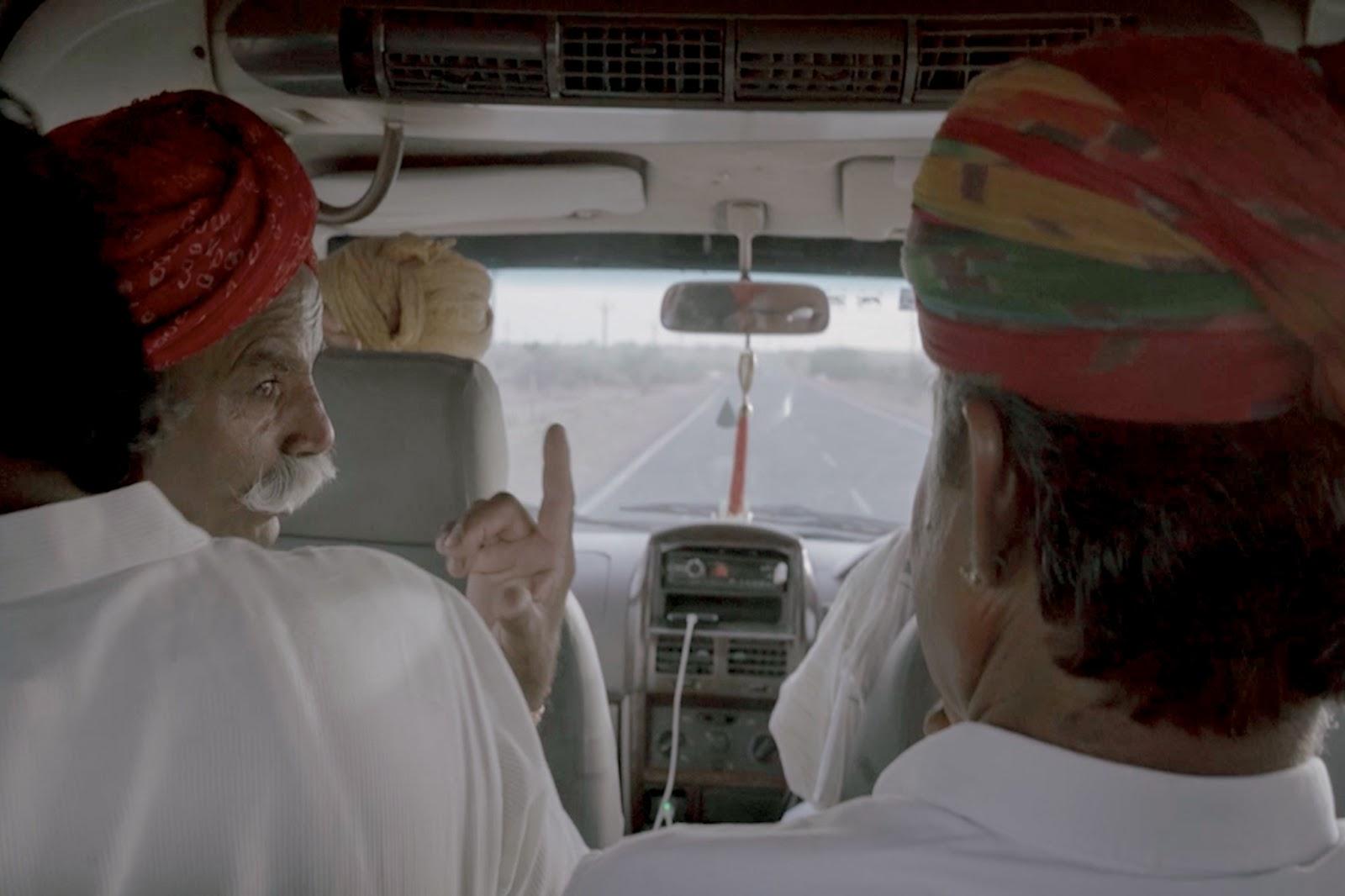
Mahesha Ram and his troupe on their way to another village for an all-night performance
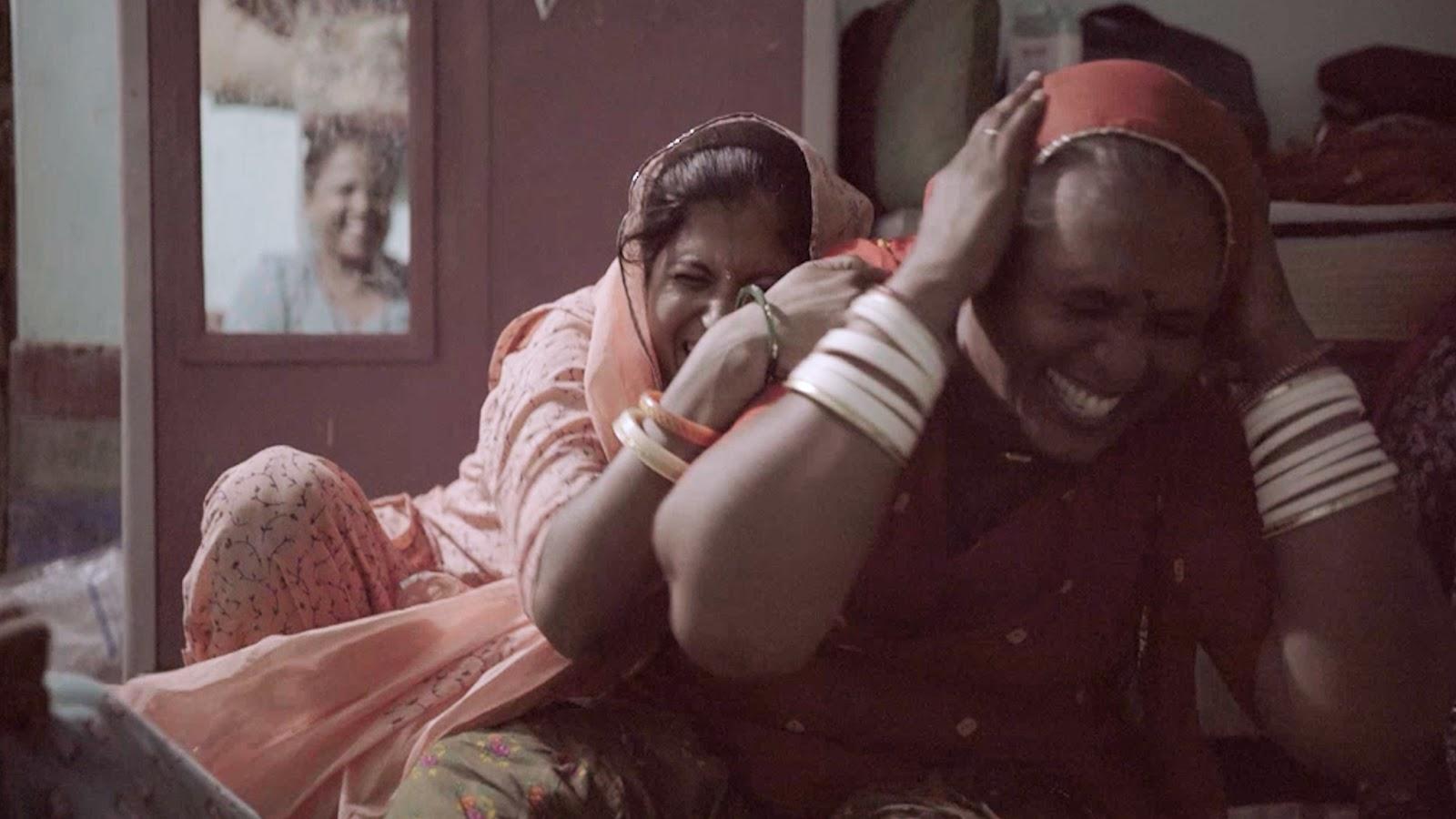
A still from the film featuring Jamuna Bai and her daughters
What role does Mira Bai’s poetry play in the film?
Mira Bai was a 16th-century Bhakti poet and a controversial figure. Though best known for her devotion to Krishna, she made radical life choices – leaving her royal life, choosing her own spiritual path, and learning from a Dalit guru. The Bhakti movement itself was a reaction to the hierarchy and authority of the upper caste communities and their gate keeping of knowledge and religious practices. In many ways, the singing tradition of Mahesha Ram and Jamuna Bai is a continuation of that same Bhakti tradition.
Over time Mira Bai’s poetry started feeling like a character in the film. I kept hearing the same songs that Mahesha Ram and other singers would sing, from women like Jamuna Bai, who added their personal flavour to the common theme.
Can you tell us about your experience making the film — how you met the people who are present in it, and what music means to you?
I first met Mahesha Ram while volunteering at the Rajasthan Kabir Yatra (a travelling folk music festival) in 2016, a friend introduced me to him who was also Mahesha Ram’s student. In 2017, I joined her on a month-long trip to photograph and film her learning process. That time was crucial – I began to understand not just the music, but its place in everyday life, the presence of Bhakti poetry, and the act of singing itself. That’s also when I met Jamuna Bai. Her world opened up a different perspective on folk music and performance. Between 2017 and 2021, I kept visiting – not always to film, but to unpack and understand. Over time, I felt more and more drawn to her voice, and that’s when the shape of the film began to emerge.
“Lately, I’ve realised music keeps showing up in my work – both personally and professionally. I’m still listening closely to understand what that means, and how it helps me reinterpret society more broadly.”
Poshali Goel
The film opens with a bus driving at night, what’s the significance of this beginning?
That’s actually the jeep we travelled in to reach Mahesha Ram’s performance venues – most of which started late in the evening and went on till morning. These satsangs were meandering in time – what was sung and how it was perceived shifted through the night, revealing social hierarchies between artists, audience and the rest. While editing, I noticed that Jamuna Bai, too, found her musical space in the later hours of the day – humming to herself before sleep. So I started weaving these moments together; both shaped by music, but each carrying its own emotional and social reality.
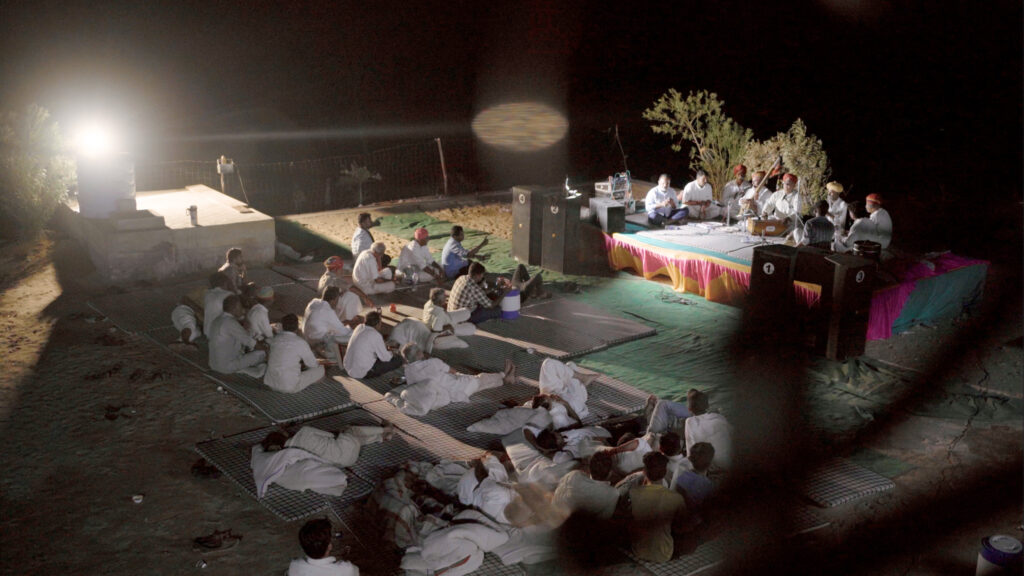
Mahesha Ram and his troupe perform through the night to celebrate the inauguration of a new home in a village near Barmer, Rajasthan
The film shows the siblings on two very different paths — one out on the road, the other rooted at home. Did this contrast stand out to you from the start, or did it emerge later?
I saw the contrast early on, but it took time to understand what sits between those two worlds. Their practices aren’t opposites — they overlap quietly, when they talk about songs, local gatherings, or memories of learning together. That’s when I realised this was also a story about siblinghood — and how this relationship allows for a subtle blurring of gender roles and other barriers.
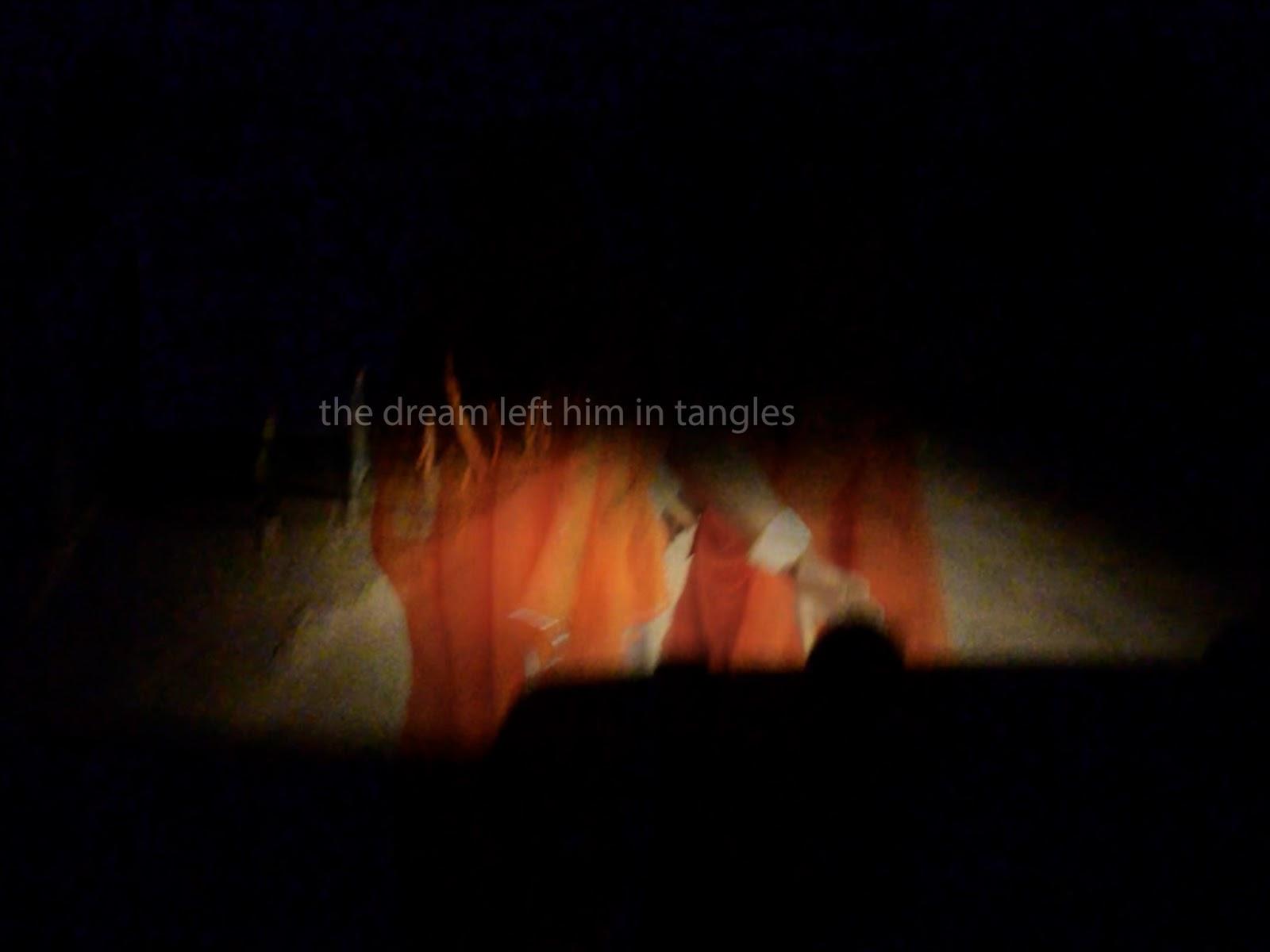
A still from the film
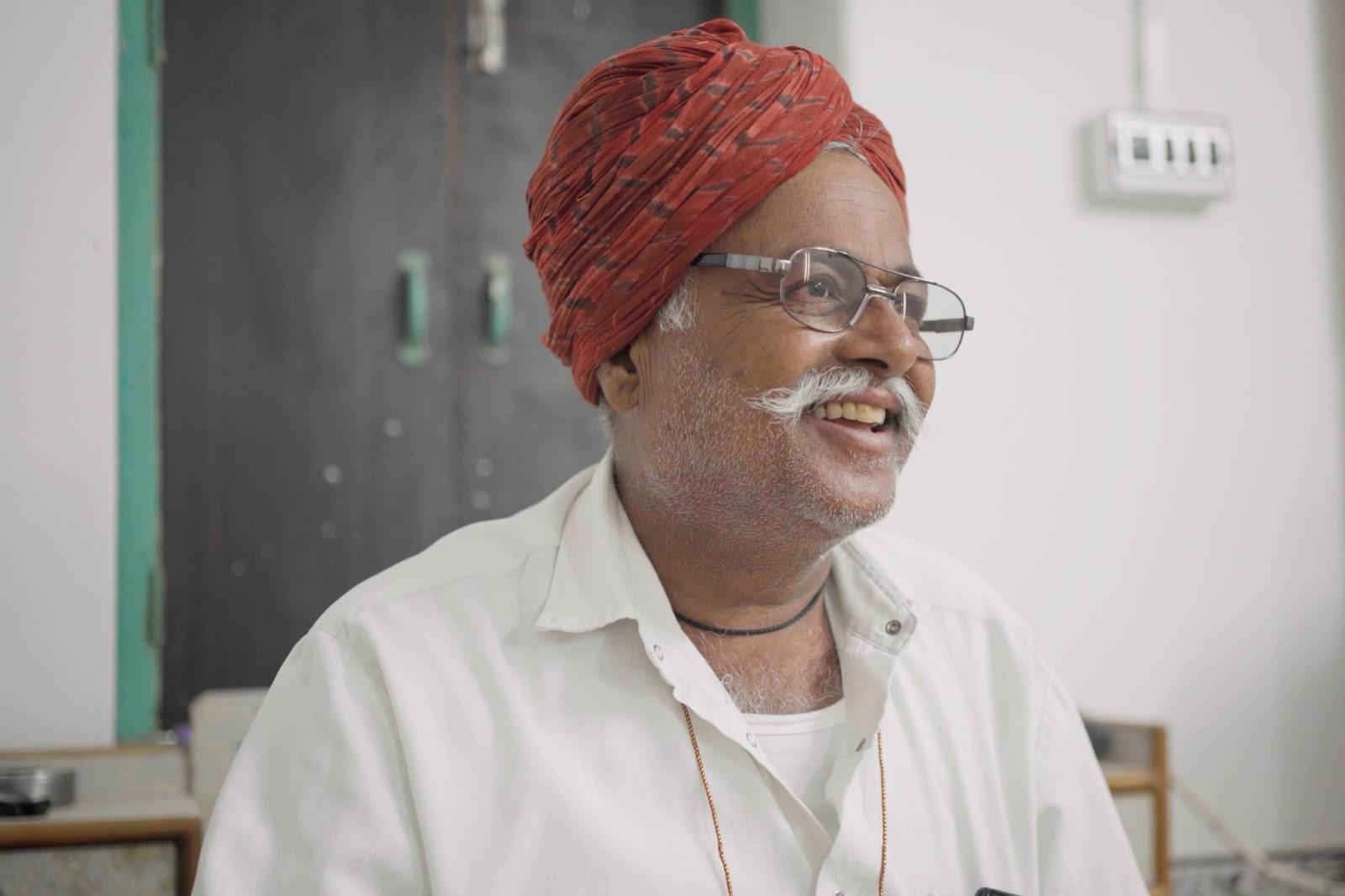
A still from the film featuring Mahesha Ram
Where is Heli being shown? And what are you currently working on?
Heli was recently shown at Singing Histories strand at the Otherfield festival, Lewes UK in the first week of August.
After sharing the film in different gatherings in the UK and seeing the many ways audiences connected with it, I’m now hoping to take it to institutions and collective spaces in India.
Currently however, I’m editing a couple of projects on urban spaces and development in India, which has opened up new questions for me about housing, memory, and the ways built environments shape the life of a city. In some ways, it feels like a continuation of the same journey – listening closely to how people live, and what their spaces quietly say about them.
If you would like to watch the film, or hear more about where it is being shown, contact Poshali on poshaligoel@gmail.com.
Additionally, if an institution, collective or individual would like to invite Mahesha Ram for a gathering or performance, please feel free to get in touch with him through Poshali on poshaligoel@gmail.com.