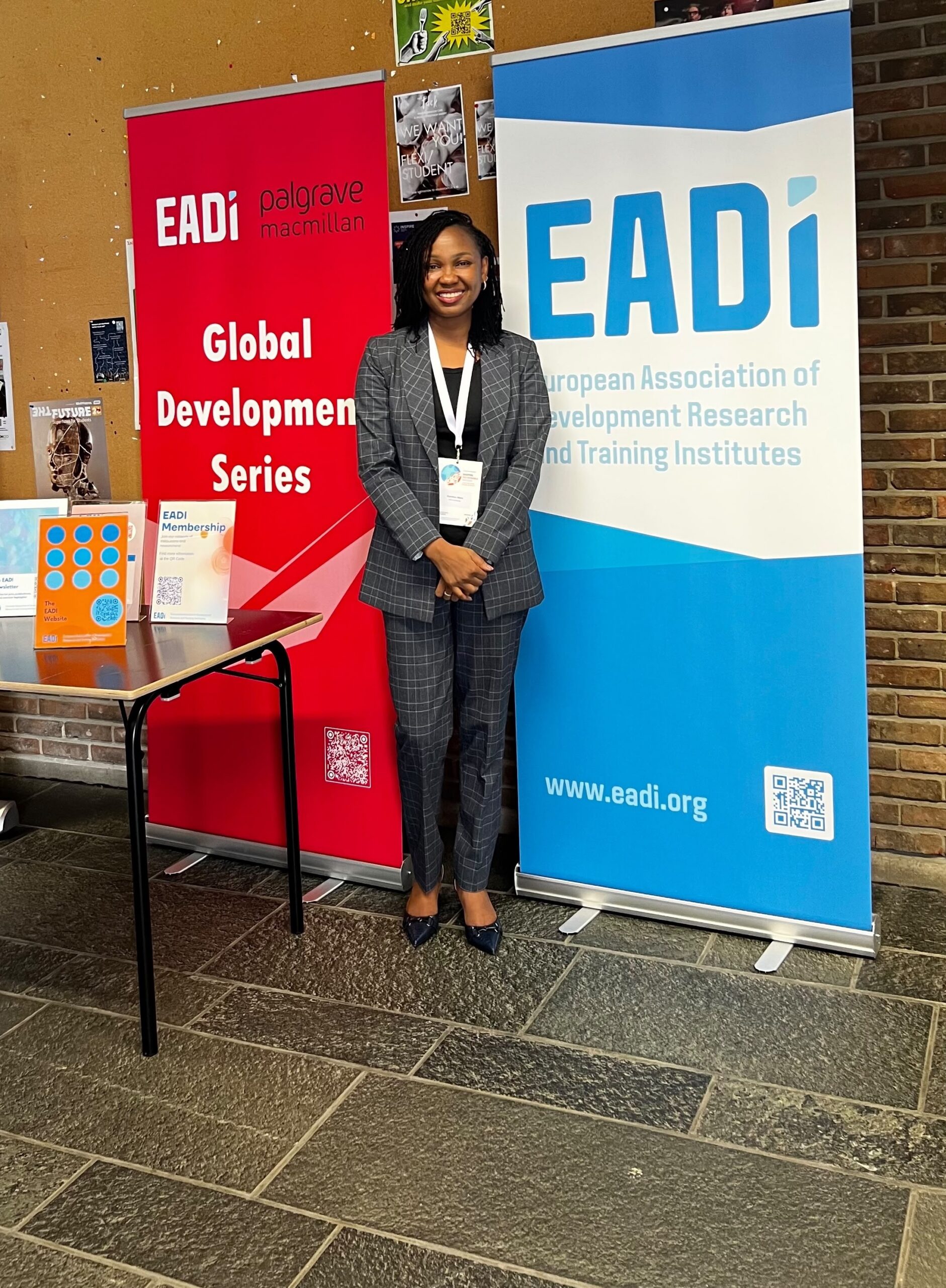
How do we shape sustainable futures in an era marked by growing global uncertainty? Dr Caroline Ntara is a Kenyan scholar of international business and public policy from KCA University in Nairobi, Kenya. She was invited to be a discussant in the Seed Panel “The New South in Global Development” at the EADI–IOB Conference 2026, where she joined scholars from across the world to explore how Global South perspectives are reshaping development debates. In this reflection, she shares how the conference reinforced her research on sustainable development, locally grounded knowledge, and the often-overlooked role of the informal sector in shaping inclusive development.
Arriving in Antwerp: A Conference About More Than Just Development
I arrived at Antwerp a day before the conference and did not know what to expect over the next few days. There are conferences that change the way you think, and others that strengthen your conviction that you are asking the right questions. For me, the EADI–IOB Conference 2026 Shaping Sustainable Futures: Global Challenges, (G)local Solutions? was firmly in the latter category.
Over four days, scholars from around the world gathered to debate one of the defining questions of our time: How do we shape sustainable futures in the face of growing global uncertainty? The programme reflected the complexity of today’s development landscape, with discussions spanning democracy, geopolitical fragmentation, climate change, conflict, social justice, migration, artificial intelligence, energy transitions, and regional integration. Yet despite this diversity, a unifying theme emerged across these discussions: development can no longer be fully grasped through conventional frameworks alone.
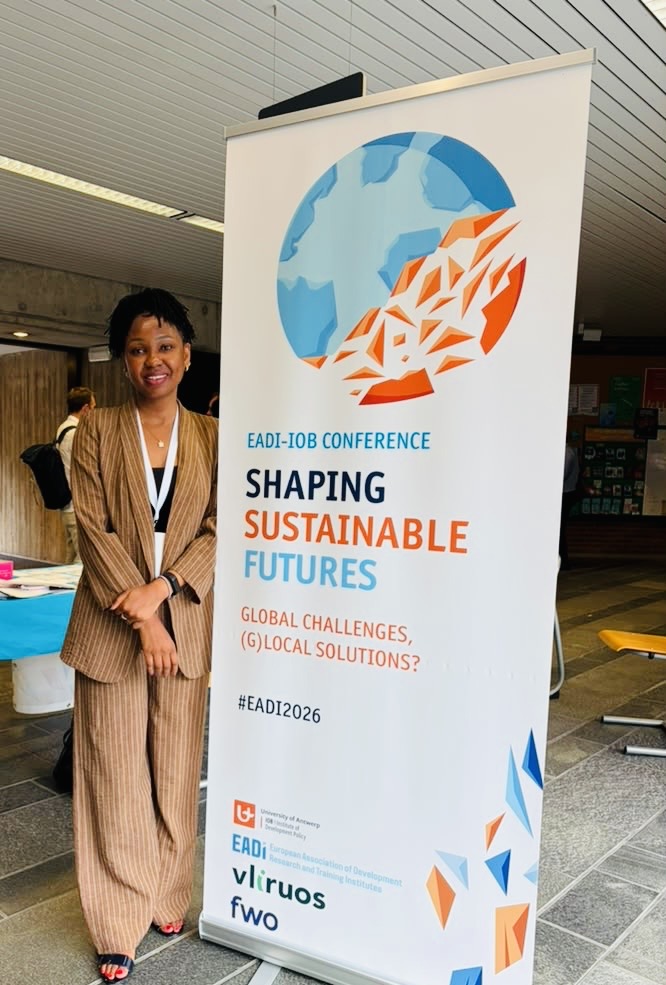
The conference showcased remarkable diversity, with scholars from Asia, Africa, Latin America, North America, and Europe engaging in a global discussion. Early-career researchers, political scientists, economists, and anthropologists exchanged ideas across disciplines during panels, informal talks, and keynotes. Highlights included keynote and plenary contributions by political scientist, Gilbert Khadiagala and biodiversity scholar Bila-Isia Inogwabini, alongside sessions chaired and enriched by scholars such as Angela Daly, Isabel Günther, Nicola Banks, and Christophe Gironde. The atmosphere embraced complexity, fostered dialogue, and recognised that sustainable futures need multiple perspectives.
As someone whose work lies at the intersection of international business and public policy, I found these conversations both personally affirming and intellectually stimulating. They reinforced my belief that many of today’s development challenges cannot be addressed through disciplinary silos. They demand collaboration, openness and a willingness to question long-held assumptions.
Why I Attended the EADI–IOB Conference
I attended the conference with more questions than answers. Over the last few years, my research has increasingly centred on the Global South, particularly regional integration, public policy and the role of the informal economy in development. As these ideas evolved, I found myself asking whether development scholarship is keeping pace with the realities of the societies it seeks to understand.
I wanted to test these thoughts against a broader community of scholars. Is development still being framed largely through perspectives developed outside the Global South? Are we giving sufficient recognition to the knowledge, experiences and innovations emerging from the Global South itself? Do our theories and research methodologies adequately reflect economies in which informality, community networks, and local institutions are not exceptions but defining features? And if sustainable development is truly about inclusion, are we overlooking important development actors simply because they exist outside formal systems? These were the questions I carried with me to Antwerp.
What I found was reassuring. While the conference offered diverse perspectives, many discussions echoed the issues I had been grappling with in my own research. The conversations reinforced my conviction that “development is no longer something that simply happens to the Global South. Increasingly, it is being shaped by the Global South,” through its scholarship, locally grounded solutions and lived experiences. More importantly, the conference provided opportunities for collaboration, new ideas, and methodologies that have strengthened my resolve to continue exploring these questions.
“Development is no longer something that simply happens to the Global South. Increasingly, it is being shaped by the Global South through its scholarship, locally grounded solutions and lived experiences”
Caroline Ntara
Seed Panel, The New South in Global Development
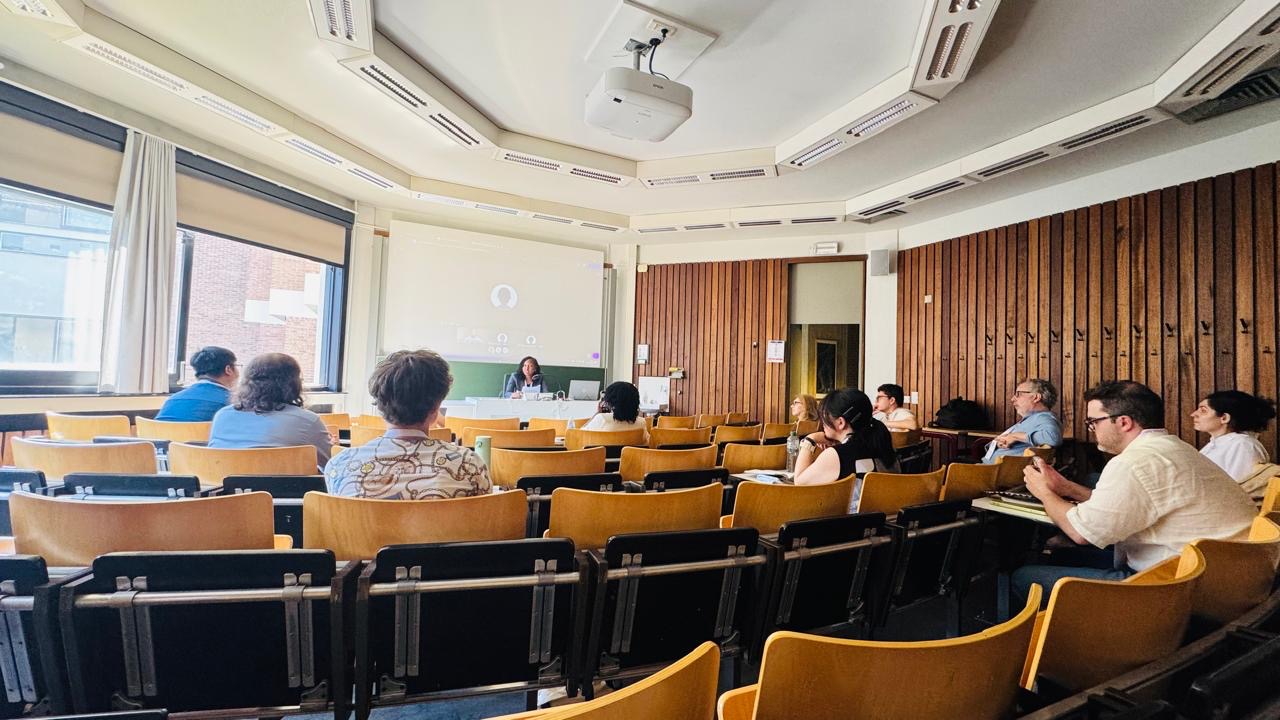
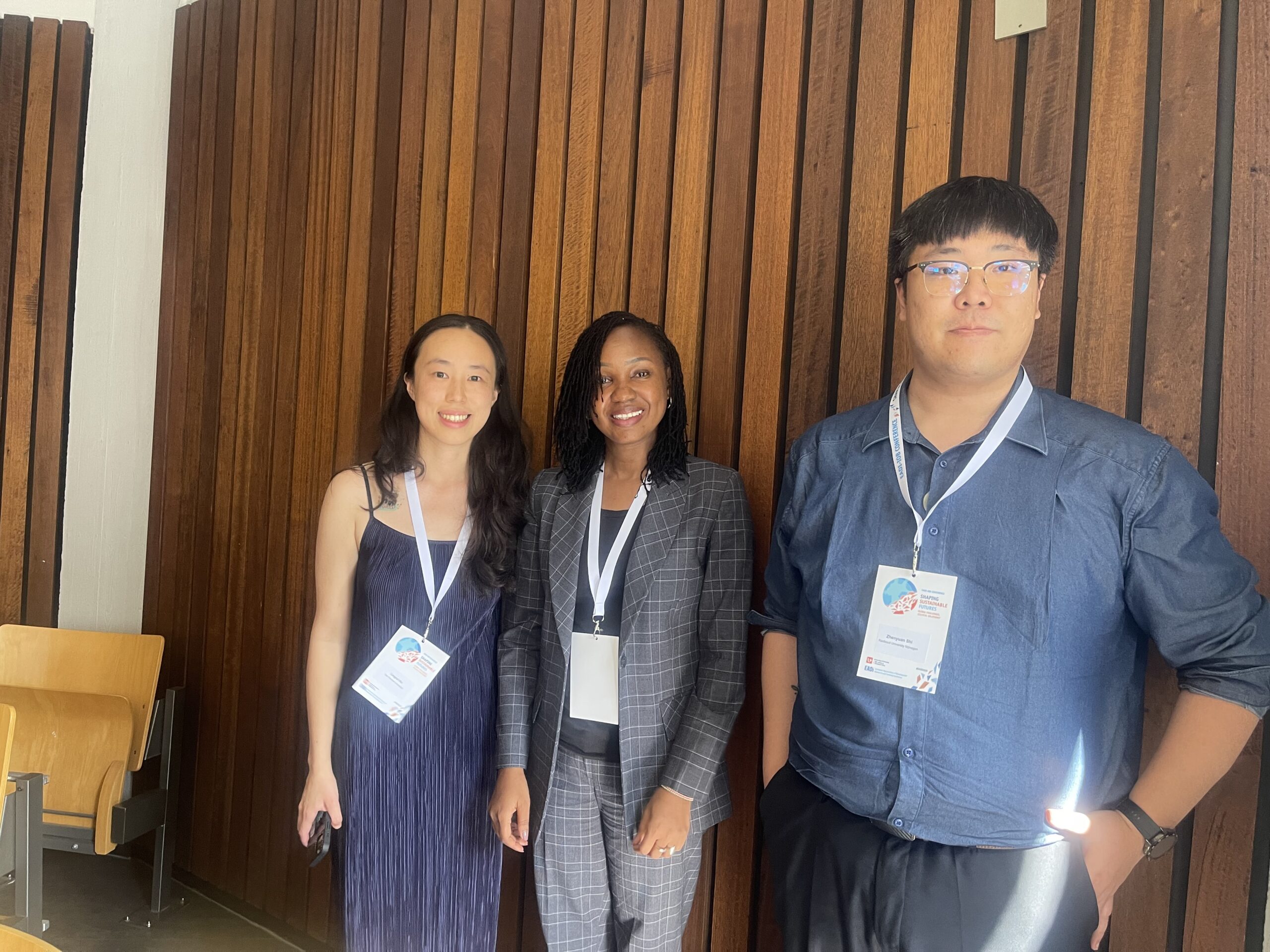
The Seed Panel, The New South in Global Development, chaired by Prof. Indrajit Roy, featured presentations by Zhenyuan Shi on the role of China’s International Development Cooperation Agency (CIDCA) in shaping South–South cooperation, Lingrui Hu on grassroots South–South encounters in Kenya’s informal settlements, and Sky Mkuti on locally driven sustainability solutions beyond South Africa’s G20 presidency. As the panel discussant, I provided critical reflections on each presentation, highlighting their theoretical and policy implications, before concluding with insights from my own research on the informal sector, digital trade, export resilience, and trade and development in the Global South. In doing so, I connected the individual papers to broader debates on sustainable development, inclusive research, and the evolving role of Global South scholarship. Three ideas, in particular, stood out for me.
The Development Actor We Continue to Overlook
One question that has increasingly occupied my work is who exactly are the actors we continue to overlook in development?
For decades, development scholarship has largely focused on three interconnected levels of action. At the community level, we examine local organisations and grassroots participation. At the institutional level, we study NGOs, governments, international agencies, and markets. At the state level, we analyse regional cooperation, governance and public policy.
These actors continue to be vital. However, in many parts of sub-Saharan Africa, another key actor intersects with all three but is often overlooked in mainstream development frameworks: the informal sector.
This omission is striking. The International Labour Organisation reports that about 2 billion people globally work in the informal economy, accounting for roughly 60% of worldwide employment. In Sub-Saharan Africa, nearly 85% of jobs are informal, and in numerous countries, the informal sector contributes between 40 and 60% of GDP. These figures illustrate that informality is not a marginal phenomenon; it is a defining feature of economic life across much of Africa. At the same time, for many workers, informality reflects economic necessity rather than choice, often characterised by income insecurity, limited social protection, and constrained access to decent work. Recognising both its economic significance and the vulnerabilities it entails is essential for designing inclusive and sustainable development policies.
Despite its scale, discussions in sub-Saharan Africa focus on taxation, regulation, and formalisation, implying informality is a transitional stage. This overlooks the ingenuity, resilience, and entrepreneurial capacity that define informal economic activity. Recognising the informal sector as a development actor does not diminish the roles of communities, institutions or governments. It acknowledges how development happens in much of the Global South. Rather than focusing on formalisation, should we consider transformation instead?
This discussion also resonates strongly with my own research. My interest in the informal sector emerged during my postdoctoral work on Common Market implementation, where respondents consistently emphasised that regional integration cannot be fully understood without recognising the central role of informal trade and economic activity across Sub-Saharan Africa. Building on these insights, I am developing a conceptual framework on digital trade and export resilience in Africa, examining how structural vulnerabilities, alongside the pivotal role of the informal sector and Micro, Small, and Medium Enterprises (MSMEs) shape resilience, firm participation, and inclusive growth. This work contributes to policy debates on how digital trade and regional integration can strengthen more resilient and inclusive African economies.
Methodologies and Theories That Reflect Global South Realities
These discussions naturally led me to reflect on research methodologies.
Methodology is never neutral. The methods we choose, the questions we ask, and the evidence we privilege inevitably influence the conclusions we draw. If our objective is to understand development within the Global South, then our research approaches must reflect the realities of the societies we seek to understand. Several sessions highlighted the importance of interdisciplinary inquiry, participatory approaches, and methodological pluralism.
One of the sessions that stood out for me was on Transdisciplinary Research: Linking Research and Practice, Knowledge and Policy, which was chaired by Dr Jonathan Demenge and Prof. Isabel Günther. The roundtable brought together Winnie Ntinyari, Salome A. Bukachi, Beatrice Chiyokoma, Christian Andres, and Christophe Gironde to discuss how transdisciplinary research can bridge academia, policy, and practice, fostering collaboration among researchers, practitioners, policymakers, and funders to address complex sustainability challenges.They reinforced my view that studying the Global South requires capturing complexity rather than simplifying it. Much economic and social life occurs through relationships, informal institutions, community networks, and daily interactions often invisible in conventional datasets.
“They reinforced my view that studying the Global South requires capturing complexity rather than simplifying it.”
Caroline Ntara
Research therefore needs to move beyond methods that privilege only what can be easily measured. Community-engaged scholarship, qualitative inquiry, participatory research, and mixed methods are not simply methodological alternatives; they are essential for understanding how development is negotiated, experienced, and sustained. For example, sessions on participatory research highlighted how researchers co-produced knowledge with local communities to address issues such as youth wellbeing, waste governance, and sustainability partnerships, while discussions on transdisciplinary research emphasised collaboration between academics, practitioners, policymakers, and funders to translate research into policy and practice.
I further questioned whether mainstream modernisation and institutional development theories adequately reflect the realities of Sub-Saharan Africa. While these perspectives have made invaluable contributions to the field, they do not always capture the complexity of societies in which informality, community networks, and locally embedded institutions are central to everyday social and economic life.
Building Bridges Across the Global South
Beyond the formal programme, one of the conference’s greatest strengths was the opportunity to build new scholarly relationships.
Conversations with researchers from different countries during the networking sessions revealed that while development challenges vary across contexts, many of the underlying questions are shared. How do we reduce inequality while protecting the environment? How do we strengthen institutions without overlooking local realities? How do we generate evidence that informs policy while remaining grounded in lived experience?
Those conversations may well become the foundation of future collaborations, comparative research and new ways of thinking about development.
The conference concluded on an optimistic note with the Closing Plenary: Transformation and Grounds for Hope. Bila-Isia Inogwabini, moderated by Herwig Leirs and joined by discussants Sebastiaan Mathot and Prof. Nicola Banks, reflected on how diverse knowledge systems, transformative thinking, and collective action can inspire more just, resilient, and sustainable futures despite the complex global challenges ahead. The conference concluded with a simple but powerful message: hope.
Not hope as passive optimism. Hope as the willingness to challenge inherited assumptions and imagine different futures. Hope as the determination to build development pathways that are more sustainable, equitable, and inclusive. It was a fitting conclusion. Rather than leaving participants overwhelmed by global challenges, the conference ended by reminding us that hope is itself an act of agency. It allows us to challenge existing paradigms and envision possibilities still to be realised.
Looking Ahead
As I left Antwerp, I carried home more than notes from conference sessions. I carried a renewed appreciation for the growing confidence of Global South scholars in shaping international development debates. Increasingly, we are not merely contributing evidence to existing theories; we are asking different questions, generating new concepts, and proposing alternative futures grounded in our experiences.
For me, that future includes recognising that sustainable development will be shaped not only by communities, institutions, and governments, but also by millions of informal workers and entrepreneurs whose contributions have long sustained economies.
If the Global South is truly redefining development, perhaps our next task is not simply to amplify new voices. It is to recognise those who have been shaping development all along.
About Dr. Caroline Ntara
Dr Caroline Ntara is Chairperson of the Scientific and Ethics Review Committee (SERC) at KCA University, Nairobi, Kenya, and a lecturer and researcher in International Business and Public Policy. Her research focuses on international trade, public policy, and the informal economy, examining how locally grounded approaches can advance inclusive and sustainable development across Africa and the Global South. She is passionate about bridging research, policy and practice to address contemporary development challenges.