Naji al-Ali ’s Handala, presented in the Boycott, Divestment and Sanctions (BDS) movement and by many pro-Palestine initiatives, is a well known cartoon character associated with Palestinian resistance. In this article, Marina Hamanaka (a PhD student in Area Studies, at The University of Tokyo) tells us about the story behind Handala, and her research exploring how Naji al-Ali connected Palestinian experiences of displacement and oppression with wider struggles for liberation across the world.
Since the outbreak of the war on Gaza in October 2023, Handala, widely recognised as a symbol of the Palestinian people, has appeared repeatedly in protests and social movements around the world. Created by the Palestinian cartoonist Naji al-Ali (c. 1936-1987), Handala has continued to be used across different political and social contexts, transcending the specific historical circumstances in which the character originally emerged.
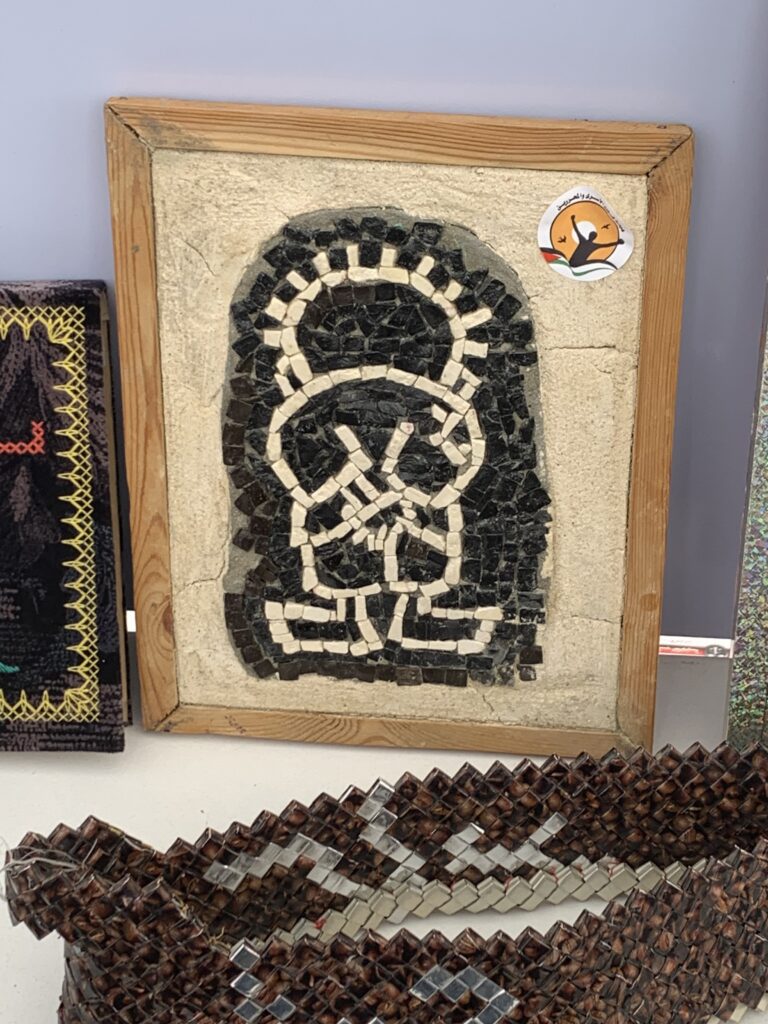
Handala is a ten-year-old Palestinian refugee boy. He first appeared in al-Ali’s cartoons in the Kuwaiti newspaper al-Siyāsa in 1969. His name derives from al-ḥanẓal, the Arabic word for the bitter colocynth plant, evoking the hardships endured by Palestinians. His age is said to correspond to al-Ali’s own age when he experienced the Nakba in 1948, and al-Ali described him as a shāhid, or “witness,” to Palestinian dispossession, suffering, anger, defiance, and resistance. He was barefoot because this was how al-Ali often saw children in Palestinian refugee camps. Handala is also usually shown with his back to the viewer and his hands clasped behind him as a gesture of rejection and defiance. He rarely speaks, instead silently observing the events before him. During al-Ali’s lifetime, he functioned as a kind of alter ego for the creator; since al-Ali’s death, he has become an enduring symbol of Palestinian resistance and solidarity, appearing in social movements, political protests, and popular culture around the world.
Active from the 1960s through to the 1980s, al-Ali was one of the most prominent Palestinian political cartoonists in the Arab world. His cartoons address his concerns with political power, imperialism, social injustice, racial oppression, and liberation struggles. Handala, too, emerged from this broader body of work. Paying attention to this wider political environment at the time offers a way to understand why al-Ali became such an important figure in Palestinian society, and why his work continues to resonate today.
Tracing the Archives
My research focuses on how Palestinian history has been represented through political newspaper cartoons. In my master’s thesis, I analysed al-Ali’s work from the 1980s during the final years of his career. It was during this research, alongside examples featuring English and Hebrew, I came across cartoons that incorporated Japanese. As a Japanese researcher, this was an unexpected discovery. Why would a Palestinian cartoonist incorporate Japanese into his work? It was this small question that led me to begin tracing representations of places beyond Palestine in al-Ali’s cartoons.
As I continued my research, I began to see that al-Ali repeatedly engaged with global political and social issues. His cartoons included not only poster-like compositions incorporating Asian languages, but also motifs evoking Black liberation movements and critiques of apartheid in South Africa. This led me to become particularly interested in how al-Ali situated Palestine within the wider world at the time.
Today, Palestine is often discussed as a recipient of support and solidarity from the international community. However, al-Ali’s cartoons depicted Palestinians themselves looking toward the struggles of people in other regions, including in Asia, Africa, and Latin America, and seeking to express solidarity with them on their own initiative. In dialogue with the decolonisation struggles and broader anti-colonial and international solidarity movements, these works seem to offer a perspective that sees Palestine not only as a recipient of solidarity, but also as an active participant in solidarity with people engaged in struggles elsewhere.
How, then, did al-Ali develop this way of looking toward others? This question has become one of the starting points of my doctoral research. I traced his career back to the 1960s, when he began working as a cartoonist, and followed his work across al-Siyāsa in Kuwait, al-Safīr in Lebanon, and later al-Qabas in Kuwait and London. I examined how his work and political outlook were formed and transformed over the course of roughly twenty-five years. In doing so, I hope to reconsider Palestinian history not as an isolated history, but as one that intersected with decolonisation and broader anti-colonial and international solidarity movements.
Interconnected Resistance
At the British Society for Middle Eastern Studies (BRISMES) conference 2026, held under the theme “War, Empire and Sabotage in an Age of Genocide,” I focused on a small visual detail: the patch on Handala’s clothing. In the materials I have examined, this feature first appears in cartoons from the period of the Lebanese Civil War in the 1970s and later became one of Handala’s recurring visual features. Rather than identifying the civil war as the origin of the patch or treating it simply as a symbol of poverty, I read its use during this period in relation to the violence, displacement, and severe material deprivation experienced by Palestinian refugees in Lebanon, and how it later became part of Handala’s recognisable visual form.
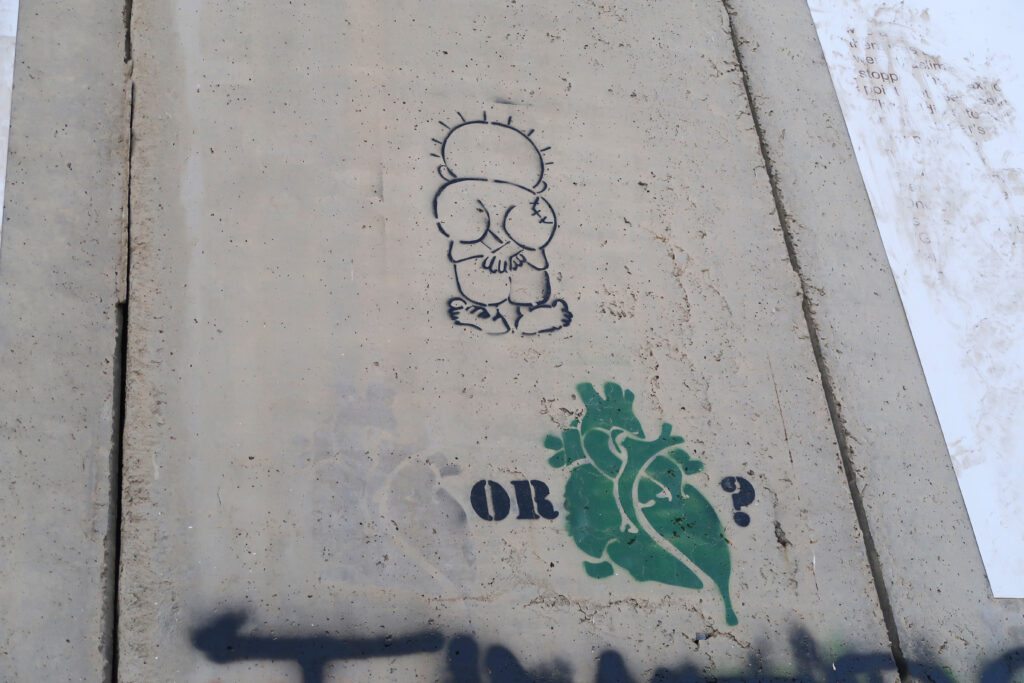
At the same time, Handala was not confined to these specific historical circumstances. As al-Ali himself explained, although Handala had originated as a Palestinian child from a refugee camp, he gradually came to possess what al-Ali called a “human identity.” Al-Ali noted that he had depicted Handala in Vietnam, Latin America, and other contexts beyond Palestine. Handala thus developed from a figure rooted in a specific Palestinian experience into one capable of appearing in struggles elsewhere. This duality was precisely what I explored at BRISMES.
To understand this plurality in Handala, we need to consider the experiences and political outlook of his creator, al-Ali. The starting point of al-Ali’s political concerns lay in the loss of his homeland during the Nakba and his subsequent life in a refugee camp. Forced to leave Palestine with his family as a child, al-Ali grew up in the Ayn al-Hilweh refugee camp in Lebanon and lived there for many years. The recurring themes in his work – return, poverty, oppression, and resistance – appear to have been deeply connected to these personal experiences.
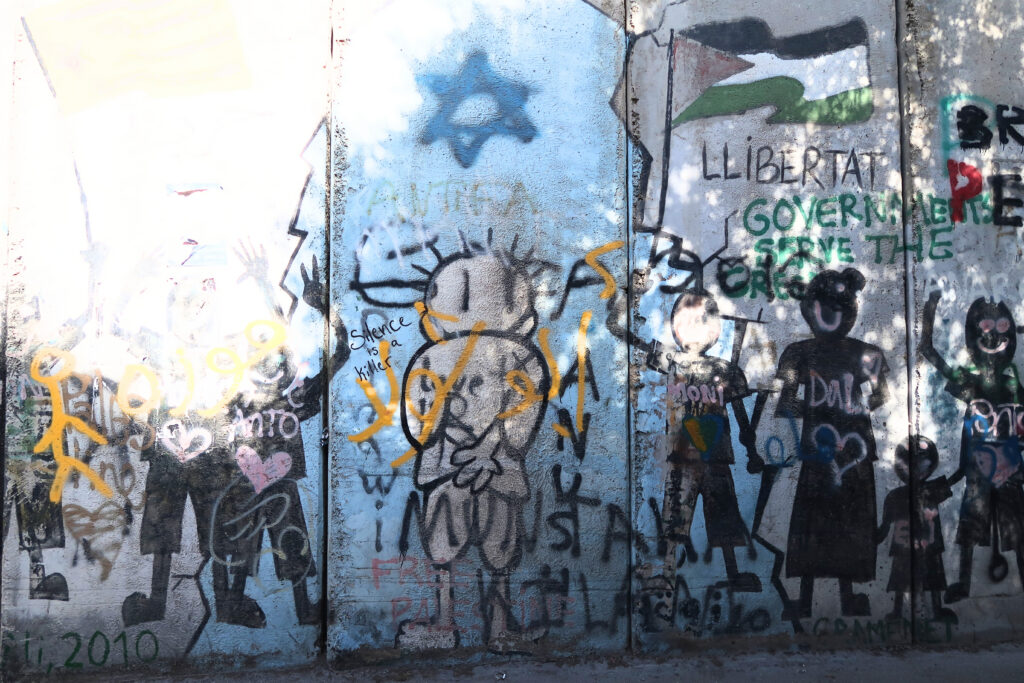
However, al-Ali’s political outlook extended beyond Palestine. My research has also shown that he incorporated events and struggles from the Vietnam War, liberation struggles in Africa, and issues concerning Native Americans.
What is important here is that, for al-Ali, belonging to Palestine and solidarity beyond Palestine are interconnected. The experiences of Palestinians – the loss of their homeland, life as refugees, poverty, political oppression, and social injustice – have provided a starting point for understanding the oppression and liberation struggles of people elsewhere in the world. What emerges from his work is neither an abstract universalism detached from Palestine nor a nationalism confined to Palestine alone. Instead, it suggests a political outlook that viewed the world from the concrete location of Palestine and sought connections with different historical experiences.
While al-Ali sharply criticised the Israeli occupation, he also directed his criticism toward the Palestinian political leadership, rulers across the Arab world, political corruption, and social inequality. In a 1984 interview, he stated that he drew Palestinians as he saw them and argued that political leaders needed to accept criticism. He also criticised wealthy Palestinians who spoke of land and sacrifice while prioritising their own personal interests.
Rather than dehumanising Palestinians through idealism, al-Ali also satirised internal class divisions, political corruption, and contradictions within Palestinian society. His cartoons functioned not only as a form of resistance to external oppression, but also as a space in which Palestinian society could critically examine itself. Al-Ali’s visual legacy can also be considered in relation to later representations of Palestine, including the graphic works of comics journalist Joe Sacco and the work of Palestinian cartoonist Mohammad Sabaaneh. Their works point to the continuing importance of comics and political cartoons as forms through which Palestinian experiences are represented and communicated beyond Palestine. One recent example of Handala’s continuing legacy can be seen in international solidarity campaigns in Italy and Japan, where cartoonists and artists drew their own characters in Handala’s distinctive pose in support of Palestine.
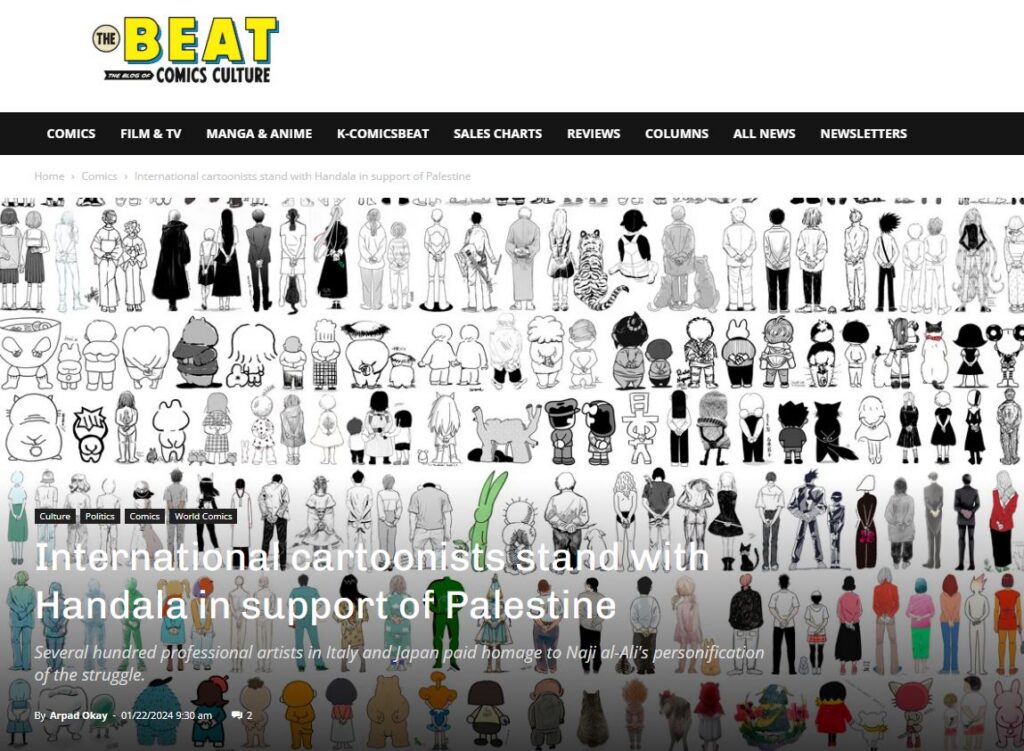
The fact that Handala is used around the world today does not necessarily mean that he has become an abstract symbol of resistance, detached from the history of Palestine. Rather, one of the defining features of Handala lies in his ability to carry collective histories of displacement and dispossession while connecting them to experiences of oppression and resistance. Al-Ali’s body of work has left us a visual language that does not isolate Palestine, but one that connects Palestine’s decolonial resistance to other liberation struggles across the globe.
About Marina Hamanaka
Marina Hamanaka is a PhD student in the Graduate Program on Human Security, Department of Area Studies, Graduate School of Arts and Sciences, The University of Tokyo. She holds M.A. degrees in Interdisciplinary Information Studies and Human Security. Her research focuses on historical representation, media history, and visual culture in the modern Middle East, with particular attention to Palestinian political cartoons.
Watch a video of Marina talking about her research.