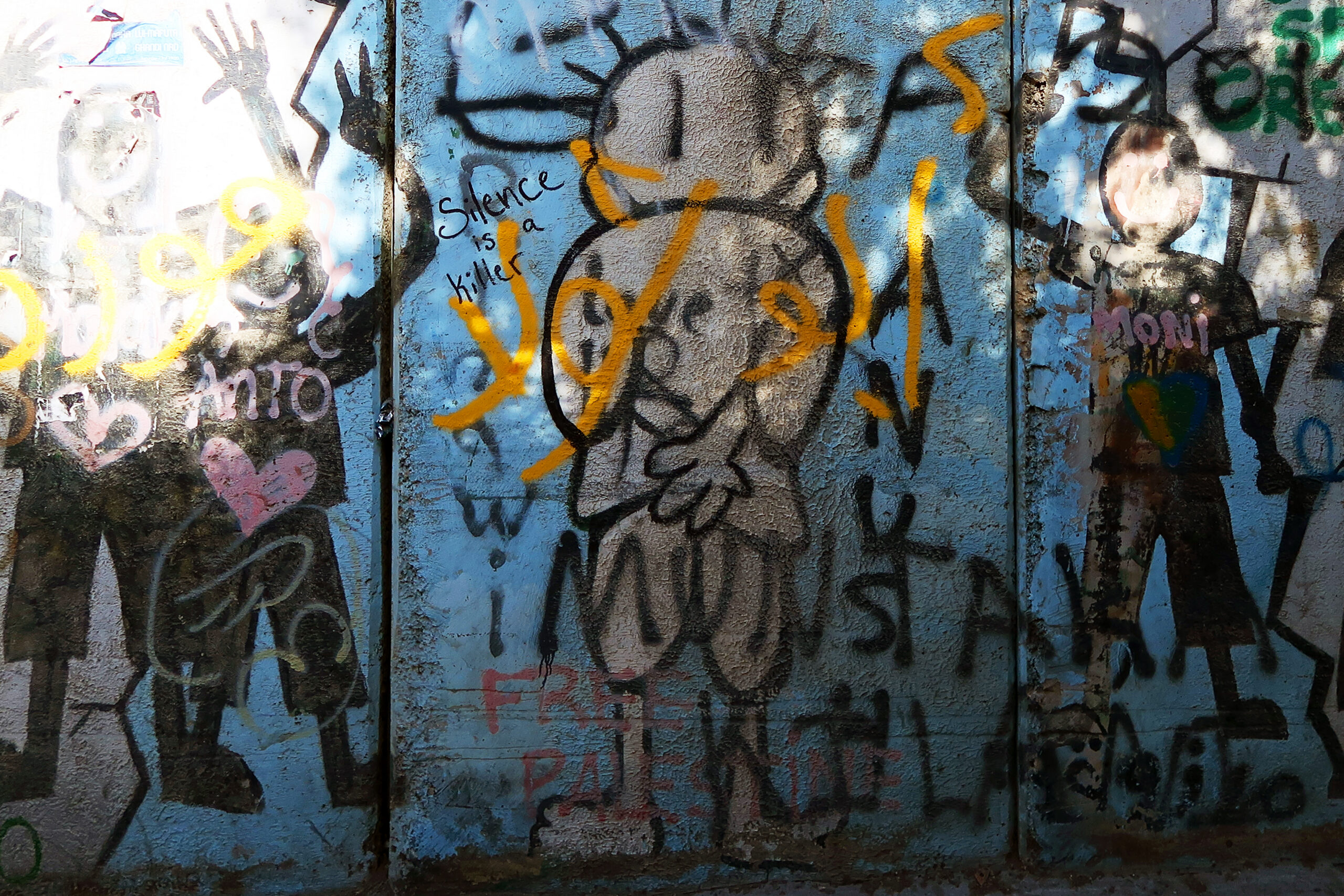
Purniya Awan, explores the complex intersections of food, famine, and malnutrition with a particular focus on how food is weaponised in conflict zones like Gaza. In this blog post for World Food Day, she unpacks the systemic drivers of hunger and shares a list of free-to-view Third World Quarterly (TWQ) and Central Asian Survey articles on the subject.
Globally, almost 673 million people are living with hunger. Every year on October 16, the world comes together to observe World Food Day, a powerful reminder of the importance of food security and the global inequality in access to nourishment. World Food Day marks the founding of the Food and Agriculture Organisation (FAO) of the United Nations in 1945. It’s a day dedicated to raising awareness for hunger, food insecurity, and the urgency of building a world where everyone has regular access to enough safe and nutritious food. However, obesity rates are also increasing, as is rampant food waste. This highlights the deep imbalances in our food systems – where excess and scarcity exist side by side.
Hunger as a Weapon and How it Changes us
Hunger is a complex crisis that goes beyond the absence of food. It manifests as malnutrition, where both undernourishment and poor-quality diets can lead to stunted growth, weakened immunity, and lifelong health complications. Poverty forces families to choose between food and other essentials like shelter or healthcare, while cheap but nutrient-poor food becomes the only option, leading to a paradox where hunger and obesity can coexist. This cycle of deprivation can reduce educational outcomes, causing intergenerational poverty.
In the most extreme cases, hunger is used as a weapon. In conflict zones like Gaza, forced starvation through blockades and restricted aid have created a dire humanitarian crisis, with children and vulnerable populations suffering the most. More than half a million people in Gaza are trapped in famine, marked by widespread starvation, destitution and preventable deaths. The Integrated Food Security Phase Classification (IPC) platform reported that as of May 2025, two out of three famine thresholds have been crossed in Gaza: plummeting food consumption and causing widespread acute malnutrition.
Beyond immediate suffering, hunger leaves a lasting biological impact: studies show that malnutrition can affect how genes work, passing health risks down through generations. This means the damage from hunger lasts long after food is available again, shaping health and opportunities across generations.
Studies from the Dutch famine of 1944–1945, commonly referred to as the “Dutch Hunger Winter” show that for individuals exposure to famine in the womb had increased risk of health conditions like obesity, diabetes, and schizophrenia – evidence that the effects of hunger can echo across a lifetime.
Similarly, the Indian subcontinent endured nearly 31 famines during 200 years of British colonial rule, many of which were worsened by exploitative economic policies. One of the most devastating was the Bengal Famine of 1943. During this period British authorities prioritised exports to bolster their own wartime economy, allowing the unrestricted shipment of crops out of India, even when food shortages loomed. This deliberate neglect left millions without access to adequate food, leading to the deaths of over three million people in Bengal.
The Bengal famine was caused primarily by Second World War inflation, making food prices unaffordable for the local population. Economist Utsa Patnaik highlights that the famine was created intentionally under Winston Churchill to shift resources away from the poorest Indians in order to provision British and American troops and fund the war.
Today, South Asians exhibit disproportionately high rates of heart disease, with earlier onset and higher mortality compared to many other ethnic groups, pointing to the enduring legacy of colonial-era famines on genetic and metabolic health.
Memory and Justice After Famines – A TWQ Special Issue
We had the privilege of speaking with Swati Parashar, Associate Professor of Peace and Development Research at the School of Global Studies, University of Gothenburg, Sweden. Swati serves as one of the guest editors of the Third World Quarterly (TWQ) Special Issue titled, “Memory and Justice After Famines“, co-edited alongside Camilla Orjuela, Professor of Peace and Development Research at the University of Gothenburg, Sweden. This Special Issue comprises a carefully curated selection of scholarly contributions that critically examine the political, economic, and structural conditions underpinning food insecurity across the Global South. By engaging with themes of historical memory and justice, the issue offers a nuanced analysis of how legacies of famine continue to shape contemporary struggles for food sovereignty and social equity.
We asked Swati: “Why do you think famines in the Global South are often seen as unfortunate events rather than as outcomes of deliberate systems of control and exploitation? “
Swati Parashar answered: “The tendency to view violence as exceptional events, outside of everyday politics, limits the scope of what might be considered violence, thereby normalising famines as a common and inevitable occurrence that can be overlooked.”
Swati emphasises the critical importance of interrogating how certain events are named and framed within dominant discourses.
She argues that the exclusion of famines from the category of “violence” significantly shapes public perception, policy responses, and historical accountability.
While mass starvation constitutes a form of structural and often deliberate harm, famines in the Global South are frequently described in apolitical terms as unfortunate events, humanitarian crises, or natural disasters. This depoliticisation displaces famines from the realm of violence and, consequently, from the sphere of justice and redress.

Swati identifies several key factors contributing to marginalisation:
- Misclassification: Famines are often seen as consequences of war or conflict, rather than as forms of violence in themselves. However, visible conflict is neither a necessary nor sufficient condition for famine.
- Aesthetic and Gendered Representations: The dominant imagery of famine emaciated women and children, domestic scarcity lacks the masculinist spectacle typically associated with political violence. These forms of suffering are therefore not recognised as violent enough to demand accountability.
- Geopolitical Disinterest: Famines in non-Western or postcolonial contexts (e.g., Sudan, Yemen, Tigray, Gaza) often receive limited attention due to their perceived lack of strategic significance. In contrast, famines in European contexts are more likely to be publicly commemorated.
- Private-Public Divide: Famine is often represented through the private realm of the household, reinforcing its framing as a personal or domestic tragedy rather than a public or systemic failure. In many postcolonial societies, famine deaths are not officially recorded, further obscuring their political dimensions.
When Food isn’t Enough
Despite the frequent circulation of images depicting famine-related suffering, these representations often result in the abstraction of pain and the erasure of specific political responsibilities. Recognising famine as a form of violence is therefore essential in establishing accountability and addressing the structural conditions that enable mass starvation.
Even in food-secure communities, limited access to nutritious foods can lead to stunting (low height for age), micronutrient deficiencies, and obesity from reliance on processed foods.
This form of “hidden hunger” (due to micronutrient deficiencies) can be just as dangerous, and is often a result of economic and systemic inequality. It affects two billion people across the globe. In this short video, FAO and World Health Organisation (WHO) experts explain in detail what hidden hunger means and what causes it.
“Hidden hunger occurs when the quality of food that people eat does not meet their nutritional requirements so the food is deficient in micronutrients, such as the vitamins and minerals that they need for their growth,”
Anna Lartey (PhD), Director, Nutrition Division, Economic and Social Department, FAO.
A Moment to Reflect
Ending hunger isn’t impossible. It requires political resolve, economic justice, and global solidarity. To ensure food security and healthy diets for all, governments, businesses, farmers, academia, civil society, and individuals must collaborate to expand access to nutritious, affordable, safe, and sustainable food.
Protecting access to food must be a shared global priority. In a world where approximately one third of food produced for human consumption is wasted rather than consumed, no one should have to go hungry.
Despite up to 40% of food being lost or wasted along the value chain, hunger deaths and suffering have multiplied in recent times. In 2023, the World Food Programme estimated that 345 million people were experiencing acute food insecurity, and for at least 846,000 of them, the conditions were catastrophic. The responsibility doesn’t fall on one group alone; progress depends on collaboration and sustained commitment from individuals, communities, businesses, and governments alike.
Free-To-View Articles
These articles will be free-to-view until the end of November.
To mark the significance of World Food Day, we have curated a selection of temporarily free-to-access articles from Third World Quarterly (TWQ) and Central Asian Survey (CAS). These contributions shed light on the intersections of conflict, climate, inequality, and governance in shaping global hunger and explore pathways toward more just and sustainable food systems.
We hope these pieces will inform and encourage ongoing reflection around the global food crisis and the urgent need for collective action:
- Anatomy of the Global Food Crisis, Pedro Conceição & Ronald U Mendoza, Third World Quarterly, Volume 30, 2009 – Issue 6, Published online: 23 Jul 2009
- Food Security Politics and the Millennium Development Goals, Philip McMichael & Mindi Schneider, Third World Quarterly, Volume 32, 2011 – Issue 1, Published online: 23 Feb 2011
- Food sovereignty as praxis: rethinking the food question in Uganda, Giuliano Martiniello, Third World Quarterly, Volume 36, 2015- Issue 3, Published online: 27 Apr 2015
- Food and identity in Central Asia, Sebile Yapici, edited by Aida Aaly Alymbaeva, Series: CASCA Vol. II, Halle (Saale): Max Planck Institute for Social Anthropology, 2017, iv + 180 pp., ISSN: 2093-987X (free online edition at https://www.eth.mpg.de/4525963/FN_Vol19_CASCA_2nd_web.pdf), Central Asian Survey, Volume 38, 2019 – Issue 3, Published online: 18 Dec 2018
- The Hungry Steppe: Famine, violence, and the making of Soviet Kazakhstan by Sarah Cameron, Ithaca, NY, Cornell University Press, 2018, 294 pp., US$24.95, ISBN 978-1-5017-520-1, Botakoz Kassymbekova, Central Asian Survey, Volume 40, 2021 – Issue 2, Published online: 25 Feb 2021
- Remembering/forgetting hunger: towards an understanding of famine memorialisation, Camilla Orjuela, Third World Quarterly, Volume 45, 2024, Issue 2, Published online: 26 Apr 2023
- Sanitation is political: understanding stakeholders’ incentives in funding sanitation for the Gaza Strip, Palestine, Mariam Zaqout, Mariam Fayad, Dani J. Barrington, Anna Mdee & Barbara E. Evans, Third World Quarterly, Volume 45, 2024 – Issue 9, Published online: 04 Mar 2024
- The imperialist roots of Tunisia’s food crisis, Gianni Del Panta, Third World Quarterly, Volume 46, 2025 – Issue 6, Published online, 23 May 2025