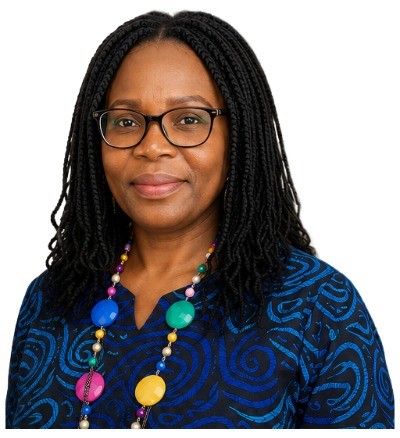
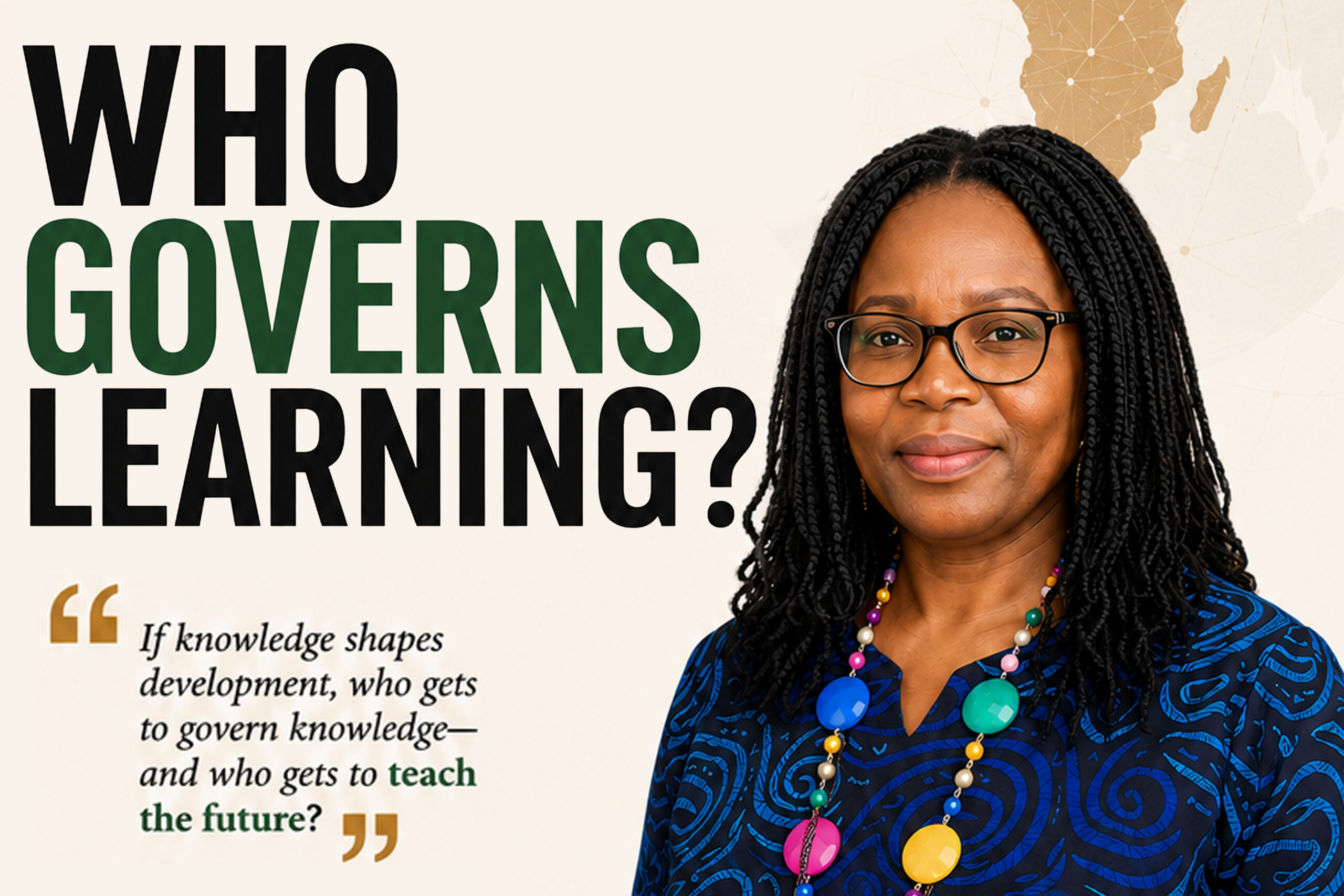
This deceptively simple question has accompanied Magdaline Nkando (Founder and Lead of Kujua Collective) for more than a decade of her work across African public institutions, multilateral development organisations, and comparative knowledge systems. It ultimately gave birth to the Learning Justice Framework, which explores how societies govern learning, whose knowledge becomes legitimate, and how unequal learning systems shape unequal development outcomes.
When Magdaline travelled to present the Learning Justice research programme at the 2026 Canadian Association of African Studies (CAAS) Conference, she expected to contribute to an academic conversation, but found herself participating in something much larger: a collective reflection on Africa’s intellectual future and who gets to govern knowledge.
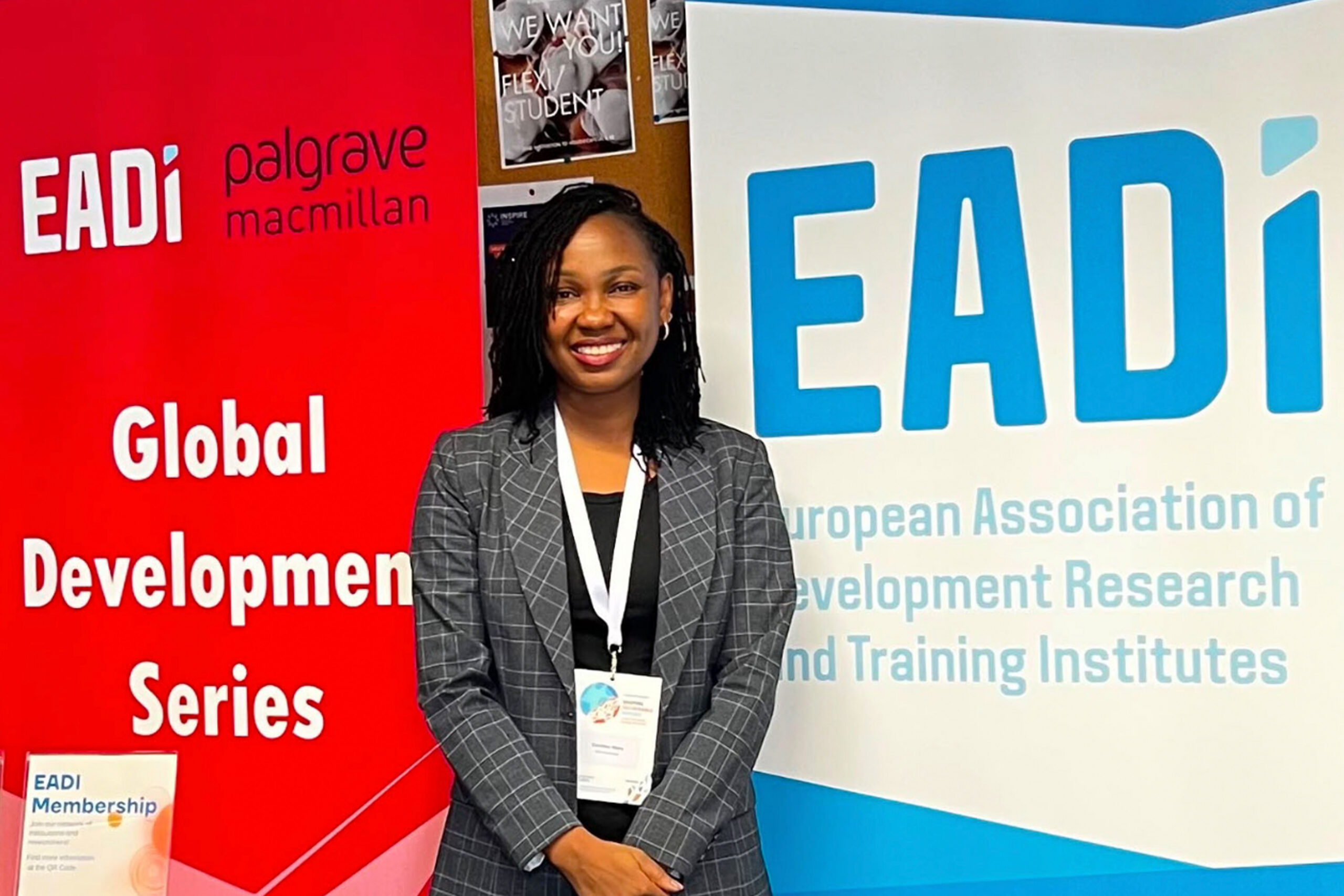
After nearly twenty-four hours of travel across three continents – from Nairobi through Brussels and Montréal to Toronto – I arrived at the 2026 Conference of the Canadian Association of African Studies (CAAS 2026) carrying more than a conference paper. I arrived carrying a question that had followed me for over a decade. A question that would eventually become Learning Justice:
Who gets to teach the future?
Over several days in June 2026, scholars, artists, historians, policy thinkers, activists, practitioners and students gathered at York University in Toronto under the conference theme Global Africa: Legacies, Change and Aspirations. The theme invited participants to reflect not only on Africa’s historical encounters with the world, but also on the continent’s evolving role in shaping global futures. Across keynote addresses, panel discussions, artistic performances, and informal conversations, one idea surfaced repeatedly: Africa cannot be understood simply through the lens of its past. It must also be understood through the futures it is helping to imagine.
I had come to present a paper “Learning Justice as Knowledge Governance: Reclaiming Africa’s Agency in Global Knowledge Futures”, introducing the Learning Justice Framework. This Framework was developed from the conviction that many of the inequalities we describe as development challenges are, at their core, learning inequalities. The Framework asks four deceptively simple questions:
- Who gets to learn?
- What knowledge counts?
- Who governs learning?
- Whose futures are ultimately shaped by those decisions?
While these questions emerged from years of research across public policy, institutional governance and development practice in Africa, I was curious to see how they might resonate beyond my own disciplinary boundaries.
Africa Has Always Been Global
Perhaps one of the most profound lessons I carried home from the conference was that Africa has never been peripheral to the world. Africa has always been global. That insight echoed throughout the conference in different voices, disciplines, and conversations. Under the theme Global Africa: Legacies, Change and Aspirations, participants challenged the familiar tendency to think of Africa merely as a recipient of global ideas, interventions, and development agendas. Instead, the conference invited us to reconsider Africa as a historical and contemporary producer of ideas, institutions, cultures, and futures. For me, this was more than an historical observation. It was an intellectual repositioning.
Repeatedly, the keynote speakers reminded us that Africa cannot simply be understood as a geographical location. It is also an intellectual destination – a place from which ideas have travelled, civilizations have flourished, and alternative ways of knowing have shaped humanity for centuries. Africans have always participated in shaping the world. Yet despite these enduring contributions, ideas produced in Europe and the wider Global North continue to enjoy the status of universality, while African knowledge is too often treated as local, contextual, or merely experiential.
One keynote speaker observed that governance is not simply a technical matter. It is fundamentally a moral question. While delivering her Opening Keynote Lecture titled “Rethinking Global Africa: Power, Gender, and the Making of Historical Futures” Professor Nikanyike Musisi (University of Toronto) asserted that power and legitimacy are moral responsibilities; not all about dominance.
Who has the authority to define legitimate knowledge?
The conference reminded us that colonialism did not simply reorganise territories. It reorganised authority, and whose knowledge counted.
Extraction continues, although today it extends far beyond land, minerals, and labour. Increasingly, extraction also encompasses data, culture, expertise, narratives, Indigenous knowledge, and even imagination itself. The global knowledge economy frequently rewards those who package and circulate knowledge while marginalising those from whom that knowledge originates. These sentiments emotively resonated throughout the conference right from the start, powerfully ushered in by the President of the Canadian Association of African Studies, Dr. Michael Akinpelu, during his Welcome Address: “the exploitation of Africans is not in the past. Our knowledge is continuously being extracted”, Dr. Akinpelu lamented, wondering “what needs to change?”

Throughout the conference, I found myself returning to a question that has increasingly shaped my own research:
Can political sovereignty ever be complete without intellectual sovereignty?
The discussions suggested that it cannot. Whether conversations centred on development partnerships, aid architectures, climate interventions, governance reforms, or South-South cooperation, similar questions continued to emerge: Who defines priorities? Who determines evidence? Who frames the problems? Who decides what success looks like? And perhaps most importantly, whose knowledge matters?
“Rather than presenting Indigenous knowledge as an interesting cultural addition to mainstream scholarship, speakers argued for recognising it as a legitimate way of knowing in its own right.”
Magdaline Nkando
Public participation is frequently emphasised in theory and official discourse, but in practice, meaningful public involvement is often limited. Institutions designed to safeguard accountability frequently struggle against systems that reward patronage and dependency.
One discussion that particularly resonated with me examined public accountability institutions in Africa. Ghana’s Public Interest and Accountability Committee (PIAC) was highlighted as an example of how institutional ownership matters. PIAC is an independent statutory oversight body in Ghana. It was established to monitor how Ghana’s oil and gas revenues are collected, managed, and spent. Rather than relying primarily on external funding, Ghana has continued to finance PIAC through domestic commitment, reinforcing the principle that accountability institutions become stronger when countries themselves choose to sustain them. Development, several participants argued, cannot ultimately be outsourced.
For me, these conversations reinforced something that sits at the heart of Learning Justice: Development is not simply about improving services or increasing economic growth. It is also about expanding a society’s capacity to generate, validate, govern, and transmit knowledge on its own terms.
Because beneath conversations about governance, democracy, international relations, and development lay a deeper intellectual question.
Not simply: Who governs nations?
But rather: Who governs learning?
When Conversations Become Compasses
Academic conferences often produce an overwhelming number of ideas. Papers are presented. Questions are asked. Conversations begin. Business cards are exchanged.
By the time one boards the flight back home, many of those moments have already begun to blur into memory. CAAS 2026 was different.

Rather than remembering individual presentations in isolation, I found myself remembering a series of conversations that gradually converged around a common intellectual concern. They became less like separate conference sessions and more like pieces of a larger puzzle. Each conversation seemed to illuminate a different dimension of questions that have increasingly occupied my own work:
How do societies learn, and who gets to shape that learning?
And, whose knowledge counts?
“I found myself reflecting on an uncomfortable truth: perhaps colonialism’s greatest achievement was not territorial conquest, but the colonisation of imagination.”
Magdaline Nkando
Discussions on Indigenous knowledge challenged long-standing assumptions about what qualifies as evidence and expertise. Rather than presenting Indigenous knowledge as an interesting cultural addition to mainstream scholarship, speakers argued for recognising it as a legitimate way of knowing in its own right. That distinction matters profoundly.
A presentation by Dennis Tibil Bersong (Concordia University, Montreal, Canada) featuring traditional shrines among the Tallensi of northern Ghana raised difficult questions about the boundaries between heritage, spirituality, and social stigma. He lamented about colonial misrepresentation of indigenous religious practices that ultimately reclassified shrines as instruments of witchcraft control. This perception justified British colonial campaigns to suppress and dismantle indigenous shrines. For generations, many African knowledge systems have been documented, translated, archived, and analysed – often by others. Far less attention has been given to the conditions under which those knowledge systems themselves define legitimacy, authority, transmission, and governance.
One discussion explored how African theatre continues to preserve historical memory while challenging contemporary forms of injustice. Through performance, young playwrights illuminated the enduring wounds of colonialism, the disruption of family structures, economic exploitation, and the remarkable resilience through which African societies continue to reimagine themselves. This was powerfully illuminated during a roundtable conversational exchange with Zambian-Canadian Playwright Natasha Mumba around her recently premiered play “Copperbelt”, which is both a theatrical work and a critical intervention into how African stories, Canadian responsibility, and global power are imagined.
Copperbelt tells the story of Eden Chileshe (played by Natasha Mumba), the estranged daughter of an ultra-wealthy Zambian mining CEO (Chimfwembe Kasuba) who built his business from the scratch. Chimfwembe has suffered a heart attack and needs to solidify his legacy – a legacy of reclaiming the Zambian people’s power by seizing control of their country’s resources from foreign players. How does he intend to do this? By bringing his three children back into the family business they left behind. The central message portrayed by the play is: who controls the resources within Zambia’s copper-rich stretch of land that straddles the border between northern Zambia and the southern Democratic Republic of Congo, and who benefits from their extraction?
Under the title “Power, Perception, and Politics: A Conversation with Natasha Mumba on Copperbelt”, participants lamented that Africa is still feeling the effects of heavy colonial baggage that we inherited from our colonialists, including homophobia and human rights breaches; sustained economic sabotage by Superpowers who pretend to help us while extracting from us to enrich themselves; and widespread neocolonialism that has held our leaders hostage. Questions of sovereignty and legacy abound with participants observing that “people in Africa get into politics to change things, but they end up changed by the system”.
I found myself reflecting on an uncomfortable truth: perhaps colonialism’s greatest achievement was not territorial conquest, but the colonisation of imagination.
And perhaps one of our greatest responsibilities today is not simply to decolonise institutions, but to recover confidence in our own ways of knowing.
The conference repeatedly invited participants to move beyond the question of whether Indigenous knowledge exists. Instead, it asked a far more demanding question:
Under whose authority does it continue to exist?
Perhaps unsurprisingly, these discussions resonated deeply with Learning Justice.
One of the Learning Justice Framework’s central propositions is that injustice does not begin only when people are denied access to education. It also begins when societies are denied equal authority to determine what knowledge is worth learning, preserving, validating, and transmitting across generations.
One of the most memorable moments for me came not during a formal presentation but during conversations between sessions. These informal spaces – the corridors, coffee breaks, shared meals, and chance encounters – often became the conference’s most generous classrooms.
Scholars spoke openly about navigating multiple intellectual worlds. Early-career researchers reflected on the challenge of publishing African scholarship within systems that often privilege Northern theoretical traditions. Senior scholars shared stories of institution-building, mentorship, and the long patience required to sustain intellectual communities. There was a refreshing honesty about the realities of academic life.
“Young scholars were reminded that ideas do not become influential simply because they exist – institutions determine what becomes visible, who gets cited, whose voices are amplified, and which narratives acquire legitimacy.”
Magdaline Nkando
A Lunch & Learn panel discussion jointly organised by CAAS and the Canadian Association for the Study of International Development (CASID) shifted the conversation towards academic publishing and the realities of global knowledge production. Titled “How to … Get Published” and featuring Canadian university presses (University of Toronto Press, Wilfred Laurier University Press, University of Regina Press, Inanna Publications & Education, Inc., Canadian Journal of African Studies, Canadian Journal of Development Studies), the discussion underscored the importance of publication for graduate students in an academic journal or book with an academic press. Young scholars were reminded that ideas do not become influential simply because they exist – institutions determine what becomes visible, who gets cited, whose voices are amplified, and which narratives acquire legitimacy.
The conversations reminded me that scholarship is rarely built by solitary brilliance alone. It grows through relationships, dialogue, and communities willing to ask difficult questions together.
In his presentation “Beyond the Language of Climate Change: Community-Centred Environmental Governance and Information Integrity in Africa”, Dr Andrew Heffernan (University of Ottawa) emphasised the need to “meet people where they are”. He vouched for African-centred solutions to addressing climate disinformation that is locally legitimate, politically resilient, and globally relevant. He contended that the current approaches that rely on abstract, globalised climate narratives are increasingly ineffective. In the same vein, the discussion on Playwright Natasha Mumba’s play Copperbelt explored similar critical questions: What kinds of stories become possible when African creativity is centered on its own terms? How might theatre unsettle dominant Canadian self-understandings in relation to Africa? What does it mean to tell politically charged stories through character, place, and affect?
Different conversations. Different disciplines. Yet one underlying concern seemed to surface repeatedly: Whose knowledge shapes the future? Perhaps that is why the conference felt unusually hopeful. Not because it offered easy answers. But because it demonstrated that across continents, disciplines, and generations, more scholars are beginning to ask remarkably similar questions about knowledge, legitimacy, memory, and justice. For me, this was deeply encouraging.

When I first began developing the Learning Justice Framework, the questions it posed often felt unusually broad. Three interrelated questions gradually emerged during this journey and eventually became the conceptual foundations of the Learning Justice Framework:
- Could learning itself become an object of justice?
- Could governance be understood not only as the management of institutions but also as the stewardship of collective learning?
- Could development be reimagined through the governance of knowledge rather than simply the distribution of resources?
Listening to conversations throughout CAAS 2026, I realised these questions were no longer mine alone. Several discussions highlighted a troubling reality: Africa often participates in global knowledge production, but too often as an object of analysis rather than as an architect of theory. The challenge before us is therefore not simply to produce more knowledge. It is to transform who governs learning itself.
Learning Justice: Reimagining How Societies Learn
As the conference unfolded, I found myself increasingly aware that I was not simply attending sessions through the lens of my own research. Rather, the conversations themselves were helping me refine it.
For close to two decades, my professional journey has taken me across public institutions, universities, development organisations, governance programmes, and policy reform initiatives in several African countries. Although these experiences differed enormously in context, scale, and sector, I became increasingly struck by a recurring pattern: Institutions often invested heavily in policies, infrastructure, technologies, and organisational reforms. Yet comparatively little attention was given to how societies themselves learn.
Development discussions frequently focused on financing.
Governance.
Capacity building.
Service delivery.
Digital transformation.
Institutional performance.
All undeniably important. Yet beneath them lay a question that was seldom asked explicitly:
What kind of learning system produces the development outcomes we seek?
Over time, this question became impossible for me to ignore. Learning Justice begins from a simple but far-reaching proposition: Every society possesses a learning system, whether intentionally designed or historically inherited. These systems determine far more than educational outcomes.
They shape:
- Whose knowledge becomes legitimate.
- Whose histories are remembered.
- Which languages are valued.
- Who is recognised as an expert.
- What evidence informs public policy.
- How institutions retain (or lose) their collective memory.
- And ultimately, whose and what futures become possible.
From this perspective, many inequalities that appear economic, political, or institutional are also manifestations of unequal learning systems. Development therefore cannot be understood only through questions of income, infrastructure, or governance. It must also be understood through questions of Learning Justice. Learning Justice asks pertinent questions:
- Who has opportunities to learn?
- Who decides what is worth learning?
- Who governs knowledge?
- Who benefits from existing learning systems?
- Who remains invisible within them?
The Framework therefore shifts attention away from learning as simply an educational activity. Instead, it understands learning as a public good, an institutional function, and ultimately a question of justice.
As the Framework continued to evolve, another challenge became increasingly apparent. While many international indices measure economic competitiveness, governance quality, innovation, education, democracy, human development, or institutional effectiveness, none asks a more fundamental question:
How just is a society’s learning system?
That realisation led to the development of the Learning Justice Index (LJI).
Rather than ranking countries according to traditional educational indicators alone, the Index seeks to understand the broader ecology through which learning is produced, governed, shared, preserved, and transformed. It examines how institutions create opportunities for learning across society; how knowledge systems interact; how Indigenous and local knowledge coexist alongside scientific knowledge; how organisations preserve institutional memory; and how learning contributes to more equitable development futures.
In many respects, the Learning Justice Index represents an attempt to make visible dimensions of development that conventional measurements rarely capture. It asks us to see learning not simply as an outcome of development. But as one of its principal drivers.
Presenting these ideas at CAAS 2026 sparked conversations with scholars from diverse fields – including education, governance, African studies, public policy, development, history, literature, and cultural studies – suggesting that although they employed different vocabularies, many were grappling with remarkably similar questions.
For me, this confirmed something I had increasingly begun to suspect: Learning Justice provides an integrative lens through which seemingly separate conversations become connected.
Education becomes connected to governance.
Governance becomes connected to institutional memory.
Institutional memory becomes connected to knowledge justice.
Knowledge justice becomes connected to development.
And development ultimately becomes connected to the futures societies are able (or unable) to imagine for themselves.
Recognition, Intellectual Home, and the Long Journey Towards Learning Justice
One of the unexpected gifts of attending CAAS 2026 was the opportunity to step back and reflect on the longer journey that had brought me there. Research often appears linear when viewed through publications, conference presentations, or institutional affiliations. In reality, it rarely unfolds that way. Ideas emerge gradually. Questions linger for years before they become frameworks. What later appears coherent is often the product of countless moments of uncertainty, curiosity, revision, and quiet persistence.
Learning Justice has been no different. Looking back, I realise that the Framework did not begin as an attempt to create a new theory. It began with discomfort. A growing awareness that many of the development conversations I participated in seemed to treat learning as an educational sector rather than as the invisible architecture upon which every society is built.
Presenting the Learning Justice Framework and engaging with scholars from across disciplines reminded me that ideas only become fully alive when they enter conversation. Scholarship is not completed when it is written. It begins when it is shared.
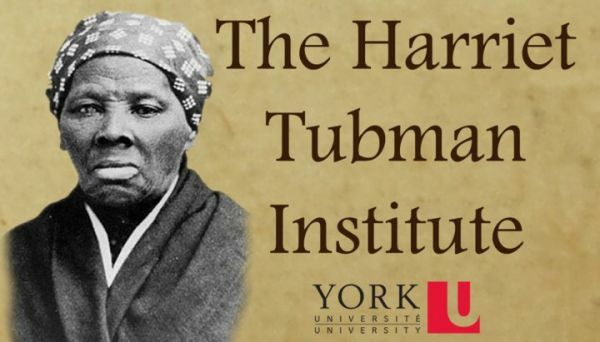
Perhaps this explains why becoming an Associate Fellow of the Harriet Tubman Institute for Research on Africa and its Diasporas at York University has carried such personal significance for me. If learning systems determine whose knowledge shapes society, then institutions like the Harriet Tubman Institute play an essential role in expanding the spaces through which African knowledge can continue to generate new questions for the world.
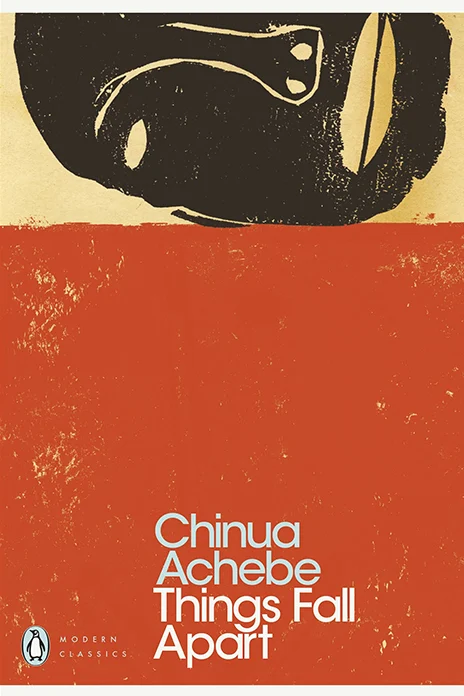
Earning recognition does not mean seeking permission. It means building ideas, institutions, and intellectual traditions with sufficient depth, rigour, and confidence that they become impossible to ignore. When the late Nigerian author, Chinua Achebe published his 1958 masterpiece Things Fall Apart, he faced a global literary landscape that treated African lives as primitive footnotes to European history. Instead of seeking Western approval, he famously bent the English language to capture the complex philosophy, rich proverbs, and human dignity of traditional Igbo culture. Chinua Achebe did not wait for universality to be granted. He wrote the world differently.
As I reflected on conversations that took place at the CAAS during my journey home, I found myself returning once again to the words of Achebe himself in his 1994 interview with The Paris Review Chinua Achebe, The Art of Fiction No. 139:
“Until the lions have their own historians, the history of the hunt will always glorify the hunter.”
Achebe’s observation has long been understood as a call for narrative justice. Increasingly, however, I have come to see it as a call for Learning Justice. For if societies do not possess the authority to teach their own histories, define their own knowledge traditions, and imagine their own futures, then injustice extends far beyond representation. It becomes embedded within the very systems through which learning itself is organised.
This reflection also brought to mind the work of Sylvia Wynter, whose scholarship challenges us to question the assumptions underlying dominant knowledge systems and the categories through which humanity itself has often been understood. In her discussion of “psychic colonisation” in Unsettling the Coloniality of Being/Power/Truth/Freedom: Towards the Human, After Man, Its Overrepresentation – An Argument, Wynter reminds us that decolonisation is not simply about changing political institutions. It also requires transforming the epistemic frameworks through which societies understand themselves and others.
The challenge before us is therefore not only to expand access to education. Nor simply to improve governance. Nor even to preserve Indigenous knowledge. It is to reimagine the conditions under which diverse knowledge systems coexist with dignity, legitimacy, and mutual respect.
For me, this is where Learning Justice ultimately finds its purpose. Not in replacing one intellectual tradition with another. But in creating conditions where multiple traditions can contribute more equitably to our shared human future.
The Journey Home: Learning Justice and Africa’s Intellectual Future
As my aircraft lifted from Toronto and began its long journey back across the Atlantic, I found myself reflecting on the conference in an entirely different way. When I travelled to Canada, I believed I was attending an academic conference. When I returned to Nairobi, I realised I had participated in something much more enduring. CAAS 2026 had become a conversation about Africa’s intellectual future.
Not simply about Africa’s past.
Nor even about Africa’s present.
But about the kind of learning systems that will shape the continent – and indeed the world – for generations to come.
Throughout the conference, scholars returned repeatedly to questions of memory, identity, governance, justice, development, Indigenous knowledge, institutional transformation, and global partnership. These conversations were extraordinarily diverse in their disciplinary perspectives, yet they seemed to converge around one shared conviction.
The future cannot simply be inherited.
It must be learned.
And if the future is learned, then the systems through which societies organise learning become matters of profound public importance.
Every public policy is also a learning policy. Every governance system is also a learning system. And every development pathway is shaped, consciously or unconsciously, by how societies organise the production, stewardship, transmission, and renewal of knowledge.
The challenge before us, therefore, is not whether Africa possesses knowledge. It always has. The challenge is whether our institutions, universities, governments, communities, and international partnerships create the conditions under which that knowledge can flourish on its own terms while contributing meaningfully to our shared global future. That, ultimately, is what Learning Justice seeks to encourage.
Perhaps the most enduring institutions are not built when people set out to build institutions. They emerge when people spend years pursuing questions that refuse to let them go.
As I look ahead, I do so with both humility and hope. Humility because Learning Justice remains an evolving research programme, continually refined through dialogue, collaboration, institutional engagement, and critical reflection. Hope because the conversations that began in Toronto reaffirmed that scholars across disciplines and continents are increasingly asking questions that resonate deeply with a central concern…
If colonialism extracted resources, perhaps its most enduring legacy was the unequal organisation of learning itself. Perhaps that is the unfinished intellectual project of our time.
The most important work before us is not simply producing more knowledge. It is cultivating more just ways of learning together.
Given that knowledge shapes development, perhaps one of the defining questions of the twenty-first century is no longer simply who governs nations, economies, or institutions – but who governs learning, and who gets to teach the future?
About Magdaline Nkando
Dr. Magdaline Nkando is the Founder and Lead of Kujua Collective, an African-led platform advancing knowledge systems transformation and Learning Justice. Her work focuses on how knowledge is produced, governed, and applied within institutions, and how this shapes development outcomes. She is developing Learning Justice as an emerging governance methodology, alongside the Learning Justice Framework and Index, to support institutional transformation. Her work spans research, policy advisory, and institutional capacity building across multilateral and African contexts, with a focus on advancing African knowledge systems within global discourse.