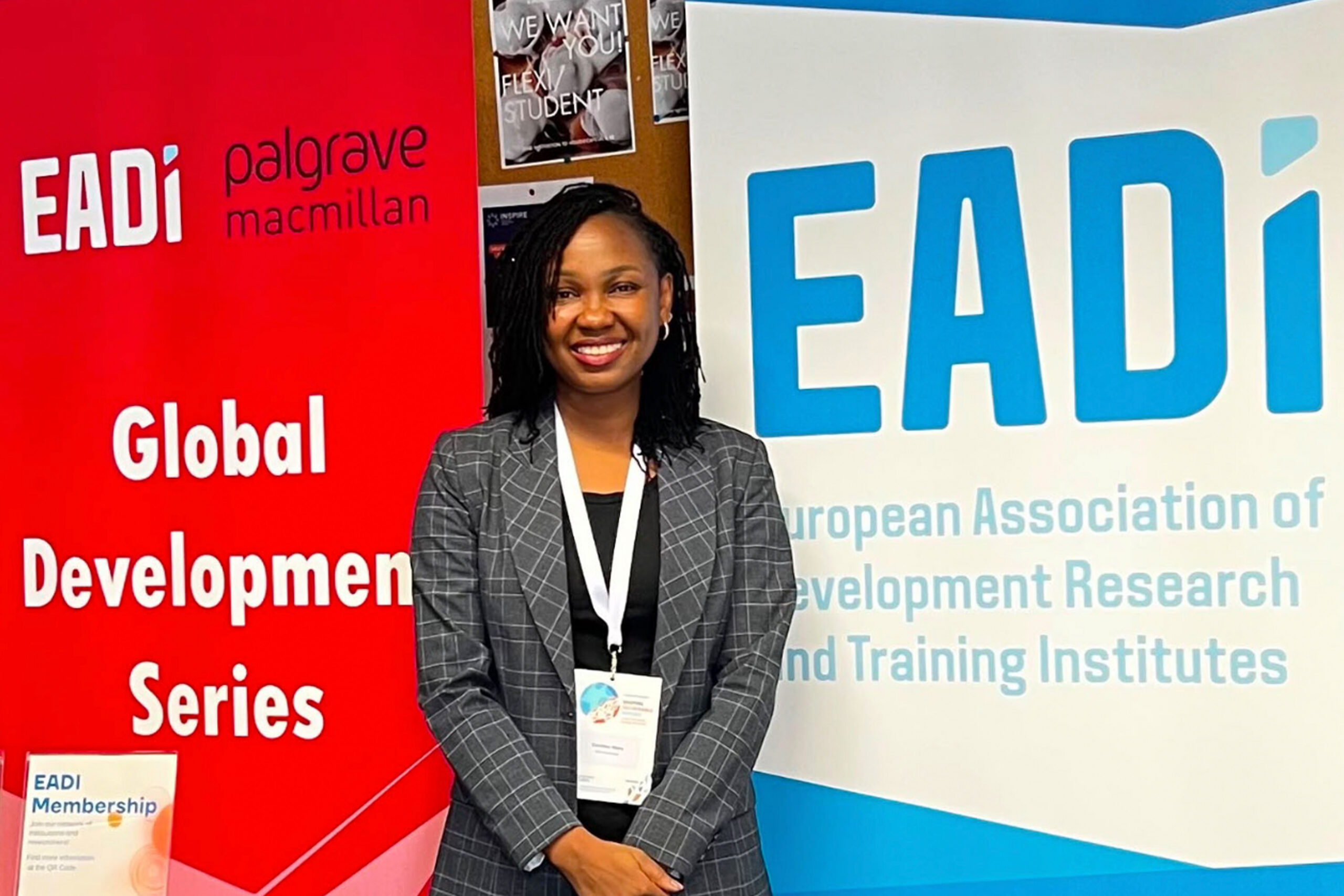
In our latest Q&A Bethlehem Attfield talks to University of Johannesburg‘s Centre for Education Rights and Transformation Director June Bam-Hutchison. June stresses the importance of addressing interpretive injustices that often marginalise the basic early archiving of human interactions. As a member of the Khoi-San Ausi, she also points to Indigenous knowledge gaps within education and research, and explores ways to foreground feminist oral traditions.
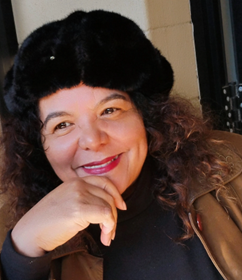
What does the pre-colonial historiographies programme at the University of Johannesburg do, and can you explain your role within it?
I should explain first that ‘historiography’ is the process of writing about the past and producing knowledge from the past. Pre-colonial historiographies have always existed – as evident in rock paintings. Although they are often not conventionally recognised as such, they are still legitimate forms of historical writing and early archiving that capture human interaction with one another, spiritual cosmologies, and the relationships between the natural and material worlds. Unfortunately, this form of archiving is often relegated to the margins of what is conventionally understood as ‘historiography’ in a Western context, but that narrative needs to change.
In South Africa, a formal pre-colonial programme was first introduced in 2012 as part of a ‘catalytic’ programme to open up southern Africa’s history before 1652 – a year which marks the beginning of European colonisation in South Africa.
It was the year after in 2013 that I joined the Centre for African Studies as a research fellow at the University of Cape Town (UCT) under the directorship of Professor Lungisile Ntsebeza, a South African sociologist. Lungisile had also been appointed National Research Foundation (NRF) Chair on Land and Democracy, and National Institute of Human and Social Sciences chair of the ‘Precolonial Catalytic programme’.
We worked together on the programme from 2014 to 2021. It involved looking at unresearched areas of African history (such as oral history, oral traditions and material culture) from at least 500 years before 1652. That entailed working in new ways with oral historians, archaeologists, interdisciplinary scholars in the arts, linguistics, anthropology, as well as drawing on the deep knowledge of time residing within these communities.
I was also working as the research manager for the 500-year archive, which is a digital research platform focused on southern African history before European colonialism. This was with the historian Professor Carolyn Hamilton, who was based at the Archive and Public Culture Initiative at UCT.
Both projects were focused on the production of new knowledge, decolonial historiography, curation of the archive and digitisation.
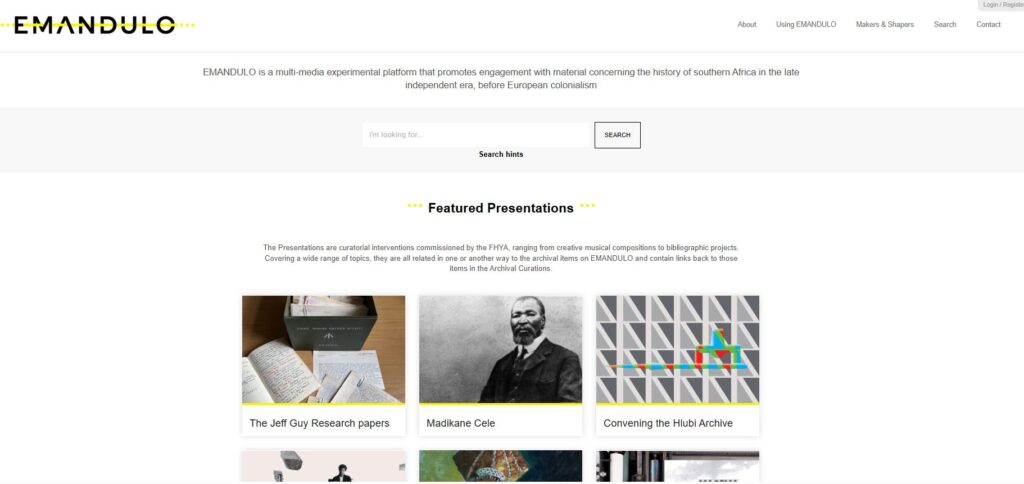
I drew on my global work in education and museums, and together with Carolyn Hamilton we began asking: how could we create meaningful digital exemplars of the ‘archive’ that weave together these diverse historical strands – artefacts, institutional provenance, related scripts, visual materials, ritual, song, maps, proverbs in indigenous languages, clan histories, praise poetry, sound, and other forms of knowledge? How might we reconfigure or reimagine the dispersed ‘archive’ and its institutional governance? How do we challenge the idea of a decontextualised ‘Khoi’ pot—removed from indigenous interpretation and displayed in a museum’s curiosity cabinet—and instead reveal its many layers of meaning for scholars and communities? To do this, we had to probe and find new ways of producing and interpreting knowledge about material culture as ‘archival’.
In the case of restorative justice and restitution for the loss of Indigenous linguistic heritage, who should be responsible for such programmes, and how can effective collaborations be fostered?
Restorative justice and restitution means to correct the injustices of the colonial and apartheid pasts, and the devastating harm caused to indigenous and oppressed peoples. This involves giving back what was disavowed – such as land, environmental resources, culture, and language.
In South Africa, it is important that restorative justice is led by indigenous peoples themselves, as well as language activists and scholars. For example, the last remaining fluent Nlu speakers, (such as 92 year old Ouma Katriena) have suffered intergenerational losses. Nlu is one of the oldest indigenous languages in the world and is spoken by the people identified as ‘KhoiSan’ in southern Africa. Ouma Katriena has led the education of youth in South Africa by establishing her own language school and writing story books for children with her granddaughter in Nlu. This is a restorative justice initiative against the genocide suffered by this community at the hands of the colonists during the 1700s. With this genocide came the displacement of land and the attempted erasure of language and culture. In 2023, Ouma was honored by the University of Cape Town for her contribution to indigenous education.
It is also important to work with indigenous allies in linguistics as well – for example the role of sociolinguistics is vital. However, care must also be taken to guard against new cycles of colonial appropriation, control and erasure. This is where some self-interested linguists, often white and privileged, who have benefited from colonial histories and apartheid, dominate indigenous intellectual property – controlling funding and excluding indigenous scholars in funding proposals. This is just as bad as the process of loss that occurred through the colonial conquest itself. It is in fact another form of violence and is deeply unethical.
We urgently need a code of ethics on linguistic collaborations, and the expertise and insights of sociolinguists could play a crucial role in this.
In most African oral traditions, the repositories of knowledge or custodians of history are men. How did you decide to focus on curating indigenous feminist knowledge?
We should not homogenise Africa, or even South Africa. Africa is such a culturally diverse and complex continent like any other. Feminist indigenous oral traditions have existed since millennia, just as they have in other places in the world, such as India. The real issue is the invisibilisation of feminist oral tradition rather than the question of its existence.
In the colonised south-western tip of Africa that invisibilisation took place through colonial conquest, which imposed patriarchal cultural structures on social formations that had existed and thrived with strong indigenous feminist traditions for millennia. As historical archives reveal, this is a relatively recent development, and part of a broader process of colonialism to erase indigenous culture.
So, I did not have to create anything new—these Indigenous feminist traditions have existed for thousands of years. I simply focused on making them visible, which has become especially important since 2011. This is when a particularly dangerous national African narrative emerged amongst fellow indigenous South Africans. It portrayed ‘Coloured’ women at the Cape as being inherently somehow ‘savage’, ‘breeders’ and ‘oversexed’. This had also been internalised by some Black South Africans themselves, but was a view rooted in colonial stereotypes in archival representations in the visual arts and reinforced by apartheid propaganda, and also in travel writing.
As a scholar of indigenous background, and coming from the matriarchal cultural tradition of the ancient Khoi-San Ausi (first-born daughters; female knowledge-keepers) I found these narratives very disturbing. It revealed to me a glaring gap in South Africa’s historiography on the national narrative and question of who is ‘African’. The lasting damage caused by apartheid propaganda is evidently far more devastating than is often acknowledged. This led me to write a book, Ausi Told Me: Why Cape Herstoriographies Matter.
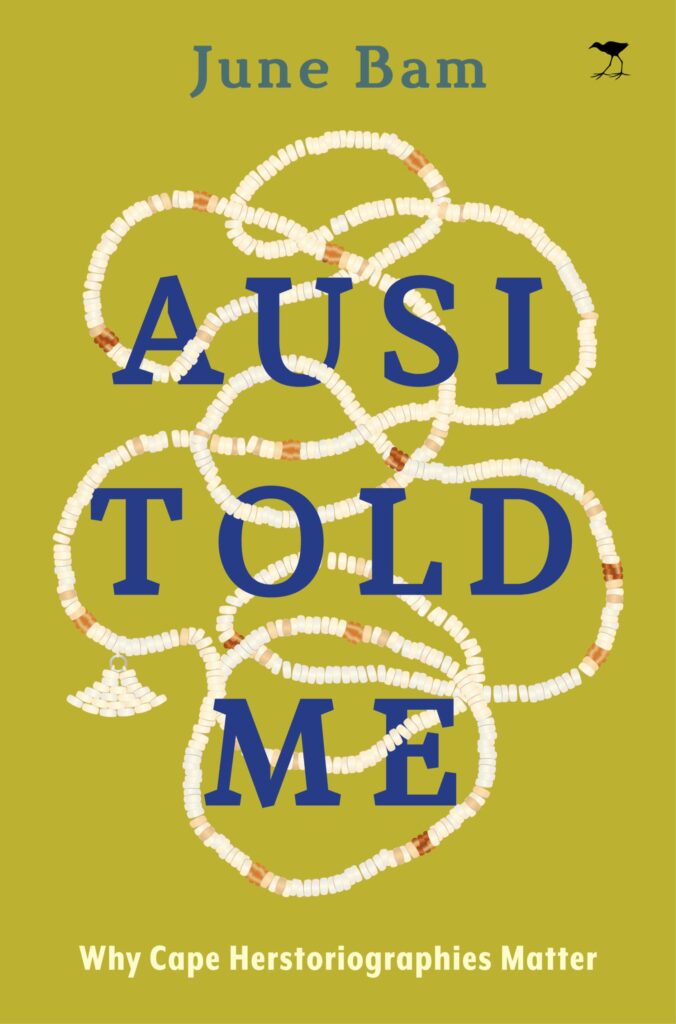
In my international research work within the African Diaspora, I was also very surprised that senior scholars from the continent were unaware of the existence of indigenous South Africans beyond people labelled ‘Xhosas’ and ‘Zulus’. The apartheid era imposed the historically racist and derogatory label ‘Coloured’ on the indigenous Khoi-San people and on those who descended from the formerly enslaved people from the East, as well as other Africans, and those migrating to Europe and intermarrying. This system of racial classification into random ‘fixities’ was in itself a form of indigenous erasure and de-Africanisation.
There are concerns particularly among indigenous peoples of the Americas, about the preservation of digital archives of indigenous knowledge due to the risk of unethical appropriation. Has this been an issue in the Digital 500 Years archive, and if so, how has it been addressed?
I have not been involved in the Digital 500 Years archive project since 2016 which is almost a decade ago. So I am unable to talk about risk mitigations. The San and Khoi Centre which was established in 2020 has been mindful of the San Code of Ethics, and we do have disclaimers on the use and appropriation of indigenous knowledge. I am also mindful of my own work, and I put such protection in place when relevant.
To your knowledge, have there been any efforts to leverage South Africa’s restorative justice initiatives and expand them on a continental scale? How do you think this should be scaled up?
There are initiatives such as Natural Justice and community initiatives such as the A/Xarra Restorative Justice Forum. This brings together civic and environmental activists, feminist indigenous scholars, and Richtersveld Khoi-San chiefs and clans from Namibia and Botswana. However, these efforts are not always effectively coordinated.
We also work with an important initiative in London, Return of the Icons which is a campaign for the return of African spiritual and cultural collections held in European museums and institutions (for example, the Benin Bronzes). It was founded by African Diaspora cultural activist, Onyekachi Wambu who works with the African union (AU) and the UN. At the moment, these initiatives are organic, dynamic and responsive to emerging needs.
Global capitalism has created divisions, and at times enabled destructive or harmful tendencies, such as the creation of complicit criminal syndicates within indigenous communities. There is an urgent need for longer-term, more sustained, coordinated and impactful interventions led by iconic, respected and credible figures within indigenous communities, who are not compromised by greed and criminal activity at the expense of the collective. Examples include politically connected individuals exploiting the repatriation of valuable collections for their own benefit, or land restitutions that are being used to benefit the politically connected elite rather than the wider community. In South Africa, this emerging lack of trustworthy leadership is currently our biggest challenge.
We invite you to listen to June Bam-Hutchison’s evocative presentation on TED Talk, “Reclaiming Ancient Knowledge.” June also spoke at a conference last year on cognitive justice, A Day of Dialogue & Reflection: 30 years of Democracy in South Africa.