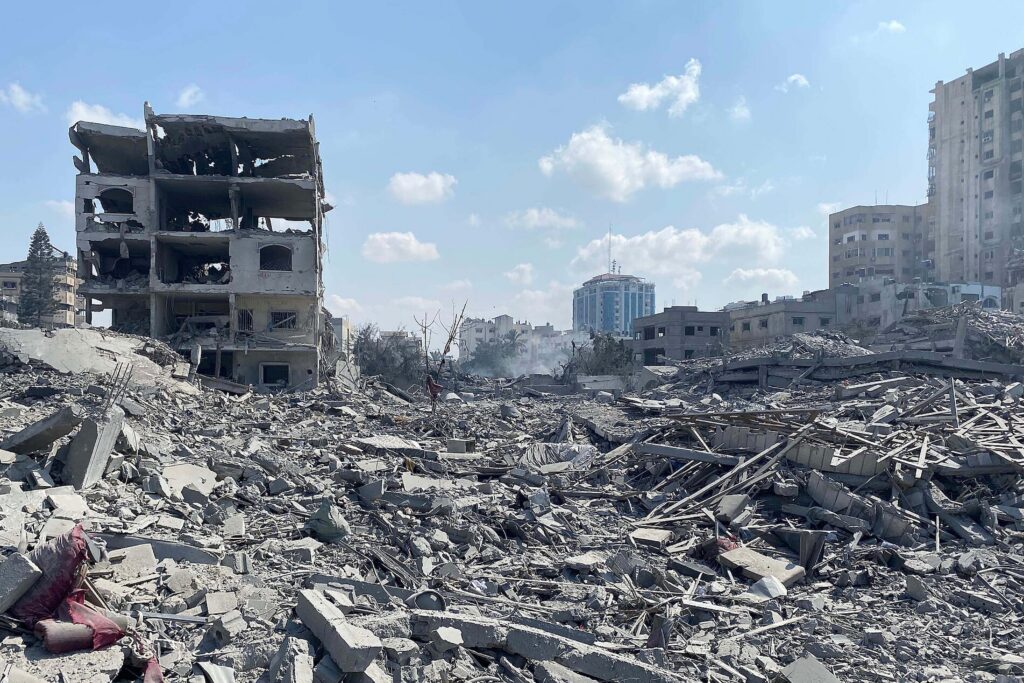
This special issue (The Gaza Genocide and the Crisis of the Global North. Guest Editors: Ibrahim Fraihat and Abeer Al-Najjar, Volume 47, 2026) examines the war on Gaza not only as a devastating act of mass violence against Palestinians, but as a revealing moment that exposes deep crises within Western political, legal, and media systems. Rather than treating Gaza as an isolated tragedy, the contributors argue that it helps us better understand how power operates in the Global North today, through
selective morality, unequal application of international law, and the silencing of certain voices.
The articles show how Western governments have actively supported Israel politically, militarily,
and diplomatically, while shielding it from accountability. They also examine how mainstream
Western media and knowledge institutions have failed ethically, often downplaying or
depoliticising Palestinian suffering and frame genocide as a purely humanitarian issue rather
than a political and colonial one. The issue further explores how international law and human
rights principles are applied selectively, revealing a racialised hierarchy of whose lives are
protected.
Taken together, the special issue argues that Gaza represents both a genocide against Palestinians
and a profound rupture in the credibility and moral authority of the Western-led international
order, forcing a global reckoning with power, justice, and resistance.
Read the full Special Issue: The Gaza Genocide and the Crisis of the Global North. The SI is free to access until the end of July.
“This special issue is a comprehensive scholarly intervention on the genocide in Gaza, conceived and written while the genocide is still unfolding. It situates Gaza Genocide within a broader crisis of the Global North, exposing fractures in Western political authority, legal credibility, and moral claims to human rights leadership. Emerging from a moment that has shaken faith in the international order, it brings together leading scholars to mark a turning point in how genocide, international relations, power, media, and law must now be critically studied and understood.”
Abeer AlNajjar and Ibrahim Fraihat (Guest Editors)
About the Special Issue Guest Editors
Abeer AlNajjar is Professor of Media and Journalism at the American University of Sharjah. Her work examines media practices, journalism ethics, and conflict reporting, with sustained scholarship on Palestine in the media, including studies of Jerusalem and Gaza coverage. She has held appointments as Visiting Scholar at the University of Westminster (2018–2019) and Visiting Senior Fellow at the LSE Middle East Centre (2016–2017), and previously served as
Acting Dean of the Jordan Media Institute (2011–2012). She earned a PhD in International Journalism from the University of Edinburgh (2004). AlNajjar serves on the editorial boards of Journalism Studies and International Journal of Communication and leads the Middle East and North Africa Critical Media Literacy Index as principal investigator. She co-edited Language, Media, Politics and Society in the Middle East, Edinburgh University Press (2018) and her transdisciplinary approach connects journalism studies, political communication, and critical media literacy.

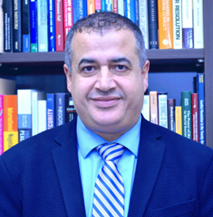
Ibrahim Fraihat is a Professor of International Conflict Resolution at the Doha Institute for Graduate Studies, the founding president of the Arab Society for Conflict Studies, and a Non-Resident Fellow at the Baker Institute for Peace and Conflict Studies at Juniata College, USA, and the Middle East Studies Forum at Deakin University, Australia. He previously served as a Senior Foreign Policy Fellow at the Brookings Institution and taught conflict resolution at Georgetown University. His books include Conflict Mediation in the Arab World (co-ed., Syracuse University Press, 2023), Iran and Saudi Arabia: Taming a Chaotic Conflict (Edinburgh University Press, 2020), and Unfinished Revolutions: Yemen, Libya, and Tunisia after the Arab Spring (Yale University Press, 2016).