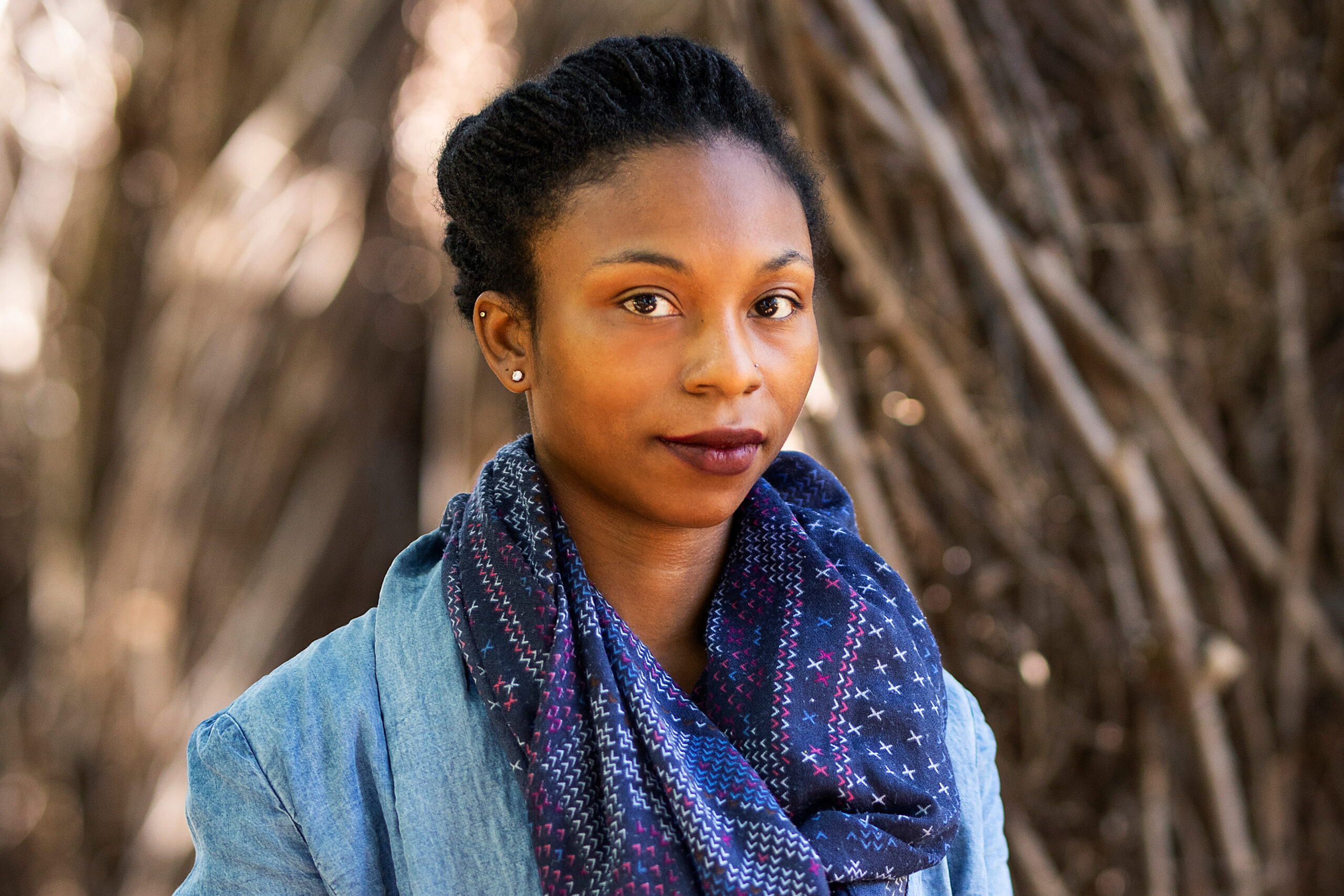
How can research translate into action? Associate Professor and Chair of Africana Studies at Davidson College and newly appointed academic editor at Third World Quarterly (TWQ), Takiyah Harper-Shipman, talks to Mira Mookerjee about her upcoming book, Unruly Fertility: Race, Development, and Decolonial Reproductive Politics, defiant scholarship, scholar-activism, and her forum Reckoning with Empire.
“Ultimately, my research is inspired by what is at stake if we forget that research can be a tool for liberation.”
Takiyah Harper-Shipman
1. What does scholar-activism mean to you?
For me, scholar-activism begins with writing – but writing in a way that is accessible. Over time, I’ve come to see how inaccessible academic work can be, including my own. Early in my career, I wrote primarily for policymakers and fellow academics, focusing on how my research could “inform policy.” Yet, if scholar-activism is truly about engaging with and supporting communities, our writing must be for them. I now try to write for my grandmother, my sisters, and my friends – people outside the academy who should still be able to understand and find value in these ideas. Graduate training often teaches us to write opaquely, to obscure rather than clarify. Relearning how to communicate plainly and meaningfully with the people who matter most is, I think, a key part of scholar-activist work.
Another dimension of this work involves redistributing institutional resources back into the communities that universities often extract from – intellectually, materially, and socially. Academia has long functioned as the handmaiden of empire, turning lived experiences into “data” and theories for others to consume. Scholar-activism, to me, is about reversing that flow: channelling resources, time, and support from universities into communities with as few demands as possible.
Importantly, this must be done with dignity and care, not as charity or token engagement. Too often, institutions invite marginalised groups to “share their stories” in ways that reduce their experiences and potential to trauma. Alternatively, what does it look like to value people’s knowledge and presence without asking them to ‘perform’ their hardship? The goal should be to support communities without extracting more labour or emotional energy from them.
Ultimately, scholar-activism is about writing, teaching, and engaging with integrity – centring community, redistributing power, and reminding us that the real strength for social change lies not only in institutions or policymakers, but in how we relate to one another.
2. What inspires your research?
Although the Western academy has historically produced the “scientific” justification for various long-standing injustices and helped to maintain uneven distributions of power away from non-white and other marginalised identities, academia also gives room for contradictions to emerge that challenge those structures and their very existence.
The same enterprise that produced Milton Friedman could also produce June Jordan and Walter Rodney. In no other context would I ever put these three people together, but to say that their research has profoundly shifted how people think, even if it is in opposing directions. But what they all understood was how research was itself a terrain of struggle that conditions what people believe to be possible.
Knowing that my research exists in an enterprise that gives way to both of these possibilities inspires me not to just do research, but to ask questions and look for answers that show what other ways of existing might be possible. Ultimately, my research is inspired by what is at stake if we forget that research can be a tool for liberation.
3. Can you tell me about the Miami Institute for the social sciences, from which you launched the forum, titled Reckoning with Empire?
I had previously worked with the Miami Institute for the Social Sciences (MISS), editing a forum on international development. I have grown to appreciate MISS as an intellectual space that abuts formal academia, but gives scholars and activists the imaginative bandwidth to engage thorny issues in creative ways. After finishing the smaller forum on international development, Maribel Morey, the founder and executive director, approached me about doing another series.
I was about to start a Fulbright Programme in Senegal, and Maribel thought the experience might provide the substance for a longer series. Instead, I decided to focus the series on imperialism and empires – their fortification, their crumbling, and the more subtle forms of their expansion.
In Unsettling the Coloniality of Being/Power/Truth/Freedom: Towards the Human, After Man, Its Overrepresentation – An Argument, the writer and academic Sylvia Wynter talks about a kind of ‘psychic colonisation’, where people lack the ability to imagine different systems, to imagine forms of resistance, or to imagine how we could create an anti-imperialist world. However, resistance can take many different forms, all contributing towards moving us in a better direction.
So rather than using the forum (Reckoning with Empire) to simply map out the nodes of imperial power – Euro-American, Israeli, or otherwise – I wanted to highlight points of resistance across different contexts. The idea was to connect people who are engaged in anti-imperialist work so that others could find pathways to participate: to join movements, share ideas, or encounter new literature and politics.
I reached out to people whose work I admire. The first conversation was with Patricia Daley, Professor of the Human Geography of Africa at the University of Oxford, and Amber Murrey, Associate Professor in Human Geography at the University of Oxford, on their book Learning Disobedience (published by Pluto Press) – a remarkably accessible and inspiring text that rethinks not only geography, but also international development and disciplinary knowledge more broadly, with a focus on centring Africa.
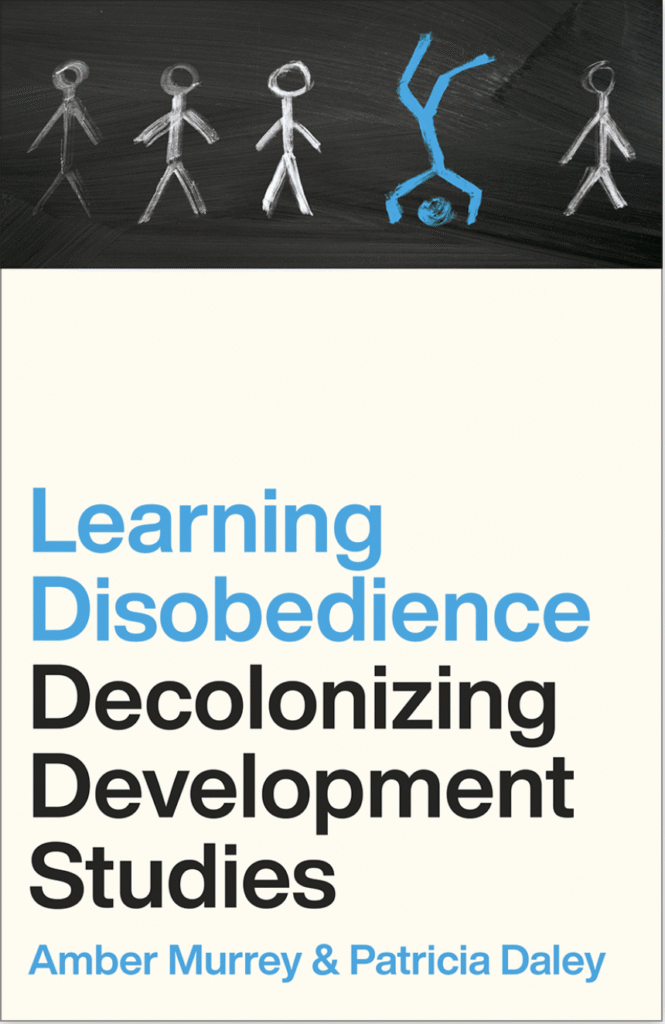
I also interviewed comrades at the Thomas Sankara Library in Burkina Faso, who are doing vital grassroots organising work in the capital, Ouagadougou.
We recently published an interview with scholar-activist Sheena Sood, founder of Yogis for Palestine. Her work examines “om-washing” – the way hyper-nationalist governments, including Israel and India under Narendra Modi, instrumentalise yoga and wellness cultures to sanitise state violence and militarism, effectively becoming more “efficient” at oppression under the guise of peace.
While in Senegal, I also collaborated with a group called GAEC – the African Group for Critical Education. They invited me to develop a workshop series on the Senegalese novelist and filmmaker Ousmane Sembène, using his work as a lens to understand political economy. The students later wrote reflections on Sembène’s films and the discussions we had, and we published those as part of the forum.
The entire process has been incredibly rewarding. I don’t know what impact it will ultimately have for others, but for me, it has been deeply inspiring – a reminder that there are people all over the world doing powerful, creative, and necessary work in the struggle against imperialism.
4. Can you tell me about the Group of Action and Critical Study-Africa (GAEC) and your experience working with them?
GAEC is an independent, critical organisation based in Senegal. I first connected with them through my friend Wendell Marsh, who introduced me to Abdou Seck, one of the founders.
What I find especially compelling about GAEC is their commitment to working closely with graduate students from Gaston Berger University, which is the main university in Saint-Louis in Senegal. They are deeply intentional about expanding what students learn beyond the confines of a rigid, Western-oriented curriculum. In many universities across the African continent, curricula remains overwhelmingly white and Eurocentric – students are reading and referencing figures like Kant, Aristotle, and Plato, or in the social sciences, Weber and Durkheim – while African thinkers, artists, and radicals are often absent from the syllabus.
That’s part of the reason I chose to focus on Ousmane Sembène (Senegalese film director, producer and writer) in my workshops. Sembène, as a Senegalese writer and filmmaker, has an extraordinary amount to teach us – not just through his creative works, but through his cultural and political critique. Using his films and novels to engage with political economy offered the students a lens that was both locally grounded and theoretically rich.
GAEC does this kind of work continuously. They have built a library dedicated to Black scholars in Africa and the diaspora. GAEC actively supports students in translating key texts from English into French, creating a truly multilingual and accessible scholarly environment. But more than that, they encourage students to think critically – to interrogate their own social and political contexts in connection with broader geographical and historical backdrops. That process is often undervalued, but it is essential for developing an engaged, decolonial consciousness.
What is also remarkable is how GAEC-Africa merges critical education with community engagement. They work closely with local women’s groups and grassroots organisations, ensuring that scholarship is not confined to the university but contributes directly to community empowerment. In that sense, GAEC-Africa embodies the integration of scholarship, activism, and mentorship – a model for how intellectual work can remain grounded in, and accountable to, the communities it seeks to serve.
5. In All Skinfolk Ain’t Kinfolk you say that “a hyper-focus on citations is often about replacing white men and women as gatekeepers in academia because for many, academia is the end itself. But for many of us located in the Third World, academia has always been merely one of many possible means to end suffering in our non-academic communities.” Can you tell me more about your ideas on academia, action and activism?
In that piece for The Caribbean Philosophical Association, I was becoming acutely aware of academic grift in these sophisticated forms. I don’t mean swindling money, but these deceptive practices peddled as redress for academia’s very real and long-standing racist and misogynistic citational patterns.
When we think about the origin of this issue, at its core, the problem was not about citation. This presumes that people actually read non-white and women scholars, and just didn’t cite the work. When in reality, white men never thought the scholarship produced by and about non-white people and communities was worth engaging with in the first place. Their assumptions being that scholarship by and about non-white men could only be identity-based and provincialised to those identities.
There is an eerie echo in the current identity-based citational efforts that people are deploying, which stands to undermine the very goal of these efforts. I’ve experienced this tension firsthand. When I submitted my book manuscript, a Black woman scholar reviewed two chapters on North Carolina, but she only asked about my citations, and if I cited Senegalese women (which I do), and suggested for me to avoid citing Black men or male scholars.
That kind of directive reveals how citation politics can become exclusionary, even as it claims to be redressing exclusion. It’s precisely this tension – the collision between politics of recognition and politics of knowledge – that continues to animate my reflections on what academic engagement could, and should, be.
That realisation brought me back to the fact that academia functions as an economy – and citations are its currency. The more you are cited, the more your work and ideas are perceived as valuable, and the more access you gain to resources, opportunities, and professional mobility. Many people are, understandably, invested in that system. And they benefit from trafficking in these identity-based citational practices.
But this practice isn’t about engagement or dialogue; it’s about inscription – about ensuring certain names are recorded as markers of importance or influence. I make this distinction because genuine engagement can often mean critique, disagreement, and/or departing from all or part of the author’s arguments. And I find people promoting these citational practices do not want intellectual engagement or disagreement – this is what produces the gatekeeping logic – you must cite my work, or the work of those in my circle, but do not disagree with it.
What struck me is how this practice reshapes our very understanding of what it means to “read” or to “engage.” For some, citation is no longer an invitation to think with or against an idea; it’s simply a symbolic gesture of recognition – a stamp of affiliation. That dynamic can easily distort intellectual exchange and narrow the field of debate. For me, Linh Huah’s (Rhetorical Arts Senior Instructor at Loyola Marymount University) approach to citational practices is especially generative in thinking through a citational ethic that allows for thoughtful but rigorous engagement with scholarship that actually speaks to me and the work that I’m doing without tokenism or reproducing extant power dynamics.
6. In Stripping Away the Body: Prospects for Reimagining Race in IR you reference what Ella Shohat calls the “homogenous feminist master narrative”, can you tell me what this means and more about the piece?
Professor, writer and cultural theorist, Ella Shohat’s idea of the “homogenous feminist master narrative” has been taken up by several scholars, including Sylvia Tamale in Decolonization and Afro-Feminism, Chandra Mohanty in “Under Western Eyes”, and Oyèrónkẹ́ Oyěwùmí in The African Gender Studies: A Reader and Ties that (Un)Bind: Feminism, Sisterhood and Other Foreign Relations. What they collectively critique is the dominant Western feminist narrative that presents non-white women across the world as a single, homogenous group of uniquely oppressed subjects. This framework flattens difference and reduces diverse experiences to a singular story of victimhood.
A well-known example of this comes from Saba Mahmood’s Politics of Piety, where she describes how Western feminists often interpret Muslim women’s wearing of the hijab as a sign of oppression. Such interpretations leave little room to understand it as an act of agency, choice, or religious commitment because it falls outside Western definitions of feminist practice shaped by Eurocentric assumptions about freedom, modernity, and womanhood.
Similar patterns appear in portrayals of African women. African feminist scholars such as Oyèrónkẹ́ Oyěwùmí and Ifi Amadiume, Patricia McFadden, Naminata Diabaté, Sylvia Tamale, and Gabeba Baderoon highlight how African women are often depicted as powerless victims of patriarchy. These depictions ignore the broader global systems – imperialism, racial capitalism, and neocolonialism – that structure inequality. They also ignore the fact that western and white women are not outside these systems; many participate in and benefit from them.
The ‘homogenous feminist master narrative’ therefore does more than erase complexity. The heuristic calls our attention to how Western feminist frameworks continue to reproduce forms of oppression and emulate white patriarchy, rather than dismantle it. It also obscures how Western feminism itself can reproduce hierarchies of race, labour, and power. It positions Western, and largely, white women and women of color aspiring towards whiteness, as the standard-bearers of gender equality, while dismissing the intellectual and cultural traditions of non-white women. Yet, as these scholars argue, many Global South feminists are not even centring Western women in their critiques.
Ultimately, the problem with this narrative is that it universalises Western feminism and presents it as the path toward liberation for all women. In doing so, it not only limits the imagination of what equality can mean, but also denies diverse feminist practices and knowledge systems that have long existed outside the West.
7. In The Business of Black Death, you explore how countries in Africa were quick to react to the COVID pandemic. However, the global public health industry still reproduces what political scientist Malinda Smith calls “the African tragedy” in Discourses on Development: Beyond the ‘African Tragedy’. Can you tell me more about this?
That piece in Africa is a Country emerged from watching global narratives about Africa unfold during the height of the COVID-19 pandemic. From the outset, there was an assumption that the virus would devastate all of Africa. Commentators predicted that Africa would become the epicentre of global suffering because, as the narrative went, it had all the “wrong” conditions: corrupt and opaque governments, weak health systems, overcrowded cities, and large youth populations that would make social distancing impossible. These assumptions were so deeply rooted in anti-Blackness and Afro-pessimism that they were accepted without question.
But, as the pandemic unfolded, it became clear that the epicentres were not in Africa at all – they were in the Global North. The worst outbreaks were in Italy and New York, where many of the same issues emerged: lack of transparency from governments, overwhelmed hospitals, inadequate health infrastructure, and political resistance to basic public health measures like masking and social distancing. Everything that had been predicted for Africa – chaos, denial, and mass death – was happening in the West.
Yet, when Africa did not experience the catastrophic outcomes that had been foretold, there was no willingness to recognise the agency, organisation, or effective responses of African governments and communities. Instead, the same racist logic was recycled to explain the opposite outcome: perhaps the numbers were inaccurate, or perhaps the governments were hiding data. There was no acknowledgment that African countries had acted quickly and effectively – for example, Ghana was among the first in the world to close its borders – or that communities had taken collective measures to protect themselves.
This is what Malinda Smith describes as “the African tragedy”: a narrative framework in which Africa is imagined only through disaster, dysfunction, and failure. Even when African nations succeed, the world refuses to see it. To recognise that African countries managed COVID-19 well would mean admitting that the West is not the universal model of competence and progress, and that whiteness is not infallible.
When I was writing this piece, I was also thinking about the importance of archiving that moment. I worked with one of my students, a public health major from Zimbabwe, who had been in the field when the pandemic began. She saw firsthand how people were masking, distancing, and organising public health responses at the community level. We decided to document it – to ensure that there was a record showing that this narrative of African tragedy persisted even in the face of evidence to the contrary.
Even now, very little writing acknowledges that the African continent, along with places like Vietnam and Cuba, managed the pandemic remarkably well. Recognising that would require unsettling deeply entrenched racial and geopolitical hierarchies – and so, instead, the myth of Africa as a perpetual site of tragedy endures.
8. In your talk for African Women’s Emancipation Day 2021 you reference the term “ecofascism”, could you explain this term and what it means in practice?
Ecofascism is a term that describes the use of environmental or ecological concerns to justify authoritarian, racist, or coercive population control policies – particularly those targeting the fertility of poor, non-white women. There’s an excellent article by Max Ajl and Lisa Tilley titled Eco-socialism will be anti-eugenic or it will be nothing: Towards equal exchange and the end of population that discusses this, and a very insightful book edited by Donna Haraway titled Making Kin, Not Population. Both explore how the push for population control often hides behind the language of environmentalism and planetary protection.
“This is the danger of ecofascism: it disguises racial and class hierarchies as environmental concerns. It takes the language of sustainability and uses it to police the fertility and lives of marginalised groups. It shifts blame from the Global North’s systems of extraction, production, and overconsumption onto the Global South, and especially onto poor women.”
Takiyah Harper-Shipman
The basic idea behind ecofascism is that certain humans – through overpopulation and overconsumption – are responsible for destroying other forms of life and disrupting natural ecologies. It positions humanity, or more specifically certain groups of humans, as the enemy of the planet. This framing is deeply anti-humanist, because it separates “humans” from “nature,” as though they are distinct – but humans are part of the natural world, even though Western ecological discourse often insists on maintaining that divide.
The ecofascist belief system tends to replicate hyper-conservative, patriarchal, and racialised ideas about controlling human reproduction – particularly the reproduction of non-white and poor women. It justifies these controls by claiming they are necessary to save the environment or to address the earth’s so-called “carrying capacity.” Human activities are undoubtedly harming ecosystems and threatening biodiversity, but ecofascism deliberately obscures the real causes of ecological collapse and places the blame on those who are most vulnerable to climate change. Simply put, it’s not global overpopulation that is destroying the planet – it’s capitalism, and specifically the extractive industries and consumption patterns rooted in the Global North.
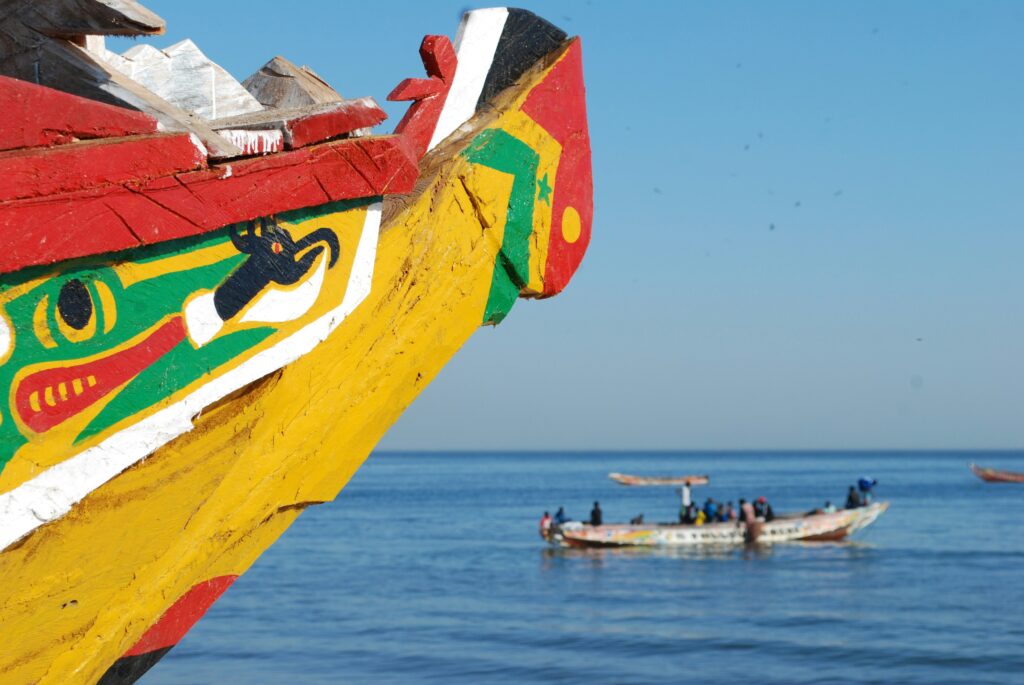
A clear example from my forthcoming book is in Senegal and the fishing industry along the West African coast. For generations, coastal communities have engaged in artisanal fishing – it’s not just a livelihood but a way of life. Fishing skills and practices are passed down through families. It’s also gendered in interesting ways: men typically go out to sea to catch fish, while women clean, cut, prepare, and sell the fish in local markets. The national dish of Senegal, ceebu jën (fish and rice), reflects just how culturally and economically central fishing is.
However, today the West African coast has been severely overfished. The cost of fish in Senegal has skyrocketed, and small-scale fishers in wooden boats now have to go much farther offshore, at great risk, just to make a living. Western narratives often attribute this to “overpopulation” or to locals consuming too much fish. But that’s not what’s happening. The real cause is industrial overfishing by European and Chinese trawlers. These massive vessels – many of which are subsidised by the European Union – use advanced refrigeration technology to capture and store huge quantities of fish, which they then export to Europe and China. In many cases, the fish aren’t even sold as food – they’re processed into fish oil for cosmetics and other products.
So, when we talk about ecological destruction, it’s not Senegalese women having children who are endangering marine biodiversity – it’s European and Chinese corporate practices backed by state subsidies. Yet, the ecofascist narrative and the policies that stem from it continue to target West African women through birth control campaigns and coercive family planning programmes. These efforts frame population reduction as an environmental responsibility, when in fact they deflect attention from the capitalist and colonial structures that are truly responsible for ecological collapse.
This is the danger of ecofascism: it disguises racial and class hierarchies as environmental concerns. It takes the language of sustainability and uses it to police the fertility and lives of marginalised groups. It shifts blame from the Global North’s systems of extraction, production, and overconsumption onto the Global South, and especially onto poor women.
In practice, ecofascism manifests as a set of policies and discourses that treat non-white populations as ecological threats. It reinforces colonial ideas of who is “fit” to reproduce, and who must be controlled, all while claiming to act in defence of the planet. And because it presents itself as environmentally virtuous, it’s difficult to challenge – it sounds moral, even urgent. But in reality, it reproduces the same old hierarchies of race, gender, and empire, just under a green banner.
In short, ecofascism is not about saving the earth – it’s about preserving existing power structures. It blames the most vulnerable communities for ecological crises created by global capitalism, while leaving industries and nations that profit from the planet’s destruction blameless.
9. What is your proudest moment in your career so far?
When I think about the moments I’m most proud of, they almost always involve my students. I’ve had many instances where a student’s senior thesis or project comes together beautifully, when they’ve been transformed by the work; when they present their work, and you can sense the audience’s engagement and inspiration – it’s incredibly rewarding. Knowing I played a small role in helping them always makes me proud.
One standout moment was when I taught our Africana Studies Capstone course. We partnered with a historically Black community in Smithville, North Carolina – a community currently fighting gentrification and navigating a very hostile local government.
My students worked directly with community members and transformed the data they shared about income, jobs, housing, and space within the neighbourhood into data visualisations and narratives – what we called “data storytelling.” The goal was to situate the Smithville community within the town’s changing demography and political economy. Doing so highlighted racial and class inequalities, while showing how the town’s economic structure was also unsustainable for everyone in the long-run.
What made the experience especially meaningful was that one of my former students organised a storytelling event with that same community. He had collected oral histories, transformed them into poetry, and created a performance titled Don’t Lose Heart, complete with live music. He invited my current students to present their visualisations and data stories at his community event. It was attended by community members, local politicians, and journalists.

When my students presented their work, the community’s response was very moving – people were genuinely touched by seeing their lives represented with dignity and care. Afterward, my former student stood up and said, “This is such a full-circle moment.” He explained that it was my class that had first introduced him to this community years ago, and now he was back, collaborating with a new generation of students to continue the work.
That moment captured what I believe scholar-activism should look like: sustained engagement, accountability, and mutual respect between the university and the community.
Seeing my students’ growth, the real impact of their work, and watching them take ownership of projects that matter to their communities makes me so proud. Academia rarely allows us to see tangible impact, but in that moment, we did. It reminded me why I do this work: to connect knowledge with care, and to build relationships that outlast the classroom.
10. As a newly appointed member of the Third World Quarterly (TWQ) Academic Editorial team, what drew you to the role, and what do you hope to contribute?
I chose to join TWQ because I believe deeply in the journal’s original mission and the importance of the space it continues to hold in global scholarship. What drew me to TWQ was the opportunity to support and amplify innovative, challenging work – the kind of scholarship that pushes boundaries and asks uncomfortable questions. So often, I encounter scholars producing truly groundbreaking ideas, but there isn’t always a clear venue for their work. You might read something or meet someone whose research is transformative and think, “I can’t wait to see where this goes,” but those ideas sometimes struggle to find a home in many conventional journals.
As an editor, I wanted to be able to change that – to say, “I have a venue for this.” I wanted to use whatever institutional power or influence I have to make sure that important, risk-taking scholarship can reach an audience rather than being shut out by gatekeeping or rigid disciplinary norms.
For me, joining Third World Quarterly represents that possibility: the chance to create and protect space for critical, innovative, and globally conscious work that might not fit neatly elsewhere. It’s about ensuring that the ideas that challenge us most – the ones that make us rethink what we know – have a place to be heard.
11. What are you currently working on and what are your aspirations for the future?
Being in Trump’s America currently makes imagining the future feel a bit bleak– but I’m currently finishing my second book Unruly Fertility: Race, Development, and Decolonial Reproductive Politics, which will be published by Stanford University Press in July 2026.
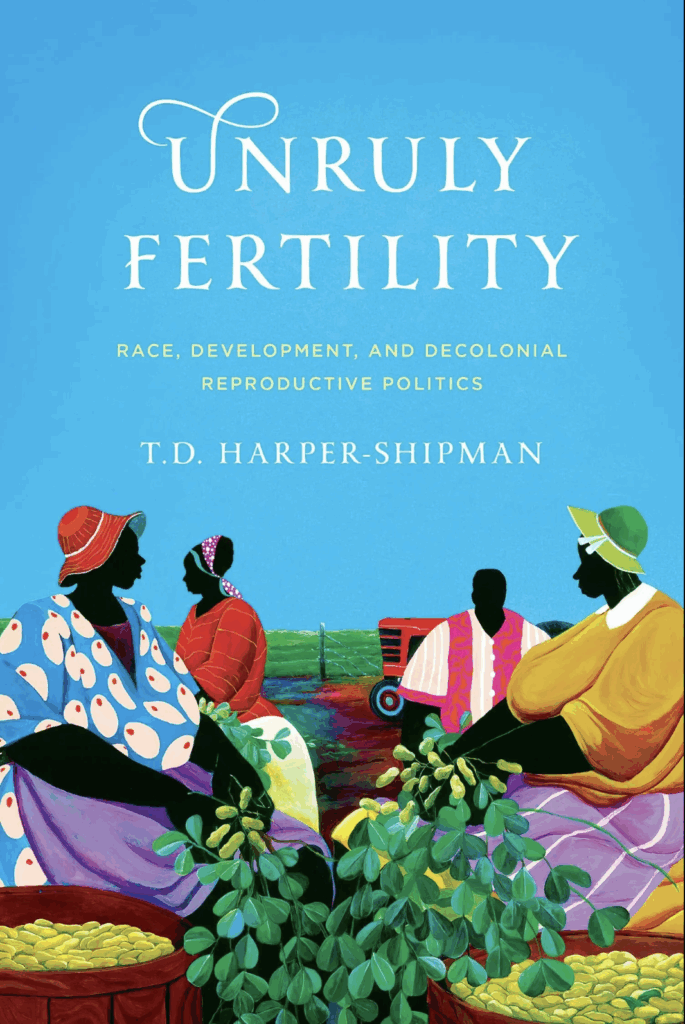
The book offers a comparative study of Senegal and North Carolina, examining how development narratives link these two places through their regulation of poor Black women’s fertility. I look at how both contexts use reproductive health policies – including maternal and infant health programmes to address broader economic and social crises. At the heart of these state-led interventions is the belief that poor Black women are “over-reproductive” yet “under-productive.” Their fertility is cast as excessive and their social and economic contributions are undervalued.
This framing allows states and development institutions to scapegoat Black women for underdevelopment and economic stagnation, rather than acknowledging the deeper structural forces at play such as global capital restructuring, labour exploitation, and inequitable reproductive health policies.
However, the book is not just about critique. It also highlights the alternative visions that poor Black women and their communities develop in response. I explore what I call ‘decolonial reproductive politics’ – the everyday practices, intentional or not, that allow women to decouple their reproductive choices from state and economic agendas. These acts expand our understanding of reproductive freedom beyond the access to birth control or abortion, and instead envision a broader politics of life, care, and dignity.
Ultimately, Unruly Fertility argues that true reproductive freedom involves dismantling the racial, gendered, and economic hierarchies that define who is seen as “too fertile,” “not productive enough,” or “undeserving” – and who is allowed the right to have a family. It asks us to redefine the human and imagine futures in which everyone’s capacity to create, nurture, and live fully is valued.
Unruly Fertility will be available from July 2026. Learn more about Takiyah’s upcoming book here.