In this article, Monaemul Islam Sizear, a public health activist from Bangladesh explores why measles – a preventable disease – has seen a resurgence in Bangladesh and beyond. This article draws out critical lessons for strengthening immunisation systems and protecting future generations.
Measles remains one of the most contagious infectious diseases globally, and continues to pose significant public health risks. In 2024, an estimated 95,000 people, predominantly children under the age of five, died from measles worldwide. The disease spreads through the air and commonly causes fever, respiratory symptoms, and a distinctive rash. In severe cases, it can lead to life-threatening complications – particularly in children. The good news is that measles is preventable, as just two doses of the vaccine can save lives. Recent measles outbreaks across all the world, however, highlights the urgent need for strengthened immunisation policies to close coverage gaps and prevent the further spread of the disease.
The Global Rise of Measles
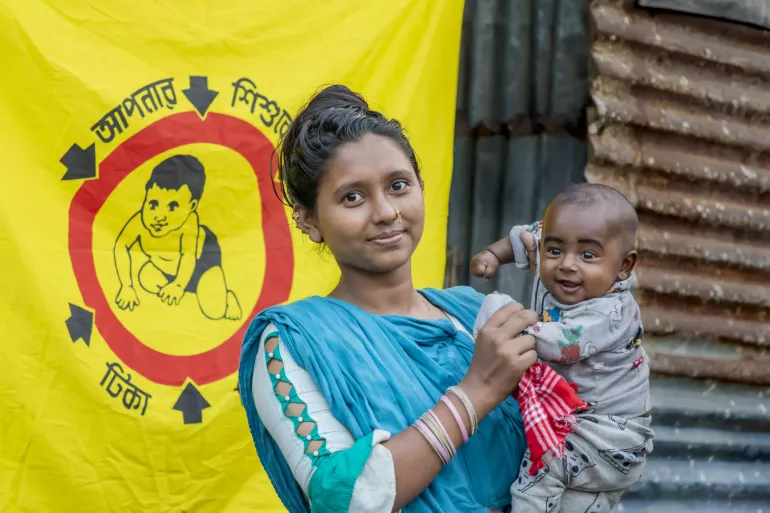
Vaccines are among public health’s greatest achievements, delivering positive impacts worldwide. Yet consistently administering vaccines remains a persistent challenge, as millions of children miss routine immunisation each year. Moreover, vaccine hesitancy grows, even in places once considered secure.
The measles vaccine was introduced in 1963 and caused decades of successful childhood immunisation campaigns. Countries like the United States declared measles eliminated in 2000, but coverage has fallen in recent years, especially during the COVID-19 pandemic. This decline has led to renewed outbreaks in countries in the Global North, including rising measles cases among young children in London in early 2026. Meanwhile, deep global inequities persist, with a widening North–South divide and major outbreaks reported in countries such as Ethiopia, the DRC, Iraq, and Kazakhstan. For instance, Sudan is facing one of its worst measles outbreaks in decades, as armed conflict and mass displacement have disrupted routine immunisation services. In Bangladesh, measles cases have been on the rise since March 2026, with 409 reported deaths, an alarming setback not seen in more than three decades. Bangladesh’s Expanded Programme on Immunization (EPI) foresaw the eradication of measles in the country – so why is this happening?
Expanded Programme on Immunization (EPI)
The resurgence of measles is being caused by several factors, but the most common reason across countries is insufficient vaccination coverage. During the COVID‑19 pandemic, routine immunisation services were disrupted, limiting access to vaccination. In addition, declining public trust in vaccines has increased vaccine hesitancy.
The most pressing question is how measles could return so forcefully in a country known for its strong vaccination record, often outperforming neighbouring nations like India and Pakistan. Bangladesh had been on track to eliminate measles and rubella by 2026. The sudden re-emergence of vaccination gaps represents not only a major setback for Bangladesh’s public health achievements, but also a stark warning for other countries working to sustain high immunisation coverage.
To understand the current crisis, it is important to realise Bangladesh’s long-standing leadership in immunisation. WHO introduced the Expanded Programme on Immunization (EPI) in 1977 at Alma-Ata, Kazakhstan. Subsequently, in Bangladesh, the Expanded Programme on Immunization (EPI), launched on a small scale in 1979 and grew into one of the country’s most effective and far-reaching public health initiatives. From vaccine coverage levels below 2%, Bangladesh achieved nationwide expansion by 1990, reaching all infants and pregnant women and surpassing 85% immunisation coverage.
Through sustained political commitment, community engagement, and investment in health systems, Bangladesh made remarkable progress in the delivery of equitable immunisation at scale and controlling vaccine-preventable diseases and gained global recognition for the strength of its immunisation system.
After the programme proved successful in pilot areas, the Government of Bangladesh began expanding it nationwide in phases through an intensified immunisation programme. This success was mainly due to keeping the immunisation programme within primary health care, led by the government, and integrating it with health education as well as the prevention and control of communicable and non-communicable diseases within the overall health system.
Given this success history, the recent measles outbreak in Bangladesh is especially alarming. The main reason for the rapid spread of measles and the tragic rise in child deaths is clear – a large number of children have missed their vaccines. Under Bangladesh’s National Expanded Programme on Immunisation, two doses of the measles-rubella (MR) vaccine, administered at 9 and 15 months, are required for full protection. According to the Coverage Evaluation Survey 2023, nearly 10 million children missed their first dose, and about 20 million missed their second dose. Over time, this widening immunity gap has left millions vulnerable and has become the driving force behind the current surge in measles cases.
Disruption of Routine Immunisation
UNICEF has warned that Bangladesh’s long-standing immunisation success can quickly unravel if services are disrupted, as even short interruptions allow immunity gaps to silently accumulate. Public Health Experts have long stressed that vaccination services must remain uninterrupted under all circumstances.
Unfortunately, under the last interim government, which handed over power in February 2026, critical supply-chain planning was neglected. The disruptions occurred in September 2025 when the interim government led by Nobel laureate Muhammad Yunus suspended the long-standing practice of procuring vaccines through UNICEF. In addition, a supplemental immunisation campaign planned for 2024, postponed to 2025, was ultimately cancelled. This weakened the continuity of vaccination services and exposed serious failures in policy priorities and governance, with devastating consequences for children’s lives. These disruptions did not occur in isolation. Recent political instability in Bangladesh has placed additional strain on public institutions, affecting policy continuity, resource allocation, and the delivery of essential health services – including routine immunisation.
Changes to the health sector’s operational planning further disrupted service delivery. Health department staff were forced to stop working, and numerous workers went months without pay. This sudden loss of frontline workers at the community level, dealt a severe blow to vaccination services. This health sector restructuring was carried out without adequate contingency plans, leaving immunisation programmes dangerously exposed.
In addition, the absence of regular mass immunisation campaigns typically conducted every four to five years in Bangladesh to reach children (who had been missed), has also widened coverage gaps. These campaigns are critical not only for increasing coverage but also for addressing vaccine hesitancy amongst parents and tackling misinformation. To stop measles transmission, at least 95% of children must receive two doses of the vaccine to achieve community immunity. Yet, Bangladesh has fallen short of this threshold in recent years.
Beyond supply-chain and policy failures, several technical and operational issues also contributed to the crisis. Incorrectly administered or mistimed doses, along with high dropout rates between vaccine doses has weakened overall protection. Poor monitoring, largely due to shortages of health workers, has allowed these problems to persist and go unnoticed. Geographic barriers, hard-to-reach communities, and migration further complicated efforts to complete childhood vaccination schedules, leaving many children unprotected.
These compounded failures have contributed to a resurgence in measles cases. While other factors may also be involved, the absence of a formal investigation or a comprehensive assessment raises concerns among those responsible for public health planning and response.
What is urgently needed is a bottleneck analysis, a systematic way to identify the key obstacles and the underlying causes of this measles outbreak, along with a thorough review of policy and governance failures. Experts agree there is unlikely to be a single explanation, but uncovering the true drivers of this outbreak could help prevent similar crises arising in Bangladesh and elsewhere.
Bangladesh Launches Emergency Measles-Rubella Campaign
Beyond questions of blame, the immediate priority is to strengthen vaccination services, learn from past mistakes, and rebuild technical capacity.
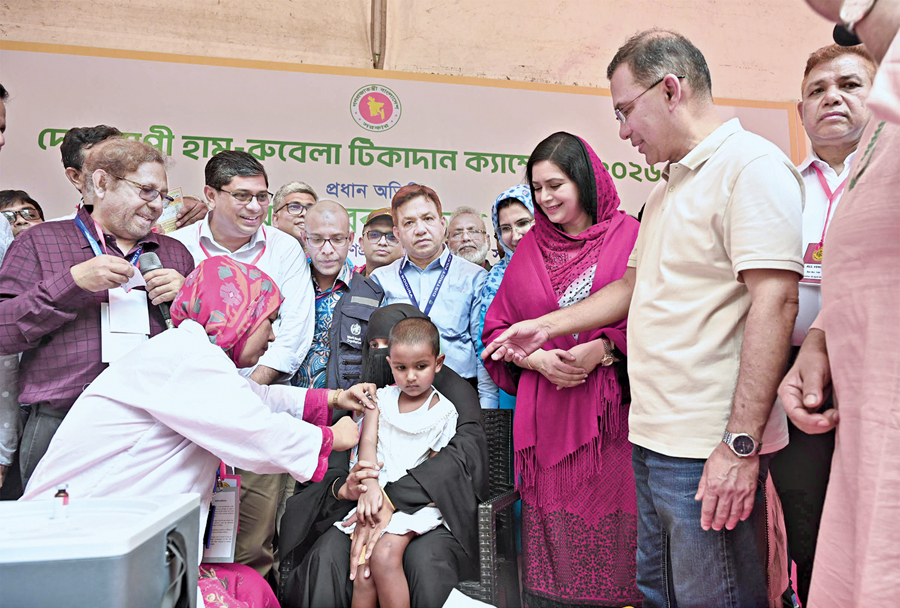
The emergency measles–rubella vaccination campaign launched in April 2026 by the Government of Bangladesh, with support from UNICEF, World Health Organization, and Gavi, the Vaccine Alliance, represents an important corrective intervention.
This recent initiative is a timely and welcome step toward protecting children and restoring public trust, but it is not sufficient on its own. Its reactive nature highlights the consequences of delayed responses and the failure to act on early warning signals. Such delays increase exposure to this preventable disease and also point to systemic gaps in surveillance and preparedness. Immediate and comprehensive action is needed to manage the current crisis, alongside strong forward-looking planning to prevent future failures.
A transparent and evidence-based investigation is urgently needed not to fuel political blame, but to serve as an institutional post-mortem.
Bangladesh and Beyond
Vaccines are among the most cost-effective and life-saving public health interventions ever developed. To protect populations and prevent outbreaks, countries must maintain uninterrupted immunisation services and achieve at least 95% coverage to ensure community immunity. The recent surge in measles cases in Bangladesh and worldwide highlights the cascading consequences for human health and survival when vaccination coverage fails.
Routine immunisation must be treated as a non-negotiable public good. Regardless of political shifts, economic pressures, or bureaucratic transitions, public health services, especially vaccination programmes, must continue without interruption. Vaccines are not merely a policy option; they are a societal safeguard. Ensuring their availability, accessibility, and public acceptance should remain a top priority for all governments, in all circumstances.
Understanding what went wrong in Bangladesh, and identifying policy and governance failures is essential for strengthening accountability and improving public health systems. Documenting these lessons can support reforms within Bangladesh, but can also contribute to wider global health efforts to prevent similar breakdowns in vaccination systems.
Further Reading
- Why Vaccines Matter for Children – UNICEF
- Global Immunization: Fast Facts – Centers for Disease Control and Prevention
- Many Countries Eliminated Measles – Why Is It Coming Back in the U.S. and Globally? – Council on Foreign Relations
- Disease Outbreak News: Measles (2026 DON598) – World Health Organization
- Nearly Half a Million Children in Bangladesh Miss Full Immunization – UNICEF
- Evidence on Declining Vaccine Coverage and Measles Resurgence in Sudan – The Lancet
- How Vaccines Changed the World – Council on Foreign Relations
- Largest Catch-Up Initiative Delivers Over 100 Million Childhood Vaccinations – Gavi, the Vaccine Alliance
- Five Ways Health Policy and Systems Research Is Strengthening Vaccine Uptake – World Health Organization
- Measles Takes Root in Mexico – Think Global Health
About Monaemul Islam Sizear
Monaemul Islam Sizear is a passionate public health professional with 14 years of experience in programme design, management, and implementation research. He serves as Programme Operations Manager/Lead for the global Reading Glasses for Improved Livelihood (RGIL) initiative at VisionSpring Bangladesh and as Executive Director of the Public Health Foundation, Bangladesh (PHFBD). He is also the founder of Health Systems Matter, a knowledge platform and a contributing public health writer. His academic background spans Anthropology, Public Health, and Urban Development from institutions in Bangladesh and the Netherlands. He has published in top-tier (Q1) peer-reviewed journals and contributed blogs and newspaper articles to global platforms on health systems and environmental issues.