The Third World Quarterly TWQ Special Issue (SI) Decolonising Epistemology: Intellectual Imperialism and the Coloniality of Knowledge (Vol 46, 2025) discusses problems of intellectual imperialism, academic dependency, and the general issues surrounding global knowledge production in a highly unequal world.

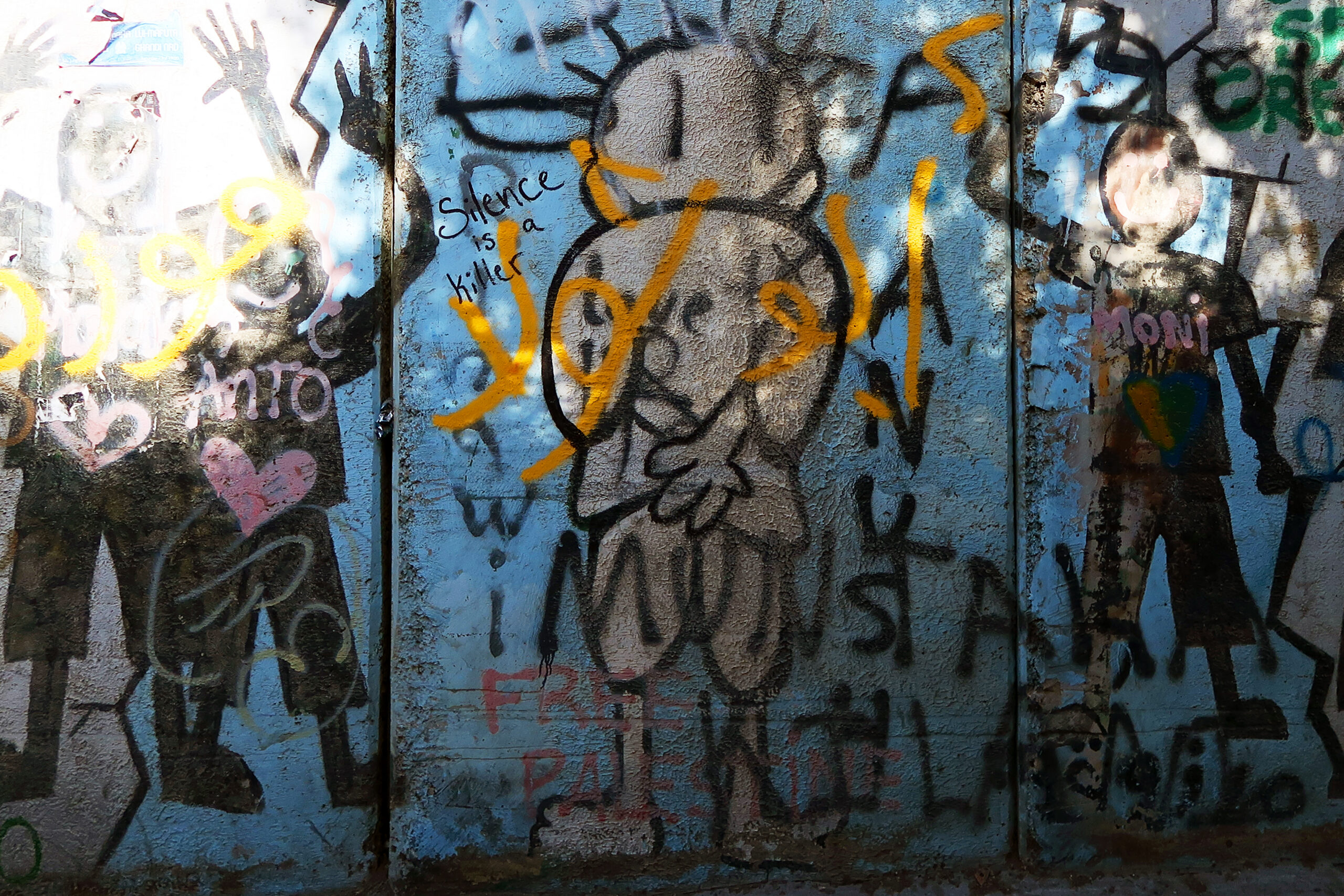
Destruction of Mexican Codices. Source: Wikipedia public domain
Decolonisation and the coloniality of knowledge, or Eurocentric biases in knowledge, are widely discussed topics – however, very little attention is paid to the power relations of knowledge production. Moreover, the inputs of scholars from and based in the Global South are not fully centred in discussions on decolonisation.
The articles in this Special Issue discuss the history, characteristics, and effects of intellectual imperialism and academic dependency, or, in other words, the power relations and inequalities impacting academic knowledge production globally. The authors examine their historical roots and show how the establishment of Western universities teaching the work of white scholars in the colonies was deeply embedded in colonial politics, which emphasised the education of compliant subjects that would carry out colonisers’ policies obediently. This highlights the massive dominance and power that the Global North currently holds over the Global South in terms of knowledge – and this creation was not an accident, but rooted in intentional colonial policy that intended to erase non-Western perspectives and critiques.
Linked to this is also the problem of the coloniality of power, or the highly unequal power relations created by colonialism. This is currently understudied in relation to the coloniality of knowledge, and deserves greater attention, because it keeps enabling the extraction of profit, land, and resources of the Global South by the Global North. Activism and strongly social-justice oriented scholarship will be necessary to try to dismantle these power relations and bring about greater social justice.
The authors who have contributed to this SI argue that we must also dismantle the global power relations of knowledge creation, which currently stifles vital critiques from the Global South. We must build global academic structures—including journals, conferences, and systems for allocating resources and ways for universities and researchers to collaborate internationally. These should create balanced flows of knowledge, enabling the global majority and globally marginalised voices to theorise their own situations and be heard by the globally privileged.
A focus on epistemic justice may help us see the varying global axes of power and the intersecting geographies of privilege and marginalisation they produce, while moving us beyond single-issue approaches. Since the globally most marginalised populations are often blocked from entering academia and even from partaking in higher education, a focus on empowering their voices will pose the problem of how academia can recognise and centre knowledges produced by non-academics. The authors emphasise how much value can be gained by harnessing the knowledge of non-academics, not as data, but as the thought of the subaltern. This asks us to re-think how academia currently reviews and evaluates knowledges.
The authors also discuss how the highly unequal global knowledge production affects the Global South’s academic and social landscapes. For example, how Eurocentric knowledge translates into Eurocentric policy-making, which obscures how many social problems in the Global South can trace their origins to Western actions. This often enables Western “experts” to rush in with solutions that are often a bad fit to local contexts and that override local perspectives.
In the SI, we conclude by showing how problematic Eurocentric biases in knowledge production can be, and urge that the decolonisation project should place the human and ecological cost of colonisation and neocolonialism at its centre. Reparations and true social justice for everyone on the planet must be at the heart of decolonisation.
About the Special Issue Guest Editors
Caroline M. Schöpf is an assistant professorial fellow at the University of the Philippines Diliman. Her main research interests are decolonial approaches to migration studies, intellectual imperialism, and academic dependency. Setting migration studies into a dialogue with decolonial approaches, her PhD project comparatively analyses labor market privilege of White Western migrants in Hong Kong. Her work has been published in international journals. She convened three major decolonial conferences and workshops, has organised multiple sessions on Decolonial and Southern Theory at the American and International Sociological Association, and has been serving as guest editor at Third World Quarterly (TWQ) and Social Transformations: Journal of the Global South.


Tamari Kitossa (PhD) is professor of sociology and the Graduate Program Director for the MA in Critical Sociology at Brock University, Ontario, Canada. He began his career at Brock University in 2006. Research Interests: anti-criminology and counter-colonial criminology; Blackness/anti-Blackness; African Canadian leadership; Black masculinities; Epistemology; Interracial unions. He is co/editor and contributor to Nuances of Blackness in the Canadian Academy: Teaching, learning and researching while Black (University of Toronto Press); Appealing Because He Is Appalling: Black masculinities, colonialism and erotic racism (University of Alberta Press); African Canadian Leadership: Continuity, Transition, and Transformation (University of Toronto Press).
Bandana Purkayastha, Board of Trustees and Distinguished Professor of Sociology, University of Connecticut, has published extensively on human rights, intersectionality, transnationalism, knowledge hierarchies, migrants, violence and peace. She has received awards for her research, teaching, and leadership, locally and nationally, including American Sociological Association’s Jessie Bernard award for a career of scholarship and leadership improving the lives of women and other marginalised groups, and Sociologists for Women in Society (SWS) mentoring award. She is the current Associate Dean for Social Sciences, and is the elected Vice President, National Association, International Sociological Association.


Matthew Chew is an Associate Professor at the Department of Digital Arts and Creative Industries of Lingnan University, Hong Kong. He is a cultural sociologist whose empirical research analyses creative industries, digital media, and popular communication in China and Hong Kong. He earned his MA and PhD in Sociology from Princeton University. His past research focused on the video games industry, comics and animation, the nighttime economy, Internet memes, celebrity systems and electronic dance music in China. More recently, he has been extending his empirical investigative foci to fantasy webnovels, danmei (boys’ love) culture, political communication, digital activism, social eating, cyberbullying, rap music, and carnivalesque digital cultures in China.
Third World Quarterly (TWQ) regularly publish Special Issues(SIs), which are collections of papers centred around a theme of topical interest and are organised and led by subject experts who take on the role of Guest Editor/s. Visit theTWQ Special Issue page to find out more.