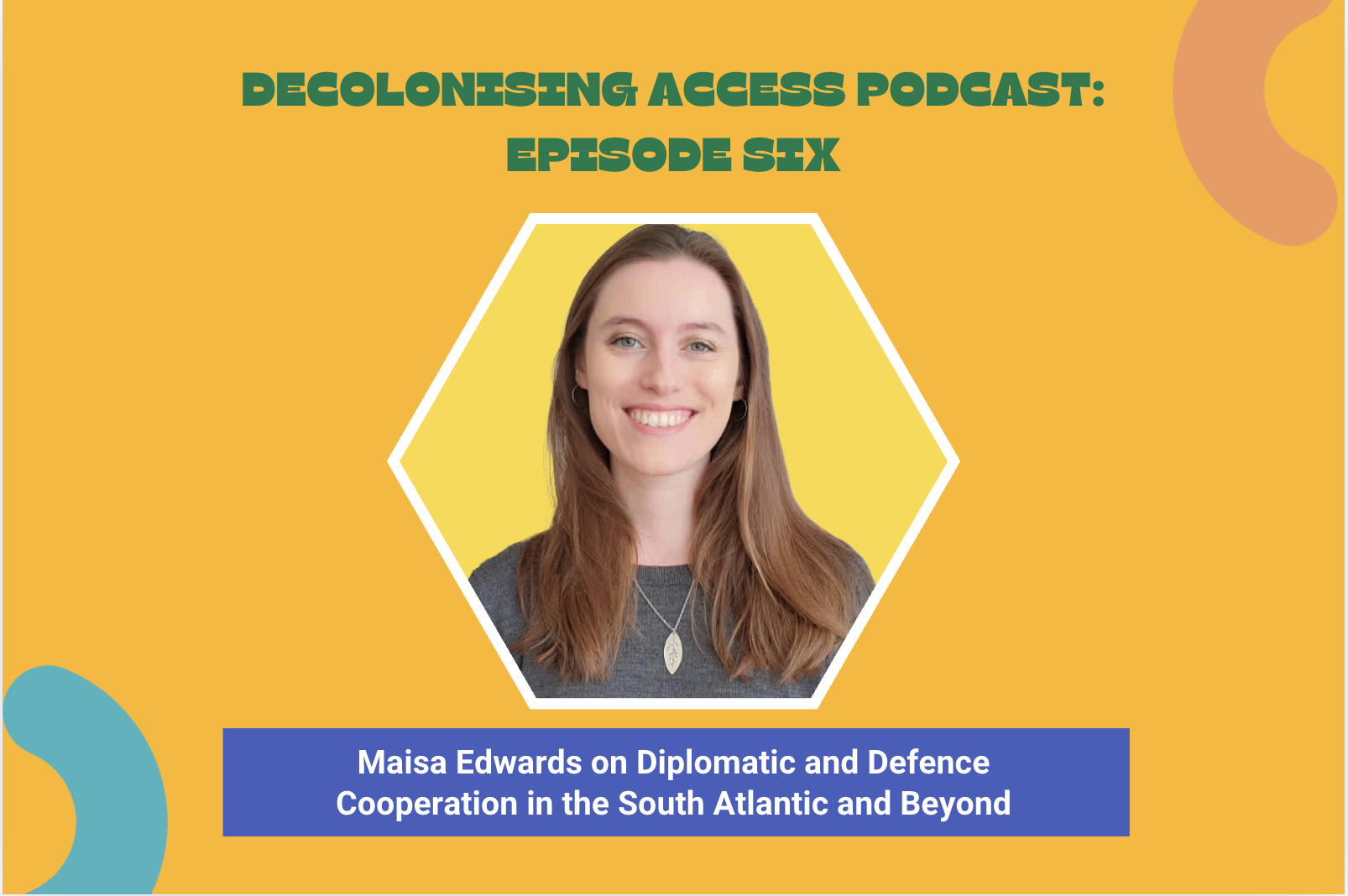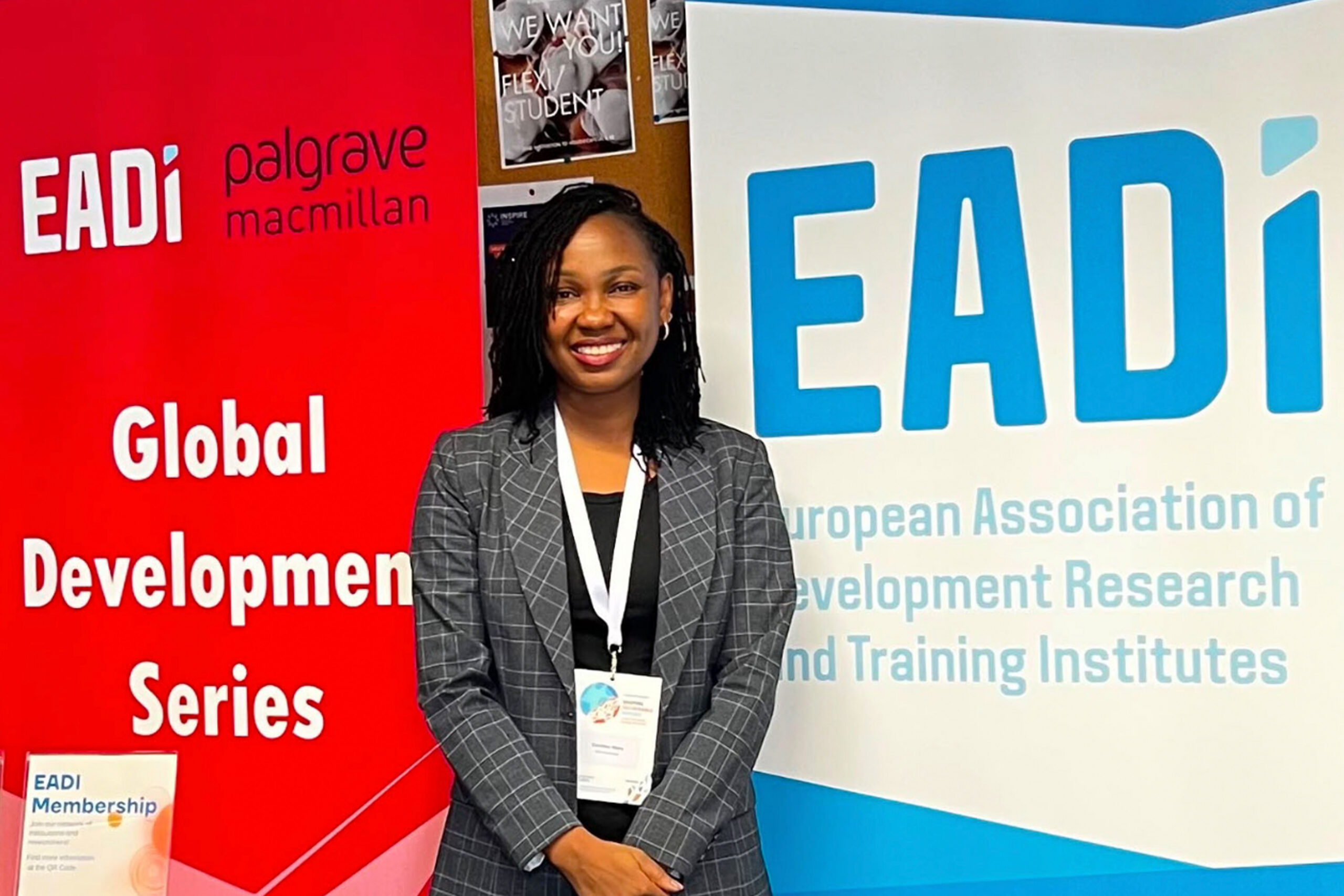
Noha Atef is a media scholar from Egypt, who is currently based at the University of Galway in Ireland. Her native language is Arabic. She began her academic journey in England and has worked at universities and research institutions in English-speaking countries. Although her research focuses on the Arab region—where she engages directly with participants and collects data in Arabic—it is often not considered “impactful” unless published in top-tier English-language journals. Noha explores how we can decolonise International Relations (IR) when the English language is still so predominant in the field.

A few years ago, I was catching up with a colleague over coffee. I had just published a study on social media influencers in Jordan, Egypt, and the UAE, one of the first of its kind in the region. It involved months of personal interviews and fieldwork in a space still relatively unexplored in 2020. When she asked if it had been published, I proudly mentioned that it appeared in one of the highest-ranked Arabic-language journals in our field (The Arab Journal for the Humanities). Her response was swift and casual, but it hit hard: “If it’s not in English, it’s not there.”
She didn’t mean it as a criticism, but just a recognition of the reality we both knew too well. But that one sentence crystallised a much larger problem: that English dominates academia and the global academic system sidelines knowledge produced in languages other than English, especially from regions within the Global South.

Is English Linguistic Dominance Real?
English dominates global academic publishing. In 2020, over 85% of all academic works registered with Crossref Digital Object Identifiers (DOIs) were published in English. The next most represented languages were German (2.9%), Portuguese (2.2%), Spanish (2.0%), and Bahasa Indonesian (1.3%).
Although English is especially dominant in fields such as natural sciences and engineering, the humanities does tend to include more publications in local languages.
However, this linguistic dominance still affects who gets published and recognised. A 2014 special report in the medical journal Stroke showed that of 14,949 original submissions, 9,259 were from non-English speakers, while 5,690 came from English-speaking countries. Despite the higher number of submissions from non-English speakers, articles from English-speaking countries were accepted at a significantly higher rate, highlighting how understanding English can influence academic outcomes.
In some disciplines such as literature and linguistics, local languages remain strong. However, for global circulation, even these texts still face the pressure of translation into English. Deutsche Vierteljahrsschrift für Literaturwissenschaft und Geistesgeschichte (DVjs), for instance, is a highly respected journal for German literary studies, and Revue d’Histoire littéraire de la France (RHLF) is a leading journal in French literary history. However, even these well-regarded publications don’t always carry the same international prestige as top-tier English-language journals. Publishing in languages other than English often means receiving less academic credit, regardless of a journal’s scholarly quality.
I’ve experienced this imbalance personally. When I published my study on influencers in The Arab Journal for the Humanities, it was well received within the region. Yet the recognition it received didn’t match what might have followed had it been published in a prominent English-language journal.
How does this effect knowledge production?
The dominance of English in academic publishing has real consequences for researchers whose first language isn’t English. It directly impacts their academic careers, often leading to slower research progress. Reading, analysing, and writing in English can take significantly more time and energy, making it harder to contribute to academic conversations through papers or conference presentations.
This language barrier becomes even more visible during the peer review process. Many academic journals evaluate submissions not only for their originality and scholarly rigor but also for their fluency and clarity of language. While this may seem reasonable, it creates an unfair burden for researchers who didn’t grow up speaking English.
For many, getting a manuscript professionally edited is the only way to meet these linguistic expectations, yet that service comes at a steep cost. Editing a single 6,000-word article can range from $US400 to $US480. In Egypt, for instance, where the average monthly salary of a university lecturer is around EGP 25,000 (roughly $US500), that means sacrificing an entire month’s income just to polish one article for submission.
Beyond editing costs, the pressure to publish in English has also created new forms of academic inequality. One troubling trend is the inclusion of native English-speaking co-authors who offer minimal intellectual contributions, but significantly increase a paper’s chance of acceptance. Their roles are often described as “coherence checks” or help with the literature review, yet in many cases, this is simply copyediting in disguise. This practice reveals a deeper power imbalance where linguistic proficiency is treated as a gatekeeping tool, allowing Western scholars to gain credit while scholars from the Global South carry the intellectual weight.
So what? Learn English
Ken Hyland, a Professor of Applied Linguistics in Education at the University of East Anglia challenges the view that native English speakers are inherently privileged in academic publishing. He also questions the term “native speaker” itself, noting that it only emerged in the 1930s and remains a problematic and imprecise label. Hyland argues that academic writing (or “academic literacy”) is not something native speakers automatically inherit. Instead, it is a learned skill, acquired through formal education and far from universally held, even among native speakers.
While this perspective raises valid points, it overlooks a key issue: access to academic English is not equally distributed. In much of the Global South, learning academic English is not just an educational goal, it is a marker of social class. Children from affluent families often attend elite private or international schools where English is the primary language of instruction. Meanwhile, public schools offer only basic textbook English.
Between AI and alternatives: Is there a way forward?
In recent years, large language models (LLMs) like ChatGPT, Gemini and Copilot have offered some relief. These tools can clean up grammar, restructure sentences, and suggest clearer phrasing often in real time. For many Global South researchers, this is a budget-friendly solution rather than sending drafts to expensive editors, they can receive immediate help improving their writing. But while LLMs are useful, they aren’t a complete solution. They lack subject-matter awareness, cannot provide nuanced disciplinary feedback, and can introduce subtle inaccuracies. AI also reinforces the dominance of English language standards, flattening regional variations.
The benefits of linguistic diversity are both numerous and obvious, and many were stated clearly in UNESCO’s 2023 recommendations on Open Science. Fortunately, alternative models are emerging. Journals like Ephemera and ACME (An Intrernational Journal of Critical Geographies) now encourage submissions in multiple languages, including Arabic, Spanish, and Mandarin, and they publish open access , meaning their content is freely available to all readers, without subscription fees. Platforms like OpenEdition support Diamond Open Access publishing, which is free for both authors and readers and welcomes multilingual contributions. Meanwhile, regional impact metrics and citation indexes like AmeliCA and Latindex are giving long-overdue visibility to research that speaks directly to local realities often in local languages.
Efforts like these aren’t just symbolic. They challenge a system that continues to equate quality with Englishness, visibility with Western validation, and scholarly worth with proximity to Anglo-American norms. They make space for a different kind of knowledge, one that doesn’t have to pass through a linguistic filter to be considered valuable.
How to make academic publishing more inclusive?
One possible solution for inclusive academic publishing could be that high-impact journals to develop international editions that uphold the same rigorous standards while embracing linguistic diversity. For instance, a journal like the X SAGE Journal, traditionally published in English, could have a multilingual version where each issue includes articles in various languages. These editions could operate on a quota system for example four articles per year in Arabic, four in Swahili, four in Portuguese, and so on.
This wouldn’t just expand access. It would actively decolonise knowledge. By elevating scholarship produced in non-Western languages and recognising it within prestigious platforms, we challenge the dominance of English and make room for epistemologies rooted in different cultural and linguistic traditions.
Finally, academic excellence exists in every language, but the structures we’ve built around publishing continue to exclude, devalue, or erase knowledge produced in the Global South unless it’s translated into English. When my colleague said, “If it’s not in English, it’s not there,” she wasn’t wrong. But that doesn’t mean it has to stay this way.
About Noha Atef
Noha Atef is an Egyptian media scholar, educator, and consultant. She is an Assistant Professor of Journalism at the University of Galway. With a background in journalism, she transitioned into academia, focusing on digital humanities and media studies. Atef has held positions at universities and think tanks in the UK and Canada. As a consultant, she advises journalists and researchers in the Arab and Euro-Mediterranean regions on producing impactful social science research, including policy papers and industry-focused studies. Her work, published in both English and Arabic, has reached audiences across the Arab world, Europe, and Asia. She is also a recognised media commentator, providing analysis on various platforms.
Noha Atef explores why Egyptian doctor-influencers avoid academic citations and what this reveals about trust, expertise, and health communication (see Health Communication Insights from Egypt: Why doctor-influencers avoid academic citations).